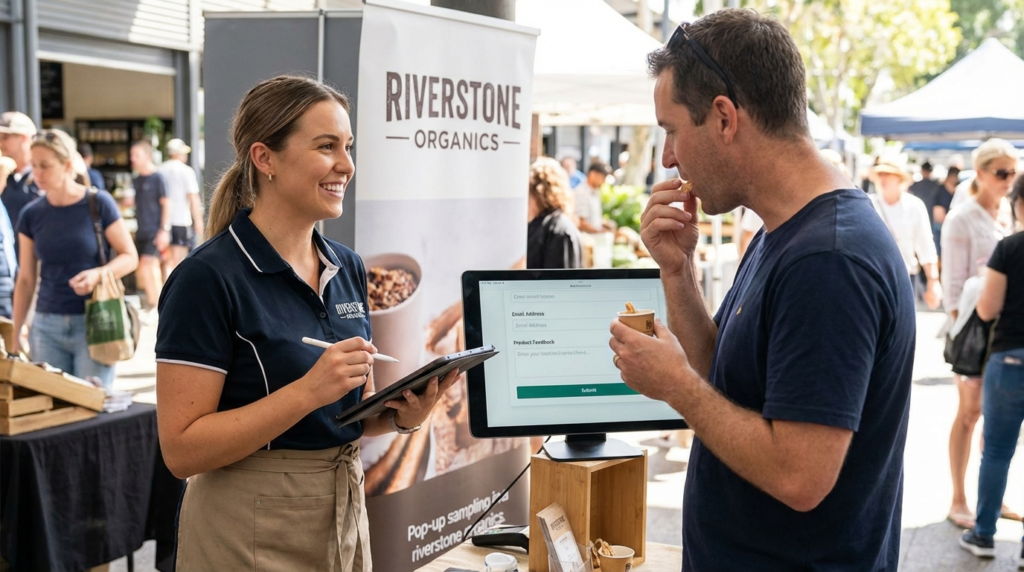
You handed out 5,000 samples at a multicultural community event. Foot traffic was strong. Conversations were warm. Then leadership asked the one question every marketer dreads: “What did it actually drive in sales?”
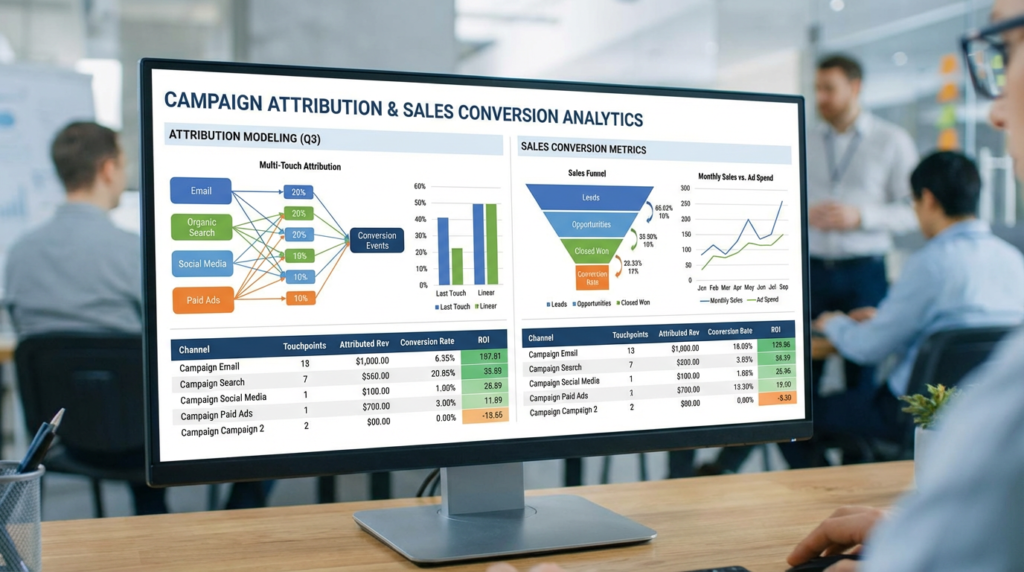
Too often, the answer is a shrug. Brands invest heavily in experiential marketing activations. Then they walk away without a system to connect those interactions to actual purchase behaviour. That gap is expensive — and entirely avoidable.
This guide covers the exact attribution framework Brand Guruz uses across multicultural activations in Canada. Follow it, and you will finally be able to answer that question with data.
LIKELY TO BUY AFTER TRIAL
SAMPLERS WHO CONVERT
IROAS OVER 30 DAYS
Research shows 73% of consumers are likely to buy a product after trying it. By comparison, only 25% say the same about television commercials. The trial itself works. The attribution — connecting that trial to a verified purchase — is where most brands fall short.
Standard attribution tools assume a linear digital journey. Multicultural experiential marketing rarely follows one. Consumers at a South Asian grocery sampling event, a Caribbean cultural festival, or a Chinese New Year pop-up often pay in cash. They shop at independent retailers. They make purchase decisions collectively, influenced by family and community conversations that happen days after the activation itself.
Furthermore, many newcomer consumers actively avoid digital data-sharing. Asking for an email at a Punjabi grocery store produces very different results than at a downtown Toronto pop-up. Successful attribution in multicultural contexts requires a tailored approach — not a copy-paste of a generic digital marketing framework.
Attribution starts before the first sample hits anyone’s hands. Begin by setting a clear purchase window. Most multicultural sampling campaigns track conversions across 14, 30, and 90 days post-activation. Each window captures a different behaviour pattern.
Fourteen days captures impulse and immediate intent. Thirty days captures considered purchases. Ninety days captures community-influenced behaviour, where a sampler recommends the product to family members who then buy it independently.
Define these windows in advance. Align them with your retailer partners. Establish a baseline velocity figure for each product at each store location before the activation begins. Without a pre-campaign baseline, you cannot measure lift — and lift is what proves attribution.
Effective attribution for multicultural experiential marketing uses four layered methods simultaneously. Each layer captures a different portion of the purchase journey.
Every sampler receives a unique, trackable offer. Printed coupons with QR codes work well in grocery contexts. Digital rebate links work better in festival environments with strong smartphone usage. Coupon redemption ties directly to a verified purchase event. It also gives you demographic data on who converted, when, and at which retail location. One snack brand using this method achieved a $2.55 iROAS over 30 days for a newly launched product.
Train brand ambassadors to collect opt-in contact information during every meaningful interaction. Keep the ask simple and the value exchange clear. Offer a recipe card, a loyalty reward, or an exclusive follow-up offer in exchange. This first-party data connects the sampler to future digital touchpoints. It also enables post-activation retargeting across Meta, Google, and email — extending the campaign’s conversion window well beyond the event day.

Partner with retailers before the campaign launches. Establish baseline sales velocity for the activated product at each store location. Measure sales velocity at activated stores versus matched control stores during and after the campaign window. Sales lift studies provide the most direct evidence of sampling-to-purchase attribution. They also strengthen your retail partnerships. When brands prove their activations drive sales, retailers prioritise shelf placement and co-op investment in return.
Deploy short surveys to opted-in contacts 7, 30, and 60 days post-activation. Ask three questions: Did you purchase the product? Did you recommend it to someone? How likely are you to repurchase? These surveys capture data that no coupon code or retail report can — specifically, community word-of-mouth and referral purchase behaviour. In tight-knit multicultural communities, referral conversions often outnumber direct sampler conversions.
“Sampling is now a performance channel — measure incremental sales lift and ROAS so it performs like a channel, not a gamble.”
The right tools make the framework executable in the field. Below are the four categories every multicultural activation team needs in place before launch day.
Printed cards with unique QR codes tie each sampler to a trackable digital rebate or coupon. Works in both digital and cash-dominant retail environments.
Ambassadors capture opt-in contact data on a branded tablet or form at the point of interaction — in the language the consumer is most comfortable speaking.
Direct access to point-of-sale data from retail partners enables real-time sales velocity tracking at activated versus control store locations.
CRM-triggered email and SMS sequences reach opted-in contacts with follow-up offers, surveys, and repurchase nudges at 7, 30, and 60 days post-event.
Generic attribution frameworks miss community-specific dynamics. In multicultural activations, these nuances are not minor footnotes — they are the difference between accurate and completely misleading data.
First, trust drives conversion timelines. Newcomer communities often take longer to make initial purchases from unfamiliar brands. A 14-day attribution window may dramatically undercount conversions from a South Asian or East African shopper who discusses the product with family before buying. Extend your window accordingly.
Second, referral conversions are disproportionately high. A single sampler in a tight-knit community can generate three to five additional purchases through word-of-mouth. Your post-activation survey must explicitly ask whether the respondent recommended the product. Track those referral purchases separately. Otherwise, your attribution model significantly undervalues the activation’s true return.
Third, language shapes data capture success. An ambassador who asks for an email in English at a Mandarin-dominant sampling event will collect far less data than one who asks in Mandarin. Brand Guruz deploys culturally fluent ambassadors precisely because attribution quality depends on the depth of interaction quality at the activation itself.
Pro Tip: Always run activated locations against matched control stores. Control stores must share similar demographics, foot traffic, and product velocity. Without that comparison, you cannot separate campaign lift from organic sales trends.
Attribution data only creates value when it reaches decision-makers clearly. Structure your post-campaign report around three core outputs. Start with incremental sales lift — the difference in velocity between activated and control stores during the campaign window. Next, present cost-per-acquisition based on verified coupon redemptions and surveyed purchasers. Finally, show community multiplier effect, documenting referred purchases captured through post-activation survey data.
Together, these three outputs build a complete picture of your activation’s true return. They also give you the language to defend and grow your experiential marketing budget in the next planning cycle. Our team at Brand Guruz builds these reporting frameworks into every multicultural campaign — so attribution is never an afterthought.
Most brands still treat multicultural experiential marketing as a brand-building expense. They run activations, collect photos, and report on foot traffic. Then they move on without ever connecting a single sample to a verified sale.
Ultimately, brands that build attribution into their activation design operate differently. They prove ROI. They earn retailer trust. Accordingly, they grow their budgets because they can demonstrate exactly what each campaign drove — in units, in revenue, and in long-term customer lifetime value.
The framework above is not complex. It requires planning, the right tools, and culturally fluent execution on the ground. Get those three elements right, and every activation becomes a measurable performance channel — not a line item you have to defend every quarter.
Brand Guruz designs multicultural experiential campaigns with measurement built in from day one. Let’s build a strategy that proves results — not just impressions.