How Do Companies Measure ROI for Experiential Marketing Events?

Experiential marketing ROI is often misunderstood. While foot traffic and social media impressions matter, real return on investment is determined by measurable lead generation and revenue impact.
Therefore, companies must implement structured tracking systems before launching an experiential marketing campaign.

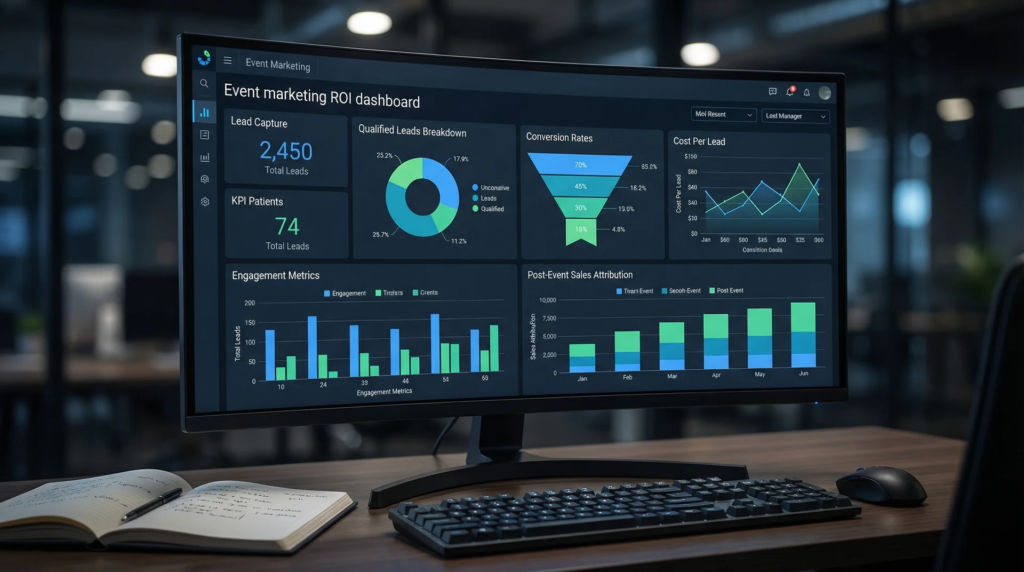
Event marketing ROI dashboard displaying lead capture numbers and conversion metrics.

Step 1: Track Qualified Lead Capture

First, measure the number of qualified leads collected during the event. This includes email sign-ups, QR code scans, contest entries, and product sampling conversions.

Step 2: Evaluate Engagement Quality

Next, analyze engagement metrics such as dwell time, interaction rates, and product demonstration participation.

Step 3: Integrate CRM and Automation

Importantly, integrating experiential marketing with CRM automation systems allows companies to track post-event sales conversions and customer lifetime value.
 
Using tools such as Google Analytics, businesses can connect event engagement with website traffic and conversion tracking.

Long-Term ROI Evaluation

Finally, evaluate long-term impact by measuring repeat purchases, referral growth, and customer retention rates. Experiential marketing ROI often extends beyond immediate sales and strengthens brand equity.
Want to measure real experiential marketing ROI? Contact Brand Guruz to build your tracking system.