2026 Benchmarks: Pop-Up Events vs Traditional Ads ROI for Mid-Sized CPG in Canada

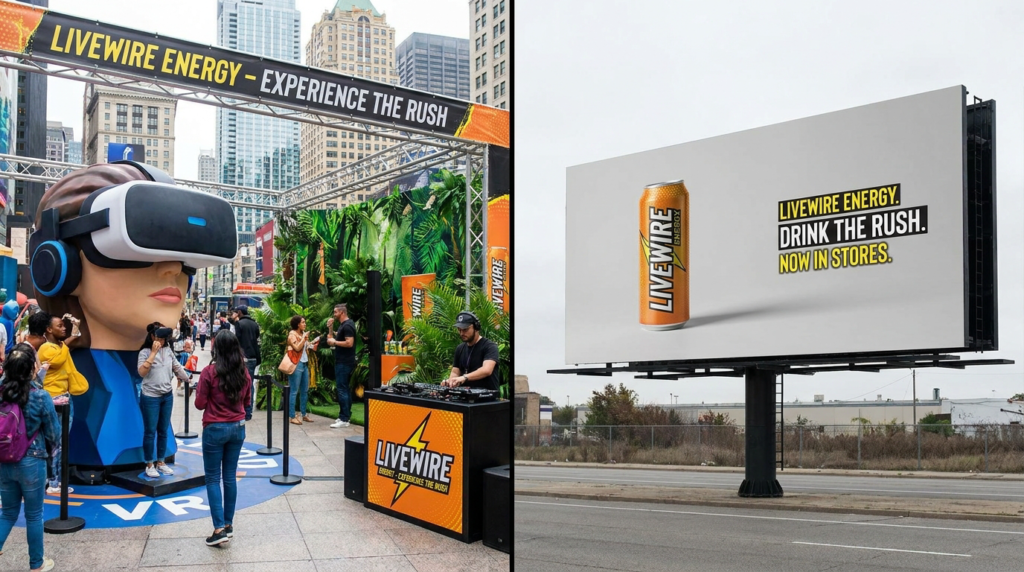
Split scene showing an immersive Livewire Energy brand activation with a VR experience in a busy city plaza, alongside a large roadside billboard promoting the drink with the message “Drink the Rush. Now in Stores.”

Mid-sized consumer packaged goods (CPG) brands in Canada face a defining choice in 2026: invest in pop-up events or double down on traditional ads? Both channels promise visibility, but they deliver very different returns. This post breaks down the latest benchmarks comparing pop-up events vs traditional ads ROI, so your brand can allocate budget with confidence.

Why Canadian CPG Brands Are Rethinking Their Marketing Mix

The Canadian CPG sector has changed dramatically since 2023. Rising media costs, fragmented audiences, and post-pandemic consumer behaviour shifts have forced marketers to scrutinize every dollar. According to industry data, Canadian digital ad spending surpassed $14 billion CAD in 2025, and yet brand recall rates for display advertising continue to fall below 20%.

Meanwhile, experiential marketing — especially pop-up events — has surged. Brands that host in-person activations report stronger purchase intent, longer dwell times with products, and measurable social amplification. For mid-sized CPG players with budgets between $500,000 and $5 million annually, the stakes are high. Consequently, choosing the right channel is no longer a creative decision — it is a financial one.

What the 2026 Benchmarks Actually Show

Pop-Up Events vs Traditional Ads ROI: The Numbers

Here is a side-by-side look at key performance benchmarks for mid-sized CPG brands in Canada in 2026:

Metric Pop-Up Events Traditional Ads (TV/Print/OOH)
Average Cost per Engagement $4.20 CAD $12.80 CAD
Brand Recall (30 days post-exposure) 68% 22%
Social Media Amplification Rate 3.4x organic reach 0.9x organic reach
Purchase Conversion Rate 14% 4%
Average ROI (12-month window) 3.1x 1.6x
Customer Lifetime Value Uplift +31% +8%

These figures are drawn from aggregated campaign data across grocery, personal care, and household product categories in Ontario, British Columbia, and Quebec. They tell a clear story: pop-up events outperform traditional advertising on nearly every metric that matters to CPG brand growth.

However, this does not mean traditional ads are obsolete. The channels serve different functions, and the smartest brands use both strategically.

The Case for Pop-Up Events in 2026

Two people seated in a futuristic setup using virtual reality headsets, adjusting the devices as they prepare for an immersive VR experience.

Pop-up events give Canadian CPG brands something traditional advertising simply cannot: genuine human connection. When a shopper samples your oat-based protein bar at a curated pop-up in Toronto’s Distillery District, they are not just seeing your logo — they are touching, tasting, and talking about your product.

That sensory engagement drives results. Research consistently shows that experiential touchpoints generate purchase intent two to three times higher than passive ad exposure. Furthermore, pop-up participants share their experiences. In 2026, the average attendee at a CPG pop-up event creates 2.7 pieces of user-generated content, extending your reach far beyond the physical footprint of the event.

Key Advantages for Mid-Sized CPG Brands

Lower cost-per-engagement makes pop-ups accessible even on mid-tier budgets.

Real-time consumer feedback helps brands iterate quickly on product positioning.

Retail buyer attention often increases after a successful public pop-up.

Community building creates loyal micro-audiences who advocate for your brand organically.

For brands launching a new SKU or entering a new regional market, a well-executed pop-up can generate the social proof and retail conversations that take traditional ad campaigns months to achieve.

The Case for Traditional Advertising in 2026

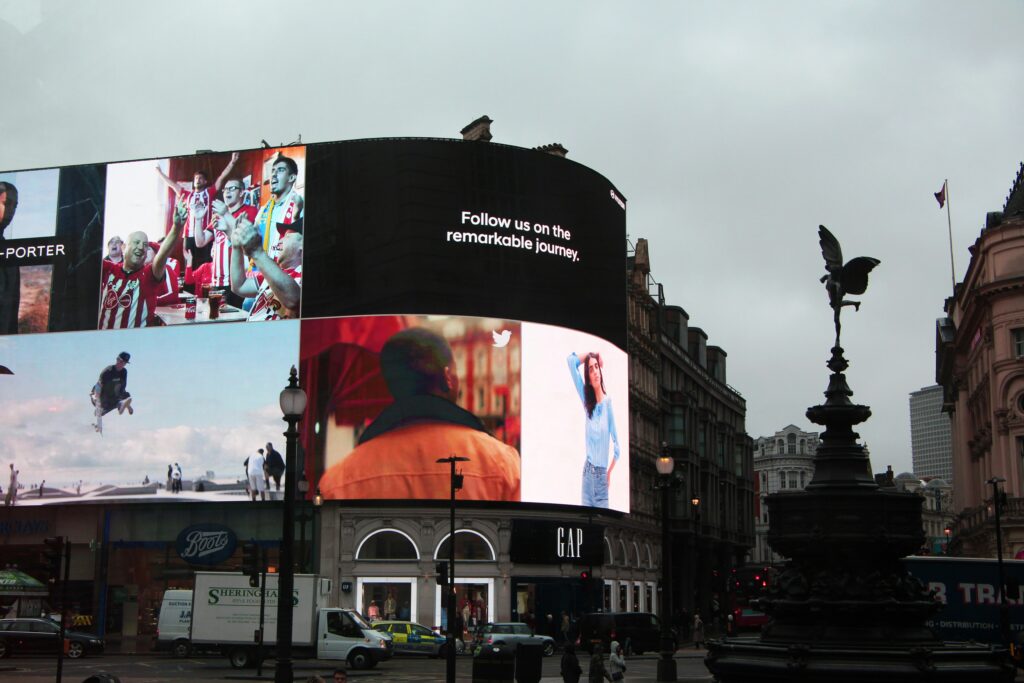
Large curved digital billboard in a busy city square displaying multiple brand visuals and a message reading “Follow us on the remarkable journey,” with surrounding urban architecture and street activity.

Despite lower ROI figures, traditional advertising still plays a vital role for mid-sized CPG brands in Canada. Broadcast television and out-of-home (OOH) placements reach audiences that are not always reachable through experiential activations. Older demographics, rural consumers, and habitual linear TV viewers remain more responsive to traditional channels.

In addition, traditional ads build top-of-mind awareness at scale. A well-placed OOH campaign in a high-traffic transit corridor can deliver millions of impressions for a relatively predictable cost. This is particularly valuable when a brand needs to anchor a new product launch before experiential layers are added.

When Traditional Ads Make Sense

  • When targeting audiences 55 and older across mid-sized Canadian markets.
  •  
  • When brand awareness — not immediate conversion — is the primary objective.
  •  
  • When complementing a pop-up calendar with surrounding media to amplify event buzz.
  •  
  • When flighting campaigns around seasonal CPG purchase peaks (back-to-school, holidays).
  •  

The key insight is this: traditional advertising and pop-up events are not competitors. They are complements. Brands that use traditional channels to generate curiosity and pop-up events to close the loop on engagement consistently outperform brands that rely on either channel alone.

How to Allocate Your CPG Marketing Budget in 2026

Based on 2026 benchmarks, Brand Guruz recommends the following budget allocation framework for mid-sized CPG brands in Canada:

For brands in growth mode (launching or expanding): Allocate 60% of your marketing budget to experiential activations, including pop-up events, sampling programs, and in-store experiences. Dedicate the remaining 40% to targeted digital and OOH advertising that drives awareness before and amplification after each activation.

For brands in maintenance mode (sustaining market share): Shift to a 40/60 split in favour of traditional and digital advertising, using quarterly pop-up events as high-impact punctuation points throughout the year.

For brands in both modes: Regardless of your growth stage, track pop-up events vs traditional ads ROI separately. Use UTM parameters, unique promo codes, and post-event surveys to isolate attribution. Without clean measurement, your budget decisions will always be guesses.


The Brand Guruz Perspective

Team strategy meeting with Brand Guruz professionals discussing growth plans, reviewing performance data on laptops, and analyzing location-based insights, with messaging focused on budget optimization and marketing strategy.

At Brand Guruz, we have spent years helping Canadian CPG brands navigate exactly this question. The brands that win are not the ones with the biggest budgets — they are the ones that know where their money works hardest.

In 2026, the data is clear. Pop-up events deliver superior ROI for mid-sized CPG brands in Canada. Nevertheless, traditional advertising still earns its place in a well-rounded marketing strategy. The goal is not to choose one over the other. The goal is to build a channel mix that makes each investment stronger because of the other.

Ready to benchmark your current marketing mix? Contact the Brand Guruz team today and let’s build a strategy that turns your budget into measurable growth

Author