Activate Every Toronto Neighborhood: The Hyper-Local Experiential Marketing Strategy for Multicultural Communities

Your brand just landed a major GTA campaign. You’re planning a citywide activation strategy and thinking big: major event partnerships, high-traffic zones, large sponsorships.

Stop.

While you’re chasing big events, savvy competitors are quietly dominating Toronto’s neighborhoods—where 57% of residents were born outside Canada and communities have decades of tradition, spending power, and fierce loyalty to brands that show up authentically. One boutique activation in Chinatown reaches more qualified buyers than a generic downtown pop-up. One culturally respectful campaign in Little Jamaica generates word-of-mouth momentum that compounds for years.

The question isn’t whether neighborhood activations work in Toronto. It’s which neighborhoods you’re ignoring while competitors build market dominance.

Why Toronto's Neighborhoods Are Your Biggest Untapped Market

Toronto’s ethnic neighborhoods include Chinatown, Corso Italia, Greektown, Kensington Market, Koreatown, Little India, Little Italy, Little Jamaica, Little Portugal and Roncesvalles, each reflecting the concentrated settlement of specific communities. These aren’t just quaint tourist destinations. They’re economic hubs with massive spending power and communities that actively support businesses showing cultural respect.

Consider the numbers. 57% of Toronto residents belong to a visible minority group, compared with 51.4% in 2016. That’s not a small segment—that’s the mainstream. South Asian (7.6%), Chinese (12%), Italian (6.9%), Caribbean (3%), and Filipino (5.5%) communities each represent millions in purchasing power. Yet most mainstream brands activate in downtown zones where these communities are underrepresented and where their cultural nuances get lost.

Neighborhood-first activations solve this problem. You’re reaching people in their own spaces—where they shop, where they celebrate, where their trust networks operate. Areas like Chinatown, Greektown, and Little Italy are prime examples, reflecting the concentrated settlement of specific communities and serving as cultural hubs that preserve traditions and provide community support.

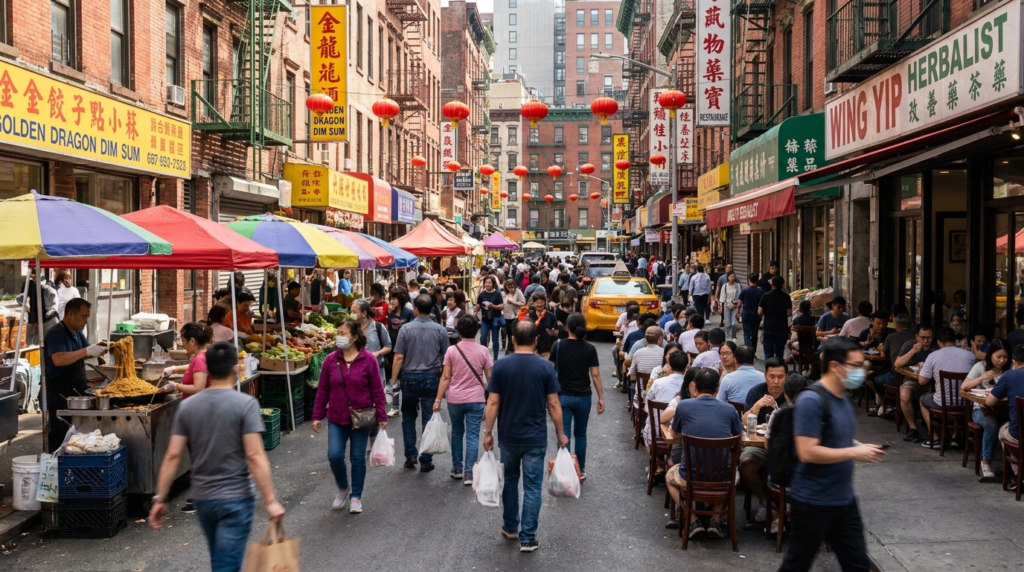
Busy Chinatown neighborhood with active community foot traffic

The Chinatown Playbook: Population 150,000+, Centuries of Tradition

Chinatown sprawls out in all directions from Dundas Street and Spadina Avenue, offering grocery stores that are bustling, busy and jam-packed with dried fish, ramen noodles, and exotic fruits—a true taste of all sides of China. This neighborhood isn’t one monolithic market—it’s evolved to include Korean, Japanese, Vietnamese, and Malaysian communities, each with distinct preferences.

Activations that work in Chinatown respect this complexity. Rather than generic “Asian market” messaging, successful campaigns translate materials into Mandarin, Cantonese, and Vietnamese. They partner with community organizations and local business leaders who understand neighborhood nuances. They time activations around cultural moments: Lunar New Year isn’t peripheral—it’s the calendar’s centerpiece.

Your activation footprint should include street-level presence (where foot traffic is highest), partnerships with existing restaurants and shops (for credibility), and multilingual collateral at minimum. Families shopping for groceries don’t stop to read English-only signage. Activate where they already are: markets, community centers, temples, established gathering points.

Budget consideration: Chinatown sponsorships and partnerships cost significantly less than downtown equivalents, yet reach more culturally aligned audiences. One vendor relationship on Spadina provides more activation value than one downtown event booth.

Little Italy: College Street's Evolving Cultural Hub

Little Italy, which many refer to as College Street West, is famous for its Italian atmosphere and is centred on College Street between Harbord Street to the North and Dundas Street to the south, also hosting a significant Portuguese-Canadian population. This neighborhood represents something important: cultural enclaves don’t stay static. They evolve.

Successful activations in Little Italy acknowledge both the Italian heritage that defines the street and the newer communities (Portuguese, Spanish, Filipino) establishing presence. You’re not activating for Italian-Canadians exclusively—you’re activating for a mixed-heritage neighborhood with intergenerational families and younger immigrant communities.

Brand partnerships with established restaurants and cafes work exceptionally well here. People are already in a leisure mindset. They linger. They engage. Experiential elements that draw people into the street (live cooking demonstrations, interactive music, art installation) create dwell time and natural social sharing.

Timing matters differently in Little Italy than downtown. Summer street festivals, weekend foot traffic, and community events are your natural windows. A pop-up that ignores the rhythm of neighborhood life won’t gain traction.

Little Jamaica: Reggae Lane and Caribana's Spiritual Home

Little Jamaica, located on Eglinton Avenue West, is a center of Jamaican and Caribbean culture in the GTA, with Reggae Lane becoming a symbol of Jamaica in Toronto and presenting a mural featuring Jamaican musicians from the neighbourhood. The neighborhood is more than a collection of restaurants and shops—it’s a cultural institution with its own visual language, musical identity, and community gathering traditions.

Activations in Little Jamaica succeed when they honor the neighborhood’s history as the spiritual home of Caribana before the festival relocated due to scale. Community leaders and cultural organizations have deep institutional knowledge about what resonates and what feels exploitative. Brands that partner authentically with these organizations gain credibility instantly.

Music, food, and visual art activate neighborhoods differently than product displays. Think live reggae and calypso performances, food sampling that showcases Caribbean culinary traditions, and visual installations that celebrate community heroes. Success metrics aren’t just attendance—they’re how the community talks about your brand afterward. Did it feel authentic and celebrate community identity? Did local business benefit?

The South Asian Corridor: Emerging Powerhouse Market

Toronto’s South Asian communities—both East Indian and other South Asian ethnicities—comprise 7.6% of the population, with concentrations building in neighborhoods across the GTA. This market is younger, digitally native, and actively seeking brands that acknowledge their identity. Unlike established enclaves like Chinatown or Little Italy, South Asian neighborhoods are still emerging, which means early positioning matters enormously.

Success in South Asian neighborhoods requires cultural fluency across different nationalities. “South Asian” isn’t monolithic—it’s Indian, Pakistani, Bangladeshi, Sri Lankan, and Nepali communities with different languages, cuisines, and traditions. Your activation should reflect this diversity. Language matters. Hindi, Punjabi, Gujarati, Urdu, Tamil, and Bengali are all significant. At minimum, reach one or two key languages.

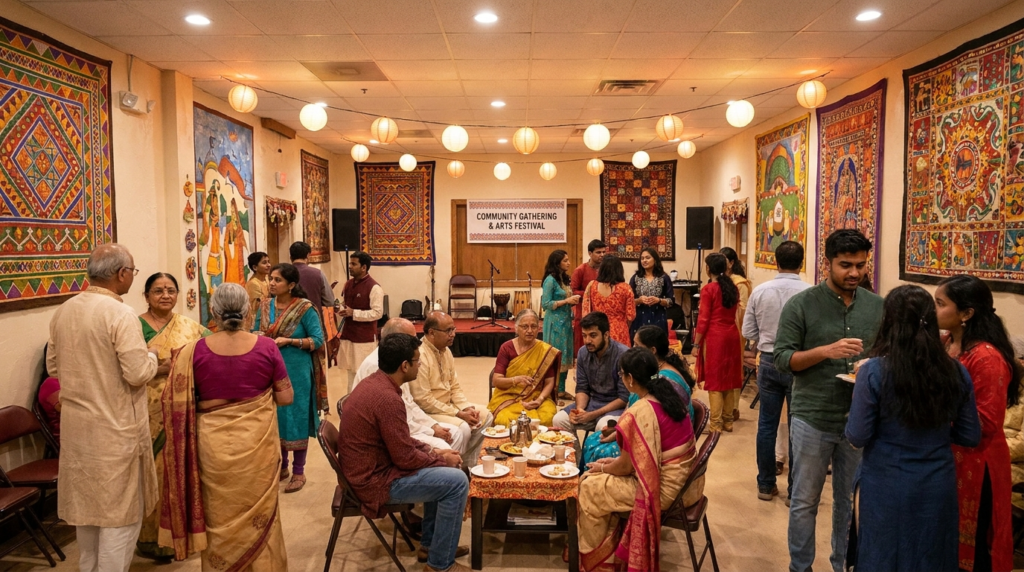
Partnerships with South Asian cultural centers, temples, and community organizations open doors mainstream activation models can’t access. These communities have strong institutional networks and skepticism toward brands that perform without understanding. Build relationships first. Activate second.

Community gathering at South Asian cultural center

The Neighborhood Activation Framework: Five Steps

Successful hyper-local activations follow a consistent process.

Step 1: Community Research & Relationship Building (Weeks 1-3)

Before designing your activation, understand the neighborhood’s history, demographic composition, and existing community organizations. Spend time there as a visitor. Where do people actually congregate? Which businesses have the strongest reputation? Which community leaders shape neighborhood sentiment? Schedule informational meetings with local BIAs, community centers, and cultural organizations.

Your goal isn’t to pitch immediately. Rather, listen. Understand neighborhood priorities, concerns, and what’s been tried before. Communities remember brands that show up expecting to extract value without contributing.

Step 2: Cultural Competency & Messaging (Weeks 3-6)

Develop activation messaging that reflects community identity, not stereotypes. Hire people from the community to review materials. Translate everything into relevant languages. Ensure visuals feature authentic community representation, not tokenization. If imagery doesn’t feel authentic to residents, it won’t work.

This step separates high-ROI activations from forgettable ones. A pizza brand activating in Little Italy sounds straightforward until you realize the neighborhood has world-class Italian restaurants and immigrant-owned businesses operating for decades. Your activation needs to honor that expertise, not condescend to it.

Step 3: Partnership Development (Weeks 6-8)

Connect with local businesses, cultural organizations, and community leaders who’ll amplify your activation. These partners provide credibility, foot traffic, and word-of-mouth promotion you can’t buy. A restaurant willing to host your pop-up represents endorsement from an established community touchstone.

Local partnerships also handle logistics that outsiders miss. Parking details, neighborhood rhythms, cultural sensitivities, permit processes—established community members navigate these immediately.

Step 4: Activation Design & Execution (Weeks 8-12)

Design your activation with neighborhood context as the primary variable. What works in Chinatown (multi-language, high foot traffic, family-focused) differs from Little Jamaica (music-forward, community gathering, cultural celebration). Your core brand message stays consistent. The delivery mechanism adapts to neighborhood identity.

Staffing matters tremendously. Hire brand ambassadors who speak the community’s languages or belong to the community itself. Customers immediately recognize whether someone genuinely represents their culture or just look the part.

Step 5: Measurement & Relationship Continuity (Ongoing)

Measure neighborhood activations through community eyes, not spreadsheets alone. Track attendance and engagement, yes. But also track community sentiment, local business feedback, and whether neighborhood leaders would invite you back. Long-term activation success depends on becoming a trusted community partner, not a one-hit brand.

Post-activation, stay connected. Maintain relationships with community organizations. Support neighborhood initiatives. This builds goodwill that compounds across multiple activations.

Neighborhood Activation Budget Reality

Here’s where Toronto neighborhood activations shine economically.

A single Chinatown partnership activation might cost $8,000-$15,000 including venue, staffing, and materials. You reach 500-800 qualified, culturally-engaged attendees. Cost per engaged attendee: $10-$30.

A downtown festival booth sponsorship costs $25,000-$50,000. You reach 5,000-10,000 people. But only 200-300 are genuinely qualified for your product, and engagement is shallow. Cost per engaged attendee: $80-$250.

The math favors neighborhood strategy. You’re spending less, reaching people with higher purchase intent, and building long-term community relationships that unlock future activation value.

Multiple neighborhood activations (Chinatown, Little Italy, Little Jamaica, South Asian corridor) across the same quarter might cost $50,000 total—the price of one major downtown sponsorship. Your reach multiplies and your brand becomes known across multiple communities. Your ROI becomes measurably superior.


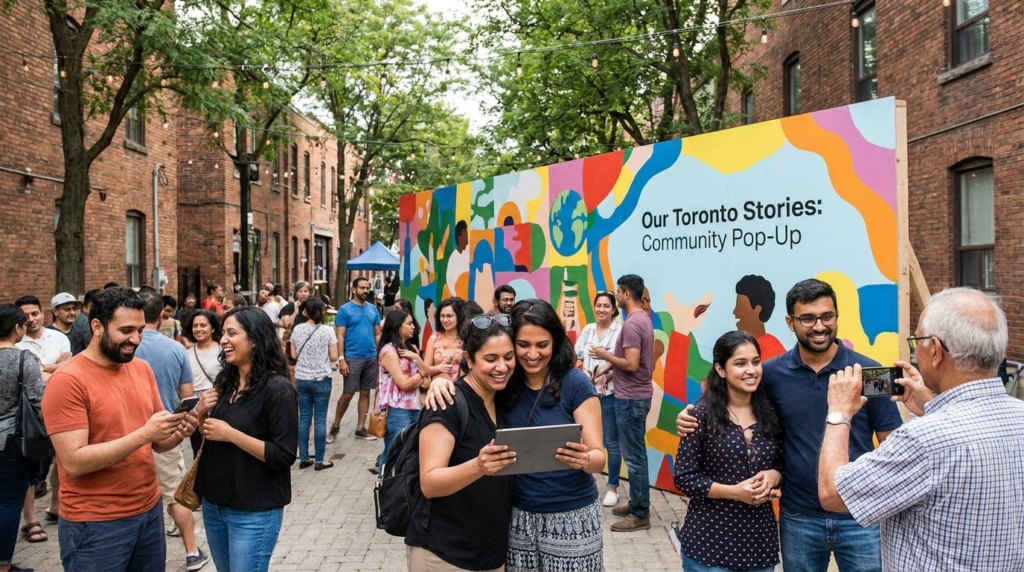
Authentic engagement moment at Toronto neighborhood brand activation

GTA Expansion: Beyond Toronto's Core

Toronto neighborhoods don’t exist in isolation. The GTA extends the network exponentially.

Scarborough, Markham, and Richmond Hill each host significant Chinese communities with their own distinct characteristics. Mississauga, Brampton, and Oakville have rapidly growing South Asian populations. Vaughan represents an increasingly diverse suburban hub. Each represents activation opportunity that mainstream GTA agencies overlook because they focus on Toronto proper.

Your neighborhood-first strategy scales across the GTA. The framework remains the same: research, relationship-building, cultural competency, partnership, measurement. The execution adapts to each community’s specific identity and economic power.

Your Neighborhood Activation Roadmap

Identify three to five neighborhoods where your target customer concentrates. Research their demographics, community organizations, and existing business landscape. Schedule conversations with community leaders—not as pitches, but as listening sessions.

Design neighborhood-first activations that honor community identity while advancing your brand message. Partner with established local organizations. Measure success through both metrics and community sentiment.

Execute with authenticity. Communities immediately recognize when brands are performing versus genuinely respecting their culture. The difference determines whether your activation becomes a one-time event or the foundation of long-term market presence.

Toronto’s neighborhoods aren’t secondary markets. They’re the future of how brands build sustainable presence in Canada’s most multicultural city.

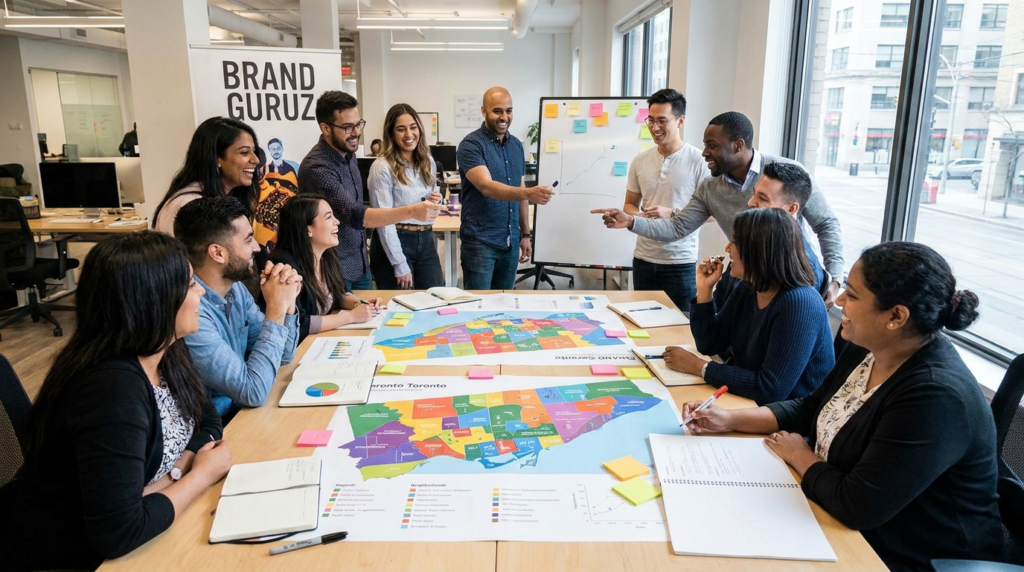
Brand Guruz team planning multicultural neighborhood activation strategy

Ready to dominate Toronto’s neighborhoods instead of fighting for downtown attention? Contact Brand Guruz to design hyper-local, culturally authentic activations that build lasting community relationships.

Author