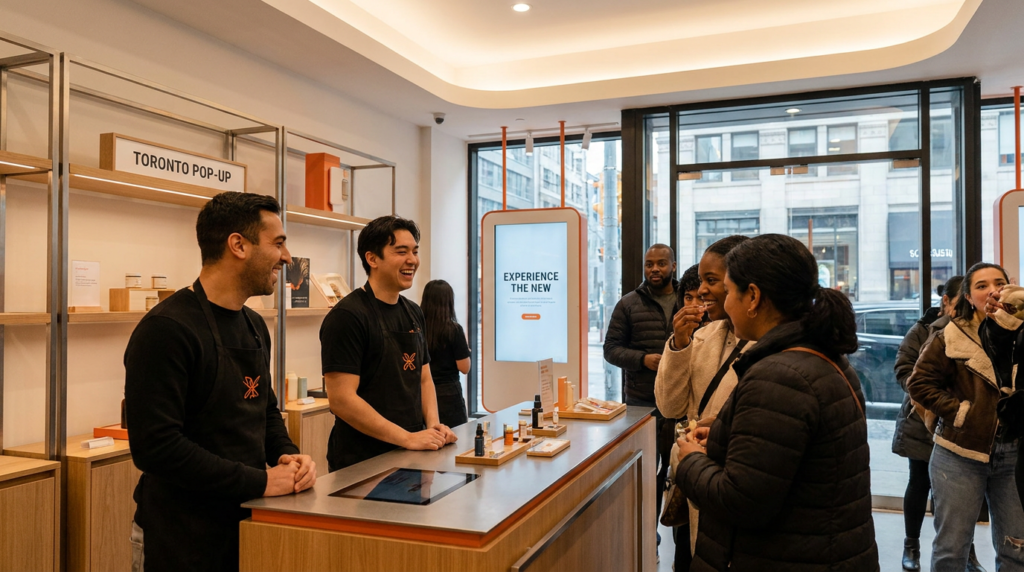
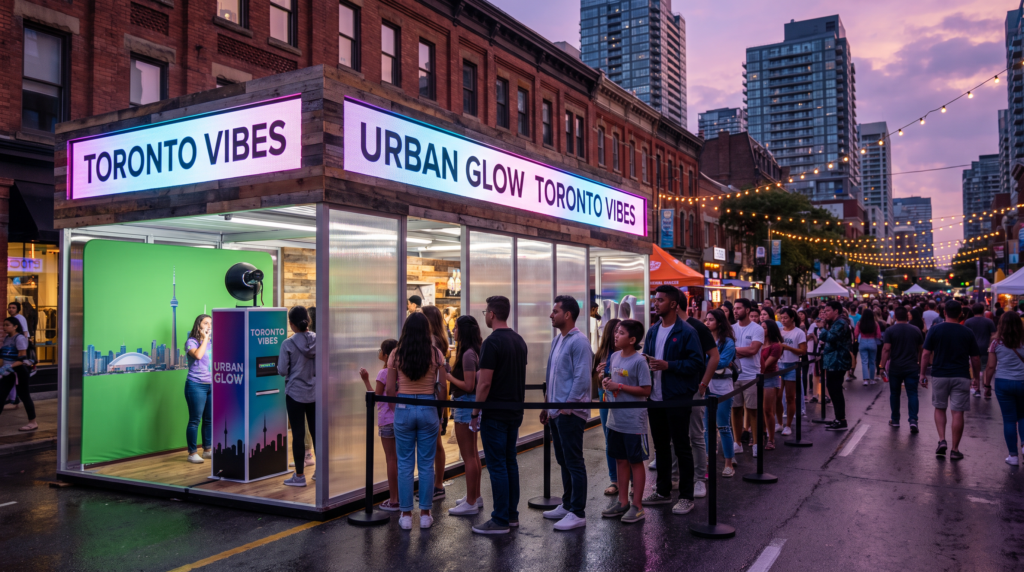
Running a pop-up shop in Toronto is one of the fastest ways to turn attention into real sales, and demand keeps climbing. At Brand Guruz, we design, build, and staff pop-up shops that pull crowds and capture leads across the GTA.
Interest is high and seasonal. Torontonians search for a pop-up shop roughly 480 times a month, and that number peaks through the summer and holiday windows. Consequently, the brands that plan early win the best locations and dates.
This guide breaks down what a pop-up shop is, why the format works so well in Toronto, and where to launch across the GTA. Moreover, it covers how to plan one step by step, what it costs, and the exact checklist to follow.
First, a quick promise: everything here is practical. By the end, you will know how to scope, book, build, and measure a pop-up shop in Toronto with confidence.
480 — monthly Toronto searches for "pop up shop", a high-intent, transactional retail term · 88% — consumers who trust a personal recommendation over any ad (Nielsen) · 6.4M+ — people in the Greater Toronto Area, Canada's largest and most diverse retail market (Statistics Canada)
A pop-up shop is a temporary, physical retail space a brand opens for days or weeks rather than years. Typically, it is used to launch a product, test a market, or create a live brand moment. In short, it delivers the impact of a store without the cost of a lease.
The best pop-up shops do more than sell. Instead, they turn a street corner into a branded experience that people photograph, share, and remember. That is exactly what separates true experiential marketing from a plain retail booth.
A pop-up shop is fast, flexible, and low-risk. Because you commit for weeks rather than years, you can test a neighbourhood, a product, or a price point cheaply. As a result, brands learn what works before they invest in anything permanent.
That flexibility is a quiet superpower, too. In effect, a pop-up lets you show up exactly where your audience already gathers, then move on when the moment passes.
People trust people far more than they trust logos. In fact, Nielsen reports that 88% of consumers trust a personal recommendation above every other channel. Therefore a well-run pop-up shop earns attention and trust that online ads simply cannot buy.
Toronto is one of the most multicultural cities on earth, and its neighbourhoods are packed with walkable retail. Consequently, a pop-up shop placed on the right block reaches thousands of high-intent shoppers a day. The trick is matching the location to the audience you want.
The city runs on festivals, launches, and seasonal shopping peaks. As a result, there is almost always a moment worth activating against. A pop-up shop lets your brand ride that energy instead of competing with it.
That trust also travels. When shoppers enjoy a great pop-up, they tell friends and post about it, so the reach keeps growing after the doors close.
The Greater Toronto Area is a huge, concentrated retail market. Notably, Statistics Canada counts more than 6.4 million people in the region, which makes it the richest ground for a pop-up shop in the country.
Queen West, Yorkville, the Distillery District, and Toronto’s malls draw dense, brand-curious crowds. Meanwhile, Scarborough and North York offer high-traffic community hubs. Together, they give a pop-up shop a full menu of high-intent locations.
Demand does not stop at the city limits. In addition, Mississauga, Brampton, Markham, and Vaughan offer dense suburban audiences, while Ottawa, Hamilton, and London reward brands that show up locally. A strong partner can produce a pop-up shop in all of them from one plan.
Timing is everything here. Summer street festivals, back-to-school, and the December rush each open a different window worth booking early.
A great pop-up shop is planned on purpose, not thrown together. Accordingly, we run every launch through six clear steps.
Decide what success looks like, whether that is sales, sign-ups, or sheer brand awareness. Because the goal shapes every other choice, it always comes first.
Match the neighbourhood to your audience, then secure the space early. In this city, prime blocks and dates sell out fast, so speed is a genuine advantage.
Turn the empty unit into a branded experience with fixtures, signage, and an interactive moment. For live-event build benchmarks, follow Event Marketer.
People make or break a pop-up shop. Therefore you want friendly, on-brand staff who can demo, answer questions, and capture leads on the spot.
Build buzz with local social, email, and partners before opening day. Then, keep the momentum going with content captured live at the shop.
Finally, track footfall, leads, sales, and content reach. Because numbers prove value, they turn a fun week into a repeatable playbook.
Most brands weigh the same choice first. Should you build the pop-up shop in-house, or hire a full-service pop-up shop company?
A DIY pop-up looks cheaper on paper. In reality, though, one small team juggles permits, build, staffing, and the day-to-day chaos alone. That model can work for a tiny activation, but it strains under pressure.
A full-service agency absorbs all of it. Better still, a good agency brings design, fabrication, trained staff, and vendor networks, so nothing stalls. To compare providers, read our guide to the top experiential marketing agencies in Canada.
Ask any partner two questions before you sign. First, who staffs the shop day to day? Second, what happens if a permit or vendor falls through? The answers reveal who can actually deliver at scale.
Use this checklist to keep every pop-up shop on track. Because the details compound, missing one can cost you an opening day.
Confirm municipal permits, landlord approvals, and any signage rules early. In Toronto, paperwork can take longer than the build, so start it first.
Secure liability insurance and a safe, accessible layout. As a result, you protect both your guests and your brand.
Set up a reliable POS, stock, and a simple way to capture leads. That way, every visitor can buy or opt in without friction.
Book enough trained ambassadors and brief them thoroughly. Because they are the face of the brand, their prep decides the guest experience.
Plan the photos, video, and post-event emails before you open. Consequently, the pop-up keeps working long after the last day.
Cost is usually the first practical question. Fortunately, a pop-up shop in Toronto scales to almost any budget and goal.
Small, self-run pop-ups can start in the low four figures for a short weekend. Meanwhile, a fully produced, multi-week branded pop-up shop with build, staff, and content runs higher but removes the workload. For a fuller picture, see our brand activation cost in Ontario guide.
Price alone is the wrong lens. Instead, look at the return the pop-up drives, since one great activation can out-perform three cheap ones. For proof, see our CIBC case study.
Value also compounds beyond a single week. Because every pop-up builds relationships and data, your next campaign starts ahead of the last.
Brand Guruz is a Canadian experiential marketing agency built for live, multicultural audiences. Specifically, we design, build, staff, and manage pop-up shops that reflect the communities you want to reach across the GTA and Ontario.
That focus matters. Because we handle the pop-up shop and the digital follow-up together, every visitor can become a tracked lead. In practice, that turns a great week into measurable revenue.
We also produce at scale, with a full team and backup support for every activation. To see the work, browse our case studies, then talk to Brand Guruz.
Few agencies close that loop. Since we own both the pop-up and the follow-up, nothing valuable slips through the cracks afterward.
It is a temporary, physical retail space a brand opens for days or weeks to launch a product, test a market, or create a live brand moment. In short, it delivers store-level impact without a long lease.
It varies by scope. A small self-run weekend pop-up can start in the low four figures, while a fully produced, multi-week branded pop-up shop with build, staff, and content costs more but removes the workload.
High-traffic spots like Queen West, Yorkville, the Distillery District, and major malls work well, along with community hubs in Scarborough, North York, Mississauga, Brampton, Markham, and Vaughan.
Usually, yes. Depending on the location and format, you may need municipal permits, landlord approval, insurance, and signage sign-off. Start the paperwork early, since it can take longer than the build.
Plan four to twelve weeks ahead for most pop-ups. For peak windows like summer festivals and December, reach out earlier, since the best locations and dates get claimed fast.
An agency is usually better for anything beyond a tiny activation. It brings design, fabrication, trained staff, and vendor networks, so a pop-up shop never stalls when something goes wrong.

Ready to open a pop-up shop that people remember? Then let us build the activation that fits your goal and your brand.
Brand Guruz designs, builds, staffs, and manages pop-up shops across Toronto, the GTA, and all of Ontario. Tell us your objective, and we will design the experience to hit it. To start, book a quick call through our contact page, or explore proven results in our case studies.