2026 Trends: AI + Cultural Insights for Hyper-Targeted Multicultural Activations

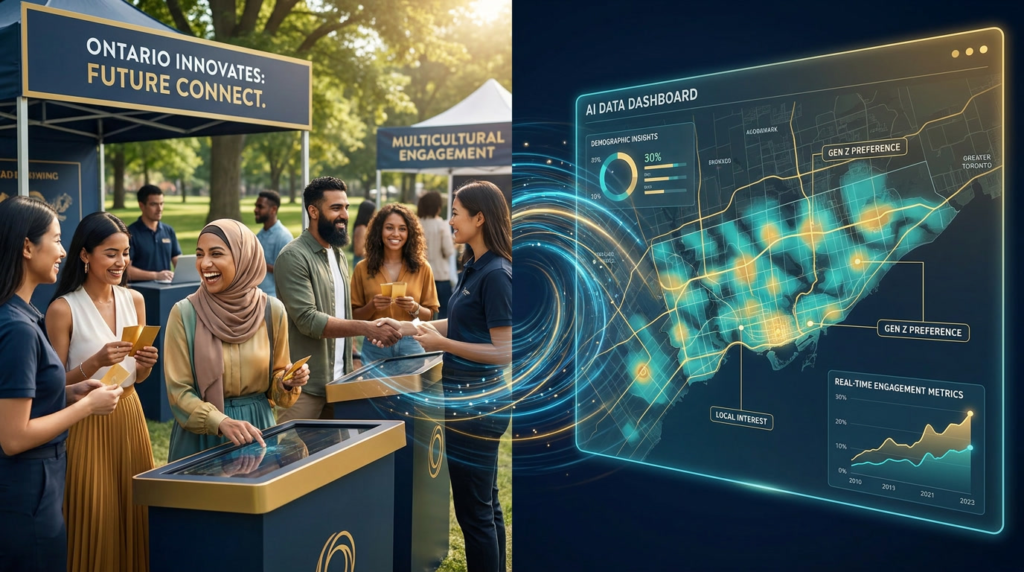
Split image showing multicultural brand activation event in a park with people engaging at kiosks on the left, and a digital AI data dashboard with Ontario heatmap and engagement metrics on the right.

Generic activations are losing ground fast. In 2026, CPG brands that show up at multicultural events with a one-size-fits-all approach are leaving significant revenue on the table. The brands winning right now are combining AI cultural insights with multicultural activations — using data to understand communities deeply before setting up a single booth. At Brand Guruz, we have spent years refining this approach across Ontario’s most diverse markets. This post breaks down exactly how the combination of AI and cultural intelligence is transforming multicultural activations — and what your brand needs to do about it.

Why Generic Activations No Longer Convert

Ontario’s multicultural consumer base is not a monolith. Each community has its own values, purchasing triggers, and cultural calendar. Consequently, a campaign that resonates in one neighbourhood may fall completely flat in another — even within the same city.

Until recently, brands lacked the tools to act on this reality at scale. Cultural research was slow and expensive. Consumer preference data was broad and imprecise. As a result, most brands defaulted to generalized campaigns and accepted lower conversion rates as the cost of doing business.

That reality has changed. AI now makes hyper-targeted cultural intelligence accessible, affordable, and actionable — even for challenger CPG brands with lean marketing budgets.

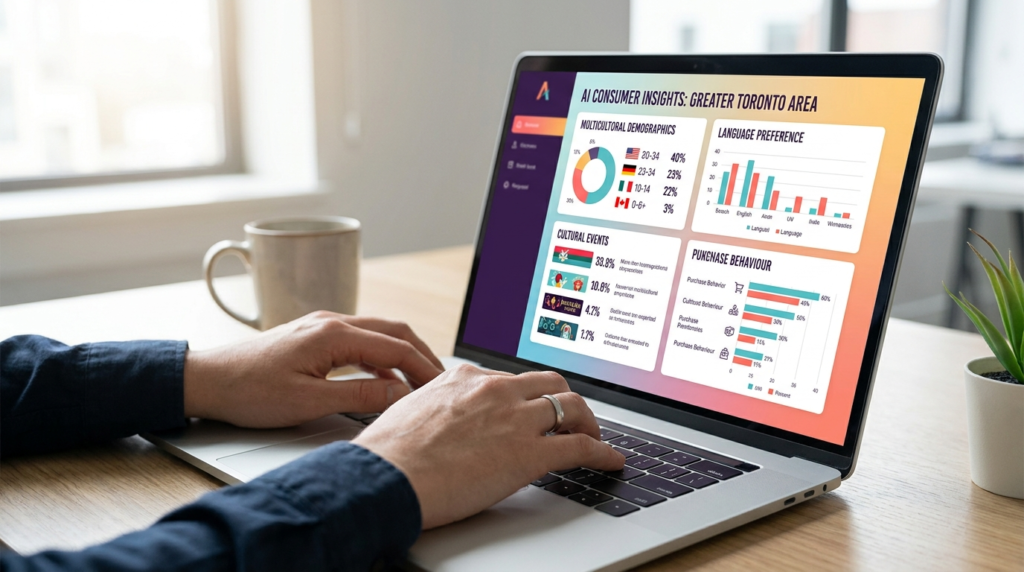
Person using a laptop displaying AI consumer insights dashboard for the Greater Toronto Area, with charts on demographics, language preferences, cultural events, and purchase behavior.

How AI Is Powering Cultural Insights for Multicultural Activations

AI cultural insights for multicultural activations work across three distinct stages: before, during, and after the event. Each stage unlocks a different layer of competitive advantage.

Before the Activation: Smarter Community Intelligence

Traditionally, brands relied on census data and industry reports to understand multicultural markets. Those sources are valuable. However, they are also static, broad, and often months out of date by the time a brand acts on them.

AI changes this completely. Today, brands can access tools that analyse real-time social listening data, purchase behaviour patterns, and community engagement signals across specific Ontario postal codes. Moreover, these tools identify which cultural events are generating the most organic buzz within a target community weeks before they happen.

This means a CPG brand can now answer questions like:

Which South Asian food festivals in Brampton are generating the highest pre-event social engagement this season?

What language is a specific Scarborough community most actively using online right now?

Which product attributes — price, ingredient sourcing, or packaging format — matter most to a specific demographic in Mississauga?

According to McKinsey’s 2025 Consumer Insights Report, brands that use AI-driven consumer segmentation achieve 20 to 30 percent higher marketing ROI than those relying on traditional research methods. For multicultural activations specifically, that gap is even wider.

During the Activation: Real-Time Personalisation

AI does not stop working when the event starts. In fact, some of its most powerful applications happen on the ground. Smart kiosks now use preference data collected during sign-up flows to recommend specific product variants to individual consumers. Bilingual chatbots engage festival attendees before they even reach the sampling booth.

Furthermore, real-time sentiment analysis tools track crowd engagement levels throughout the day. If a particular messaging approach is generating strong responses in one area of an event, brand ambassadors receive an immediate alert to replicate it across other zones. This kind of in-event optimisation was simply not possible three years ago.

After the Activation: Smarter Retargeting

Post-event retargeting is where AI turns a single activation into a sustained revenue stream. Consumer data collected during the event feeds directly into segmented digital campaigns. Each segment receives messaging tailored to its specific language preference, cultural reference points, and demonstrated product interest.

As a result, post-event email and social campaigns from AI-powered activations consistently outperform standard retargeting benchmarks. The consumer already knows the brand. The AI ensures the follow-up feels personal rather than generic.

The Cultural Intelligence Layer AI Cannot Replace

Here is an important nuance. AI is a powerful analytical tool. However, it does not replace genuine cultural expertise — it amplifies it.

The rule at Brand Guruz: AI tells you where and when to show up. Cultural intelligence tells you how.

Raw data cannot tell a brand that a specific South Asian community in Vaughan places extraordinary value on family health narratives. It cannot explain why a particular Caribbean community in Scarborough responds more strongly to bold, celebratory brand energy than to understated premium positioning. Those insights come from lived cultural experience — from bilingual ambassadors, community relationships, and years of on-the-ground activation work.

This is precisely why our bilingual brand ambassador model sits at the centre of everything we do. AI identifies the opportunity. Our people convert it. Together, the combination produces results that neither could deliver alone.

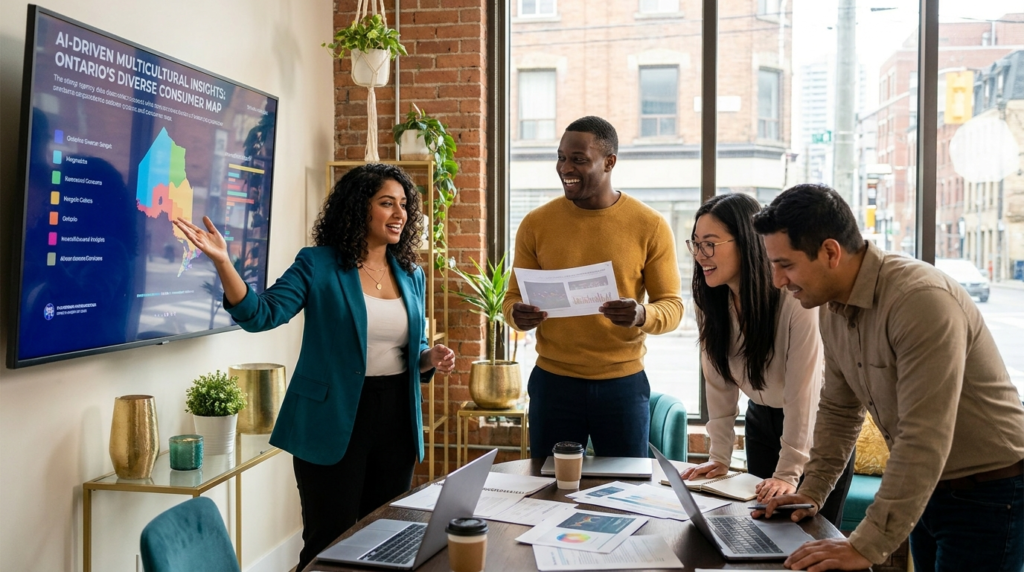
Team reviewing AI-driven multicultural consumer insights on a screen, with a presenter explaining Ontario demographic data while colleagues collaborate around a table with laptops and reports.

What This Means for Your 2026 Activation Strategy

The brands gaining ground in 2026 are not simply using more technology. Instead, they are using technology to be more human — more relevant, more timely, and more culturally specific in every consumer interaction.

For CPG brands planning multicultural activations in Ontario, this means three things practically.

First, invest in pre-activation AI research. Use social listening and behavioural data tools to identify which communities, events, and cultural moments represent your highest-conversion opportunities before committing budget.

Second, build cultural expertise into your team. AI cannot attend a community event, read the room, and adapt in real time. Therefore, pair your data tools with bilingual ambassadors and cultural consultants who can. Our post on the future of on-ground marketing in Ontario explores this in more depth.

Third, close the loop with data-driven follow-up. Every consumer interaction at a live activation is a data point. Collect it, segment it, and use it to power retargeting campaigns that feel like a continuation of the conversation — not a cold digital ad.

According to Deloitte’s 2025 Marketing Technology Report, brands that integrate AI tools with human cultural expertise see activation conversion rates up to 40 percent higher than those using either approach alone. That gap will only widen in 2026.


Start Activating Smarter

AI cultural insights and multicultural activations are no longer separate disciplines. In 2026, the most effective campaigns treat them as a single, integrated strategy. The data finds the opportunity. The cultural intelligence converts it. And the results compound with every activation you run.

Brand Guruz builds this integrated approach into every campaign we deliver across Ontario. If your brand is ready to activate smarter, contact our team today and let us show you what AI-powered cultural intelligence looks like in practice.

Author