Food and beverage experiential marketing is the highest-converting channel Canadian F&B brands have in 2026. To be specific, 73% of consumers are more likely to purchase a food product after trying it in person. Furthermore, the multicultural Canadian market gives F&B brands a sampling and sell-through opportunity no other G7 market offers. Consequently, brands that build serious food experiential programs in 2026 will outrun the ones that lean on digital ads.
At Brand Guruz, we design food and beverage experiential programs for CPG brands, restaurants, and beverage startups across Canada. In our experience, the best F&B activations blend three things — hands-on sampling, cultural fluency, and clear sell-through measurement. Specifically, the brands that integrate all three see in-market velocity jump within weeks of activation.
Below, you will find the four food and beverage experiential tactics that consistently convert. You will also find the multicultural sell-through framework, the measurement model, and the common mistakes brands repeat most often.
Fast Facts:
Food and beverage experiential marketing wins in 2026 because food itself is the most sensory consumer category. Specifically, taste, smell, and texture cannot be conveyed through a digital ad. Furthermore, the path from awareness to purchase for F&B products is shorter than almost any other category. Consequently, every in-person sample creates an immediate buying moment in a way digital cannot replicate.
Sampling is still the single highest-converting tactic in food and beverage experiential marketing. To be specific, 73% of consumers are more likely to purchase a food product after trying it in person. Furthermore, Restaurants Canada research consistently shows that in-person product trial drives stronger purchase intent than any paid media channel.
In our experience, the cost per converted customer through sampling lands well below paid digital CAC. As a result, even a modest sampling program produces measurable in-market lift within weeks.
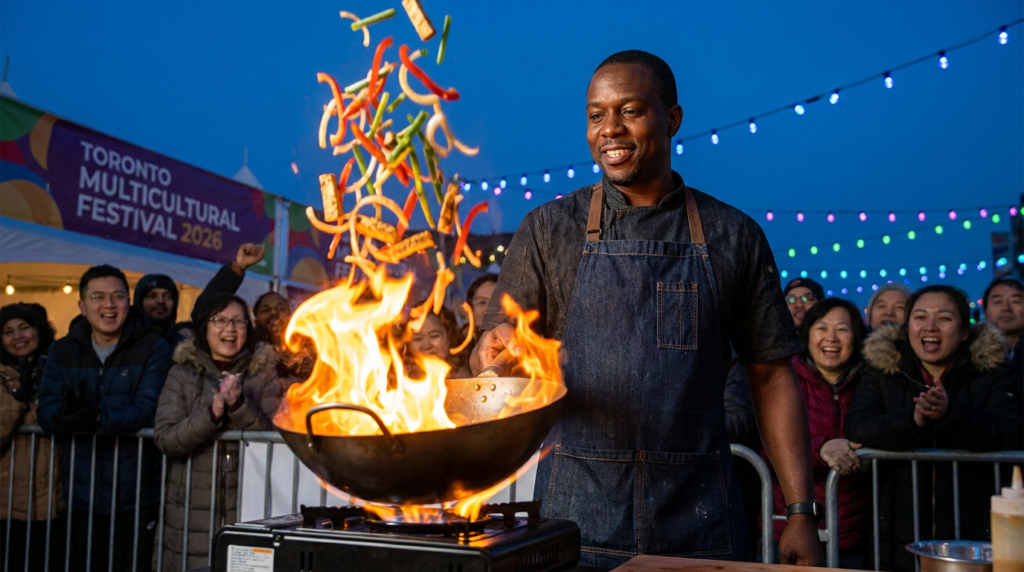
Canada offers food and beverage brands a multicultural sampling opportunity no other G7 market can match. To illustrate, GTA grocery aisles already stock products from over 40 cuisines. Furthermore, multicultural festivals put food brands in front of cross-cultural audiences every weekend from May to October. Examples include Carassauga, Caribana, Taste of India, and Lunar New Year programming.
As Kantar multicultural research consistently shows, Canadian multicultural households drive disproportionate growth in food categories like sauces, snacks, beverages, and prepared meals. Consequently, F&B experiential in Canada has structural tailwind no other market offers.
Not every food and beverage experiential tactic converts equally. To be specific, the four tactics below consistently produce measurable in-market sell-through for Canadian brands.
Hands-on sampling is the workhorse tactic of F&B experiential. Specifically, give attendees a real bite or sip, not a teaser. Furthermore, pair the sample with a quick story about origin, flavour, or cultural context.
In practice, the brands that win sampling do three things. First, they sample generously — full-sized portions, not microscopic cups. Second, they brief staff to ask one specific feedback question. Finally, they offer an immediate purchase pathway — a QR code, a coupon, or an on-site shelf.
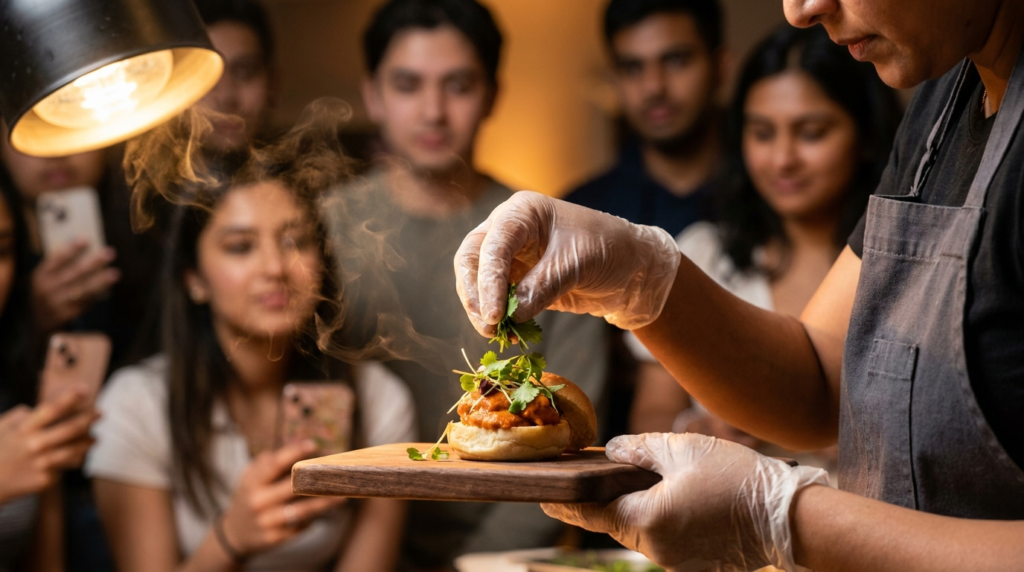
Live cooking demos turn a product into an experience. To illustrate, a sauce brand demoing a 90-second recipe with a chef produces 10x the engagement of a static booth. Furthermore, chef collaborations carry borrowed trust that a brand alone cannot generate.
For example, partnering with a community-known Punjabi or Caribbean chef earns credibility no logo placement can buy. As a result, the demo audience becomes evangelists, not just attendees.
Multicultural festivals are the highest-density F&B sampling channel in Canada. Specifically, festivals like Carassauga, Caribana, and Taste of India concentrate target audiences who arrive ready to taste. Furthermore, the cost per engaged sample lands well below downtown Toronto or Vancouver activations.
For more on the festival activation calendar, see our festival brand activation guide for Canada 2026. Consequently, F&B brands that miss the festival circuit miss the highest-converting sampling moments of the year.
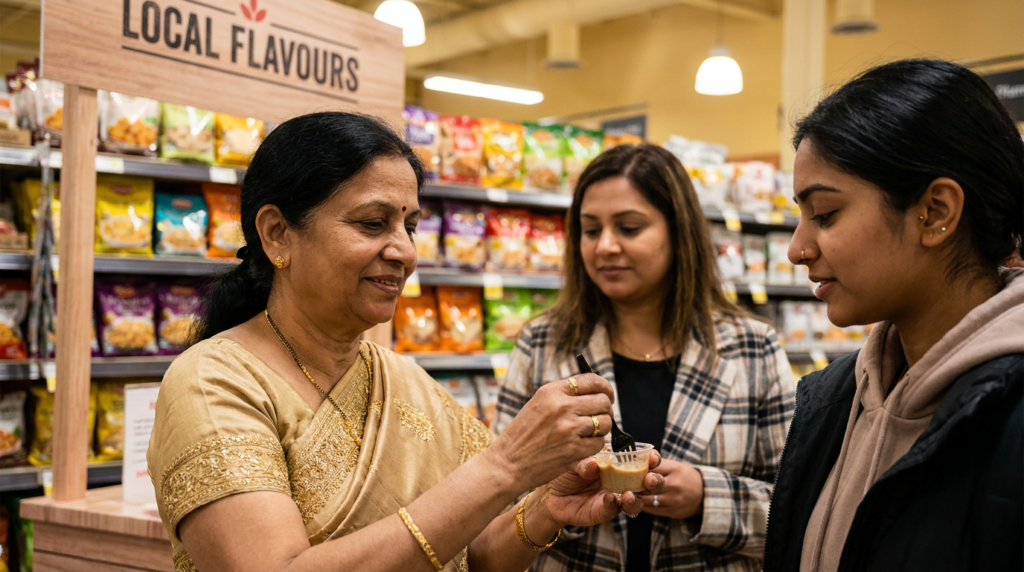
In-store F&B experiential happens at the exact moment of purchase decision. To be specific, grocery sampling, demo islands, and food court activations capture consumers with the cart already in hand. Furthermore, in-store activations integrate naturally with retailer co-op marketing budgets.
In our experience, the sell-through ratio for in-store sampling is the highest of any F&B experiential tactic. As Mintel food research consistently shows, in-store sampling produces sales lifts of 200% to 2000% depending on category and execution.
Multicultural sell-through is where most Canadian F&B brands leave money on the table. To be specific, multicultural communities buy differently, browse differently, and respond to different flavour cues. Furthermore, generic activation templates underperform across every community segment.
Cultural flavour profiling is the starting point of multicultural F&B sell-through. Specifically, identify the flavour profiles, ingredients, and preparation styles that resonate with each priority community. Furthermore, work with community advisors to validate the profile before launching the activation.
Canadian multicultural households index differently across flavour dimensions. As Vividata multicultural consumer research confirms, South Asian, Chinese, Filipino, Black, and Latin households each prefer different spice and sweetness profiles. Consequently, a single flavour profile cannot serve all communities.
Community partnerships unlock the trust that translates samples into purchases. To illustrate, a Caribbean food brand partnering with a Toronto roti shop gains credibility months of paid advertising cannot produce. Furthermore, community partners often bring their own audience to the activation.
In our experience, the brands that build community partnerships into the activation see purchase intent lift double or triple. As a result, the partnership investment pays back through both sampling and downstream sell-through.
Language and packaging are the often-missed details in multicultural F&B sell-through. Specifically, bilingual signage at the activation, community-language ingredient cards, and culturally familiar packaging design all reinforce credibility. Furthermore, simple translation is not enough — packaging needs cultural review.
For example, a beverage brand using English-only nutrition copy at a Mandarin-speaking community event misses a significant audience slice. Consequently, the activation produces samples but not sales.
Food and beverage experiential ROI is unusually measurable when designed correctly. To be specific, F&B activations produce immediate sampling-to-purchase data, in-market sell-through, and clear community engagement signals.
The metrics that matter most:
As Circana retail measurement research consistently shows, F&B activations produce trackable sales lift in stores within 30 days of execution. For more on broader experiential ROI methodology, see our experiential marketing ROI framework guide.
Most food and beverage experiential programs underperform for the same handful of reasons. To be specific, here are the four mistakes Canadian F&B brands repeat most often.
Brand Guruz is the experiential agency Canadian F&B brands hire when sampling, sell-through, and multicultural credibility all matter. To begin with, our team has executed food sampling, cooking demos, and festival F&B activations across Canada’s multicultural circuit. Furthermore, our community partner network spans chefs, restaurants, and cultural food vendors across the GTA, Vancouver, and Calgary.
Equally important, we measure F&B activation outcomes the way procurement and category managers want to see them. Specifically, sample-to-purchase ratios, in-market velocity lift, and community sentiment across all relevant languages. As a result, brands walk out of the activation with proof, not promises.
If you are planning food and beverage experiential marketing in Canada for 2026, scope it now. Talk to Brand Guruz and we will map sampling tactics, community partners, and measurement against your category. For more on our category approach, see our experiential marketing overview. Or browse case studies to see how F&B activation lands in real campaigns.
What is food and beverage experiential marketing? Food and beverage experiential marketing creates live brand experiences that let consumers taste, smell, and learn in person. Specifically, it includes sampling activations, live cooking demos, in-store experiences, and multicultural festival sponsorships. As a result, brands convert awareness into purchase intent faster than any other channel.
How effective is food sampling for F&B brands? Food sampling is the highest-converting awareness tactic in the F&B category. Specifically, 73% of consumers are more likely to purchase a product after trying it in person. Furthermore, in-store sampling commonly produces sales lifts of 200% to 2000% depending on category.
How much does food and beverage experiential marketing cost in Canada? Entry-tier F&B sampling activations start around $20,000 to $50,000. Mid-tier programs combining festivals, demos, and in-store run $50,000 to $150,000. Premium multi-festival national F&B campaigns begin at $150,000 and scale up.
Which Canadian festivals are best for food and beverage activation? Carassauga, Caribana, Taste of India, Taste of the Danforth, and Vancouver Cherry Blossom Festival all deliver strong F&B sampling reach. Importantly, the right festival depends on the brand’s target community and category.
How do F&B brands measure experiential ROI? F&B brands measure experiential ROI through four metrics. First, sample-to-purchase ratio. Second, in-market velocity lift in nearby stores. Third, community sentiment across English and community languages. Finally, repeat sampling rate. Furthermore, retail measurement partners often track lift for 30 to 90 days post-activation.

The most lucrative festival and in-store windows close fast in Q1. Talk to Brand Guruz about your 2026 F&B activation calendar. Or browse our case studies to see how the playbook lands.