Retail Activations in Canada: How to Win the In-Store Moment in 2026

Retail activations in Canada are the most underused marketing channel in 2026. To be clear, the moment of decision still happens at the shelf, the storefront, and the pop-up. It does not happen in a feed. Furthermore, Canadian shoppers are more brand-curious in-store than at any point since 2019. Consequently, the brands that build serious retail activation programs in 2026 will capture market share digital-only competitors cannot reach.

At Brand Guruz, we have designed retail activations for CPG, beauty, fashion, and lifestyle brands across Canada. In our experience, the most effective retail activations blend three elements. They are strategic location selection, multicultural design fluency, and in-store sell-through measurement. Specifically, the brands that integrate all three see in-market velocity jump within the first 30 days of launch.

Below, you will find the five retail activation tactics every Canadian brand should test in 2026. You will also find the multicultural design framework, the budget ranges, and the measurement model. All three tie retail activation to real ROI.

Fast Facts:

  • 76% — Purchase decisions made in-store at the shelf
  • 5x — Purchase intent lift from interactive retail activations vs static signage
  • 30 days — Average post-activation sales lift window in supporting stores

Why retail activations are the highest-leverage move for 2026

Retail activations are the highest-leverage move for 2026 because the path from awareness to purchase has compressed. To be specific, shoppers research online but decide at the shelf. Furthermore, Canadian retail foot traffic has stabilized at strong post-pandemic levels. Consequently, the in-store moment now carries more decision weight than at any point in recent memory.

The in-store moment drives most retail activation outcomes

The in-store moment shapes the majority of purchase decisions across most consumer categories. To be specific, 76% of buying decisions are made at the shelf according to Path to Purchase Institute research. Furthermore, this share rises above 85% in categories like CPG, beauty, and snacks.

In our experience, brands that activate at the shelf consistently capture share from digital-only competitors. As a result, retail activation is no longer optional for any brand chasing in-market velocity.

Why omnichannel brands need retail activations now

Omnichannel brands need retail activations now because digital-only acquisition costs have climbed past sustainable levels. Specifically, paid social CAC in Canada has roughly doubled since 2022. Furthermore, retail foot traffic offers a lower-cost path to conversion when designed correctly.

As Deloitte Canadian retail outlook research consistently shows, omnichannel shoppers spend more per transaction than digital-only ones. Consequently, retail activations multiply the value of digital marketing investment rather than competing with it.

Five retail activation tactics every Canadian brand should test in 2026

Not every retail activation tactic converts equally. To be specific, the five tactics below consistently produce measurable sell-through in Canadian retail in 2026.

Pop-up retail experiences in high-traffic Canadian cities

Pop-up retail experiences are the highest-impact retail activation tactic in 2026. Specifically, pop-ups create urgency, generate UGC, and let brands test new markets without long-term lease commitments. Furthermore, pop-ups in Queen West, Robson Street, and Mile End consistently outperform static retail in engagement and earned media.

In our experience, a well-designed pop-up generates 2-4 weeks of regional media coverage at a fraction of paid equivalent. As a result, the activation pays back through both direct sales and brand lift.

Shop-in-shop integrations with major retailers

Shop-in-shop integrations embed a branded experience inside an established retailer. To illustrate, a beauty brand operating a dedicated counter inside Hudson’s Bay or Shoppers Drug Mart captures qualified shopper traffic. Furthermore, shop-in-shops typically come with retailer co-op marketing dollars.

For example, a CPG brand securing a shop-in-shop at Loblaws or Sobeys gains immediate placement, signage, and demo permissions. Consequently, the shop-in-shop accelerates retail distribution while building brand experience.

In-aisle and end-cap retail activations

In-aisle and end-cap activations turn standard shelf placement into experience. Specifically, end-cap displays, interactive touchscreens, and aisle takeovers capture shoppers at the moment of category decision. Furthermore, retailers typically reward strong in-aisle execution with extended placement periods.

As Retail Council of Canada data consistently shows, well-designed end-caps produce 3-10x the sales velocity of standard shelf placement. As a result, in-aisle activation is one of the highest-ROI retail moves available.

Demo islands and live sampling in retail

Demo islands inside grocery and big-box retailers are the most direct path from sampling to sale. To be specific, live demos let shoppers taste, try, or test products with the cart already in hand. Furthermore, the conversion ratio at retail demo islands is typically the highest of any sampling tactic.

For more on F&B sampling specifically, see our food and beverage experiential marketing guide for Canada 2026. Consequently, demo islands belong in every CPG, beauty, and beverage brand’s retail mix.

Window and storefront retail activations

Window and storefront activations turn the sidewalk into media. Specifically, sculptural window installations, projection mapping, and interactive storefronts stop foot traffic and generate phone photos. Furthermore, the cost per impression of a well-designed window beats most outdoor media.

In our experience, a striking window installation produces UGC for weeks. As a result, the window itself becomes a media asset, not just a display.

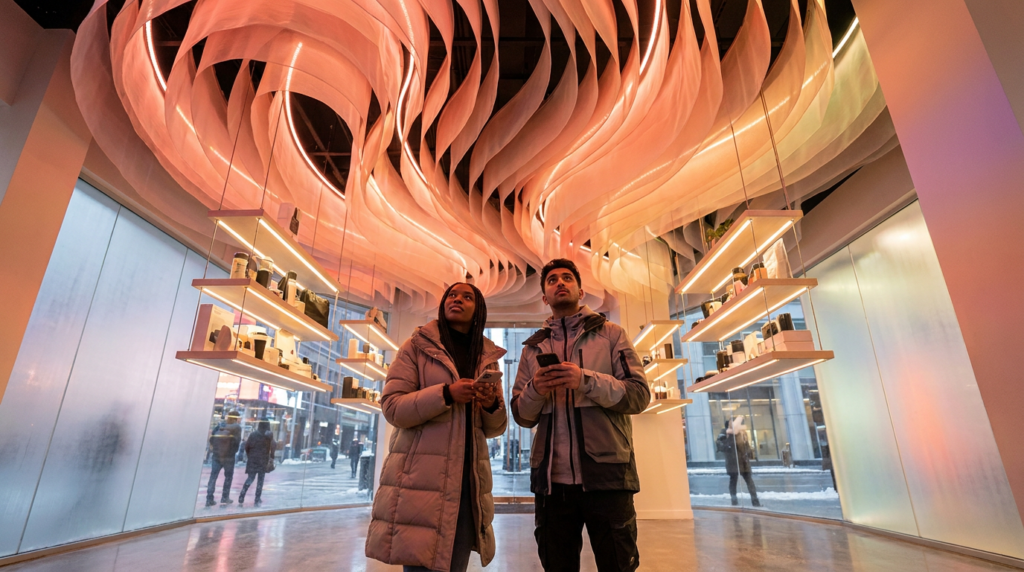
Multicultural Gen Z shoppers examining a sculptural pop-up retail brand activation interior in downtown Toronto, Canada in 2026.
A well-designed pop-up generates two to four weeks of regional media coverage.

How to design retail activations for the multicultural Canadian shopper

Multicultural design is where most Canadian retail activations underperform. To be specific, Canadian shoppers come from over 250 ethnic origins and shop differently by community. Furthermore, generic retail activations treat all shoppers as one segment. Consequently, the activation captures attention without converting purchase.

Match the retail activation to the neighbourhood

Retail activation neighbourhood selection drives outcomes more than booth design. Specifically, an activation in Brampton needs different signage, language, and product mix than the same activation in Yorkville. Furthermore, community demographics, retail context, and shopper behaviour shift dramatically across GTA neighbourhoods.

For instance, a South Asian beauty brand will outperform in Brampton or Scarborough. By comparison, a luxury fashion brand belongs in Yorkville or Yorkdale. As a result, neighbourhood matching is the single highest-leverage design decision.

Multilingual signage and packaging in retail activations

Multilingual signage and packaging unlock multicultural retail sell-through. To be specific, bilingual signage at the activation, community-language product cards, and culturally familiar packaging design all reinforce credibility. Furthermore, the multilingual layer often costs less than the lost sales of an English-only execution.

As Ipsos Canadian shopper research consistently shows, multicultural shoppers spend more when packaging and signage match their language and culture. Consequently, multilingual design is a sell-through driver, not a CSR line item.

Community partnerships in retail activation strategy

Community partnerships at retail level unlock the trust that digital cannot. To illustrate, a brand partnering with a local South Asian grocer gains credibility no national campaign can match. Furthermore, community partners often bring their own audience to the activation.

In our experience, retail activations anchored by community partnerships consistently outperform standalone retail moves. As a result, the partnership investment pays back through sales lift and long-term retailer relationship.

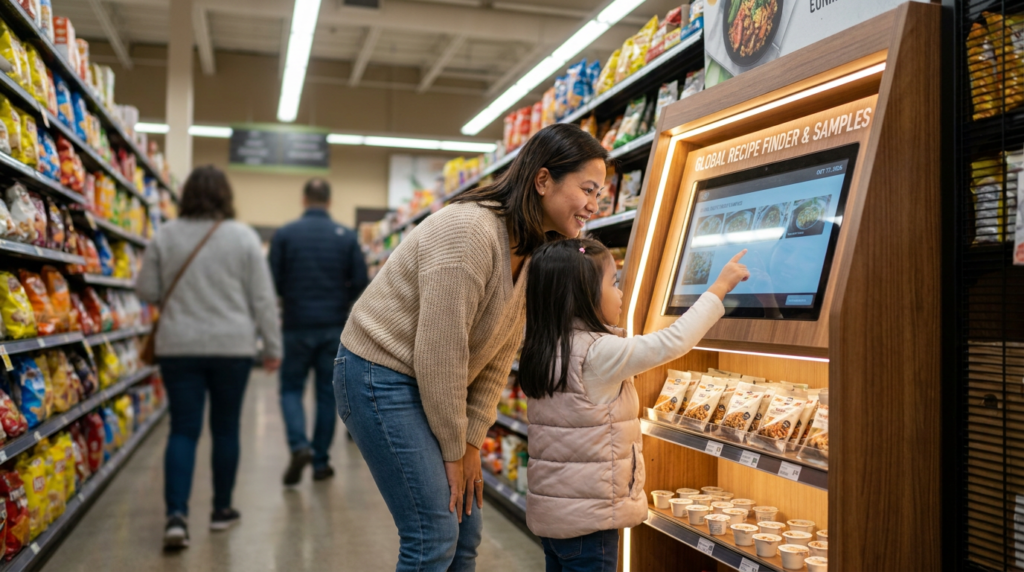
Filipino-Canadian mother and daughter interacting with an end-cap retail activation at a Canadian grocery store in 2026.
In-aisle activations capture shoppers at the moment of category decision.

Real costs and ROI for retail activations in Canada

Retail activations in Canada in 2026 break into three clear budget tiers. Specifically, the right tier depends on the brand’s goal — testing a market, scaling a category, or owning a season.

  • Entry tier ($30K – $100K): Single pop-up or shop-in-shop, one-city test, basic content capture, modest paid amplification.
  • Mid tier ($100K – $300K): Multi-city pop-up tour, integrated shop-in-shop with a key retailer, full content amplification pipeline.
  • Premium tier ($300K+): National retail campaign, custom window installations, multi-retailer rollout, post-activation amplification.

For more on related pricing, see our brand activation cost guide for Ontario. As McKinsey retail insight research consistently shows, retail activations produce trackable sales lift in supporting stores within 30 days. Importantly, the brands that win retail activation ROI track foot traffic, conversion at activation, and 30-day sales velocity together.

Multicultural Gen Z passersby photographing an illuminated brand activation storefront window display on Queen Street West in Toronto in 2026.
A striking window installation produces UGC for weeks.

Common mistakes Canadian brands make in retail activations

Most retail activations underperform for the same handful of reasons. To be specific, here are the four mistakes Canadian brands repeat most often.

  • Choosing the location by foot traffic alone. Specifically, high foot traffic means little if the shopper profile does not match the brand. Furthermore, the wrong location produces impressions without conversion.
  • Designing the activation without retailer input. For instance, an aisle activation that breaks the retailer’s planogram gets shut down within hours. Consequently, retailer alignment matters more than creative ambition.
  • Skipping community partnerships in multicultural neighbourhoods. Importantly, multicultural retail activations need community-trusted partners. By comparison, generic execution underperforms in every multicultural-heavy market.
  • Failing to measure post-activation sales lift. As a result, the brand cannot prove ROI. Consequently, retail activation budgets get cut in the next planning cycle.

Why Brand Guruz is built for retail activations in Canada

Brand Guruz is the experiential agency Canadian brands hire when retail activation has to convert, not just look good. To begin with, our team has executed pop-ups, shop-in-shops, demo islands, and window installations across major Canadian retail markets. Furthermore, our community partner network unlocks multicultural retail neighbourhoods most agencies cannot reach.

Equally important, we measure retail activation outcomes the way buyers, category managers, and CFOs want to see them. Specifically, foot traffic, on-site conversion, post-activation sales velocity, and community sentiment across all relevant languages. As a result, our clients walk into the next planning cycle with retail activation proof, not promises.

If you are planning retail activations in Canada for 2026, scope it now. Talk to Brand Guruz and we will map locations, retailers, partners, and measurement against your category. For more on our category approach, see our experiential marketing overview. Or browse case studies to see how retail activation lands in real campaigns.

Frequently asked questions

What are retail activations? Retail activations are live brand experiences designed to engage shoppers inside or near a retail environment. Specifically, they include pop-up storefronts, shop-in-shop integrations, in-aisle and end-cap displays, demo islands, and window installations. As a result, brands convert shopper attention into purchase at the moment of decision.

How much do retail activations cost in Canada? Entry-tier retail activations start around $30,000 to $100,000. Mid-tier multi-city pop-ups or shop-in-shops run $100,000 to $300,000. Premium national retail campaigns begin at $300,000 and scale up.

Which retail activation tactic is best for new brands? Pop-up retail experiences are typically the best entry point for new brands. Specifically, pop-ups let brands test markets, generate UGC, and build retail relationships without long-term lease commitments. Furthermore, they produce earned media at a fraction of paid equivalent.

How do brands measure retail activation ROI? Brands measure retail activation ROI through foot traffic, on-site conversion rate, post-activation sales velocity, and community sentiment. Importantly, retail measurement partners can track sales lift in supporting stores for 30 to 90 days post-activation.

Why does multicultural design matter for retail activations in Canada? Multicultural design matters because Canadian shoppers come from over 250 ethnic origins and shop differently by community. Specifically, signage, packaging, language, and community partnerships all shape sell-through. As a result, retail activations designed for one shopper profile underperform across most Canadian neighbourhoods.


Ready to plan retail activations in Canada for 2026?

The best pop-up windows and shop-in-shop slots close fast in Q1. Talk to Brand Guruz about your 2026 retail activation calendar. Or browse our case studies to see how the playbook lands.

Author