Avoiding Tokenism: Real DEI Tactics for Experiential Marketing in Visible Minority Communities

Visible minority communities represent a rapidly growing share of purchasing power across Canada and North America. Yet too many brands still show up at cultural festivals carrying the same recycled playbook. They bring a photo-ready activation, a racially mixed flyer, and a vague promise of “authenticity.” The result? Audiences notice instantly. Trust evaporates. And the campaign becomes a cautionary tale shared across community networks.

Real DEI in experiential marketing isn’t about optics — it’s about strategy, respect, and showing up consistently. Here’s how brands can do it right.

What Is Tokenism in Marketing?

Tokenism is the practice of including members of underrepresented groups purely to create the appearance of inclusion — without committing to meaningful change. In experiential marketing, it shows up in familiar forms: hiring one or two brand ambassadors who “look the part” while every decision-maker behind the scenes shares the same background, or crafting a one-off activation during a cultural holiday with no community presence before or after.

Tokenism also surfaces in more subtle ways. A brand ambassador who reflects the community visually but doesn’t speak the language isn’t genuine representation. Without cultural nuance or real input into the campaign, it’s simply window dressing. Similarly, diverse faces in campaign photography mean little when the internal team stays entirely homogenous. That gap signals inauthenticity to the very audiences a brand is trying to reach.

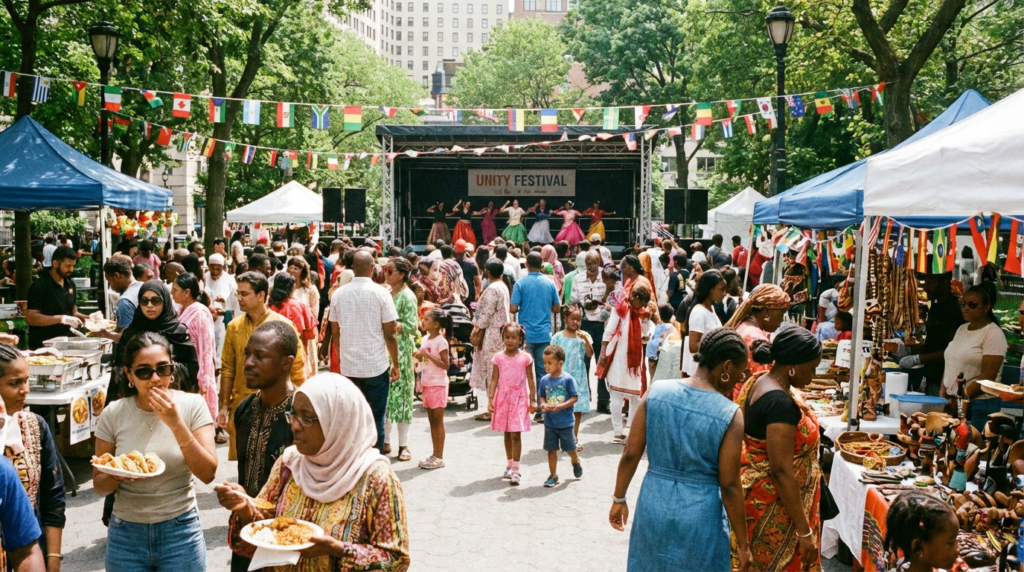
Crowded outdoor multicultural festival with food stalls, flags, and a live stage performance.
Authentic multicultural activations begin with genuine community involvement — not last-minute casting decisions.

Why Visible Minority Communities See Through It

Minority communities have encountered performative inclusion long enough to recognize the signs. Campaigns that suddenly materialize during Black History Month, South Asian Heritage Month, or Lunar New Year communicate opportunism. Disappearing entirely the next day only confirms it. The contrast between a brand’s presence during a cultural moment and its absence the rest of the year speaks volumes.

Word also travels fast within tight-knit communities. A single inauthentic activation can ripple across social media, family networks, and community groups within hours. Conversely, brands that invest in building real community relationships earn loyalty that lasts years and generates authentic word-of-mouth that no paid media budget can replicate.

Research from McKinsey shows companies with greater diversity are 36% more likely to achieve above-average profitability. That advantage only materializes when inclusion is genuine, not performed.

The Real Cost of Getting It Wrong

The stakes extend far beyond bad press. Tokenistic marketing actively damages a brand’s standing in minority communities by signalling that the brand views these audiences as a revenue category rather than as people with distinct cultures, values, and preferences. Reputational damage of this kind is notoriously difficult to reverse.

Beyond reputation, it wastes marketing budget. An experiential activation that alienates its intended audience delivers no return — not in foot traffic, not in brand recall, and certainly not in loyalty. Teams that plan campaigns without meaningful input from the communities they’re targeting tend to repeat the same shallow approach cycle after cycle, burning resources without building equity. Genuine DEI requires a deep commitment that goes beyond surface-level gestures — and that commitment pays dividends when applied properly.

Five Real DEI Tactics for Experiential Marketing

1. Co-Create With Community Insiders

Start before the brief. Bring community members — cultural organizers, local business owners, faith leaders, and youth advocates — into the planning process as genuine collaborators, not last-minute consultants. Their insight shapes everything from event timing and venue selection to language and visual aesthetic. When a community has a meaningful hand in building an activation, the result feels authentic because it is. Co-creation also generates built-in word-of-mouth: collaborators promote what they helped build.

2. Hire Locally and Meaningfully

Don’t import brand ambassadors from outside the community — recruit from within it. Local staff already understand the cultural context, speak the language, carry credibility, and hold genuine relationships. At Brand Guruz, our network of 1,200+ trained brand ambassadors spans multicultural communities across Canada, giving brands access to real community connections rather than manufactured ones. The difference between a culturally embedded ambassador and a hired actor is immediately apparent to the audience they’re engaging.

3. Show Up Beyond the Holiday

A one-day activation during a cultural celebration means almost nothing without consistent follow-through. Build a campaign calendar that engages the community throughout the year — not just when it aligns conveniently with the brand’s seasonal push. Sponsor local events. Partner with community organizations. Run follow-up digital campaigns that extend the conversation and invite ongoing dialogue. Sustained presence communicates genuine investment; a single pop-up communicates the opposite.

4. Localize Language and Cultural Nuance

Translation is not the same as localization. Translating marketing copy into another language without cultural adaptation frequently produces campaigns that feel awkward or, worse, offensive to the target community. Work with native speakers who understand idioms, humor, values, and community-specific sensitivities. Apply this discipline to every touchpoint: event signage, promotional collateral, digital follow-up content, and the scripts your ambassadors use on the ground. The gap between a translated message and a truly resonant one determines whether your brand is remembered fondly or forgotten immediately.


4. Measure What Actually Matters

Broad reach metrics don’t reveal whether a community felt genuinely seen. Track sentiment alongside impressions. Gather qualitative feedback directly at the event. Follow post-activation social conversations within the relevant community spaces. Survey attendees about whether the experience felt relevant and respectful. Then apply those insights to refine the next activation. This feedback loop is how brands shift from performing DEI to genuinely practicing it — and how campaigns improve with each iteration.

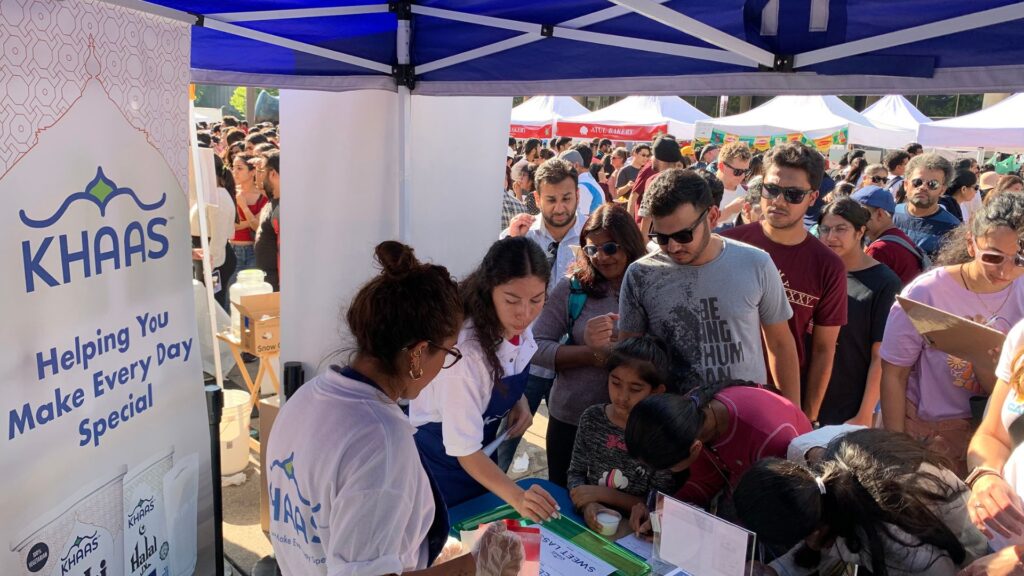
Crowded outdoor event booth where brand ambassadors offer samples to attendees gathered under a canopy.
Brand ambassadors who share cultural roots with their audience create trust that no scripted activation can manufacture.

Building Inclusion Into Every Activation

Tokenism is easy to fall into — especially under tight timelines and external pressure to demonstrate diversity quickly. However, visible minority communities deserve far better than checkbox marketing. They represent substantial and growing purchasing power, and they reward brands that treat them with consistent respect and cultural intelligence.

Genuine DEI in experiential marketing starts with humility: acknowledging that meaningful connection requires expertise, relationships, and time. It means partnering with specialists who understand multicultural audiences at the ground level — not agencies that bolt on a diversity filter at the end of a campaign brief.

The brands that get this right don’t just run better activations. They build community equity that compounds over time, turning a single well-executed event into a long-term reputation as a brand that genuinely belongs in the spaces it enters.

Frequently Asked Questions

Experiential marketing is a strategy that engages consumers through direct, immersive brand experiences — such as product sampling, brand activations, pop-up events, and community activations — rather than passive advertising. For visible minority communities, experiential marketing is particularly powerful because it creates face-to-face connections that feel personal and culturally relevant. When executed authentically, multicultural experiential marketing builds trust, drives brand loyalty, and generates word-of-mouth that reaches deep into close-knit community networks. At Brand Guruz, our multicultural experiential campaigns are designed to meet communities on their own terms — not according to a generic marketing template.

The clearest signal is whether community involvement shapes the campaign from the start or gets added near the end. Tokenistic DEI marketing typically features diverse faces in promotional materials while the planning, creative, and decision-making teams remain entirely homogenous. Other warning signs include activations that appear only during cultural holidays, brand ambassadors who don't share the community's language or cultural background, and campaigns with no follow-up or sustained community presence. Genuine DEI experiential marketing, by contrast, involves community members as collaborators, employs locally embedded brand ambassadors, and builds a year-round relationship rather than a single-day photo opportunity.

Successful multicultural brand activations combine cultural intelligence, locally sourced talent, and consistent community engagement. First, the campaign concept should be co-created with people who have deep roots in the target community — not simply translated from an existing mainstream campaign. Second, on-ground experiential marketing staff should reflect the community they're engaging, speaking the language and understanding cultural sensitivities. Third, the activation should feel relevant beyond surface-level aesthetics, speaking to values, traditions, and priorities that actually matter to that audience. Finally, measuring outcomes through community-specific sentiment and qualitative feedback — not just reach metrics — ensures each campaign improves over time.

Cultural localization goes beyond translating words — it means adapting the entire tone, imagery, references, and messaging of a campaign to align with a community's specific values and lived experience. A brand activation that resonates with one cultural audience may feel tone-deaf or even offensive to another if localization is neglected. In multicultural experiential marketing, small details matter enormously: the music playing at an event, the food offered during a product sampling, the humor used by brand ambassadors, and the timing of an activation relative to cultural observances. Brands that invest in genuine localization signal respect for the community, which directly translates into stronger engagement, better recall, and lasting loyalty.

Brand Guruz has spent over 15 years building genuine expertise in multicultural experiential marketing across Canada and North America. Our network of 1,200+ trained brand ambassadors includes individuals deeply rooted in a wide range of visible minority communities, allowing us to staff activations with people who bring authentic cultural fluency — not a manufactured look. We work with clients to co-develop campaigns that reflect real community insight, provide culturally localized content and messaging, and design follow-through strategies that maintain brand presence beyond a single event. Our DEI approach is embedded in how we execute every campaign, not applied as an afterthought. If you're ready to move beyond tokenism and build real community equity, our team is here to help.

Ready to Build Real Community Connections?

Brand Guruz has specialized in multicultural experiential marketing for over 15 years. Our team delivers culturally embedded activations — not tokenism dressed up as inclusion.

Author