Corporate Event Budget Templates: What $25K, $100K, and $500K Actually Buys

A corporate event budget is where good intentions meet hard numbers. The gap between what a brand imagines and what a budget buys is the most consistent frustration in event planning. Three numbers come up constantly in Canadian corporate event conversations: $25K, $100K, and $500K. Each one is a real tier with real constraints — and most templates online don’t tell you what any of them actually deliver.

Brand Guruz plans and produces corporate events across Canada at all three of these tiers. What follows is an honest breakdown of what each budget actually buys, where the money goes, and what every template leaves out.

65%

of event planners experience budget overruns

20%

the average amount corporate event budgets go over

40–60%

of any corporate event budget goes to venue and catering

What drives every corporate event budget

One ratio governs every corporate event budget before anything else: venue and catering together consume 40 to 60 percent of total spend. The Event Planner Expo confirms that this single proportion is your most reliable budget check before you touch any other line item. Get it wrong and everything downstream is a compromise.

Per-person spend is the second anchor. A working lunch or half-day meeting runs $75 to $150 per person. A full-day conference with catering and AV typically costs $200 to $500 per person. Multiplied by headcount, that gives you the first honest sanity check on whether the total budget is workable.

Always hold back 15 to 20 percent as a contingency. Qondor’s analysis of event budget overruns shows 65 percent of planners go over budget. The average overrun is 20 percent. That contingency line is not padding — it is the part of the budget that keeps the rest of the event intact.

Budgets are also getting tighter to stretch. The Amex GBT 2026 Global Meetings and Events Forecast, covered by Channel Technologies, found 66 percent of meeting professionals expect their budgets to increase — but rising vendor costs and staffing shortages are absorbing most of that growth. You are not spending more to get more; you are spending more to get the same.

The $25,000 corporate event budget

A $25,000 corporate event budget covers a polished, single-day experience for 40 to 75 guests. It is not a production event — the focus is professional execution of a focused program.

Where the money goes:

  • Venue: $2,500–$4,000 — hotel boardroom, private dining room, or co-working event space
  • Catering: $7,500–$10,000 — breakfast, lunch, and afternoon break at $100–$140 per person
  • AV: $2,000–$3,500 — screen, projector, basic mics, and standard lighting package
  • Décor and signage: $1,500–$2,500 — brand banners, table settings, and basic staging
  • Staffing and coordination: $2,500–$4,000 — event coordinator plus day-of registration team
  • Materials: $1,000–$1,500 — printed programs, name badges, and handouts
  • Contingency (15%): ~$3,750

What this tier delivers: A team kickoff, half-day workshop, or client appreciation lunch with clean branding and smooth execution. There is no keynote speaker, no entertainment, and no custom production. The event looks professional and on-brand, but the experience is functional rather than immersive.

The right place to invest at this tier is catering and coordination. Guests remember how the food was and how smoothly the day ran — not the décor.

The $100,000 corporate event budget

A $100,000 corporate event budget crosses into production territory. This tier supports a full day for 100 to 200 guests, with real AV, a proper stage, and at least one marquee element — a keynote speaker, entertainment, or an immersive brand moment.

Where the money goes:

  • Venue: $10,000–$18,000 — boutique hotel ballroom, private club, or gallery space
  • Catering: $25,000–$35,000 — full day with open bar at $150–$175 per person for 175 guests
  • AV and production: $15,000–$22,000 — LED screens, professional lighting, PA system, and AV tech staff
  • Décor and design: $8,000–$12,000 — branded installs, lighting accents, and thematic elements
  • Speakers or entertainment: $5,000–$15,000 — one keynote or a light entertainment option
  • Staffing and event management: $8,000–$12,000 — full event team, registration, and brand ambassadors
  • Photography and video: $3,500–$5,000 — professional photographer and highlight reel
  • Contingency (15%): ~$15,000

What this tier delivers: A full-day conference, product launch, or leadership summit with a professional production feel. The AV and stage presence give it credibility. There is one keynote or headline moment, and the F&B is genuinely elevated rather than functional.

The right place to invest at this tier is AV and one experience that people talk about afterward. Everything else can be mid-range — but the production quality and the marquee moment have to be excellent.

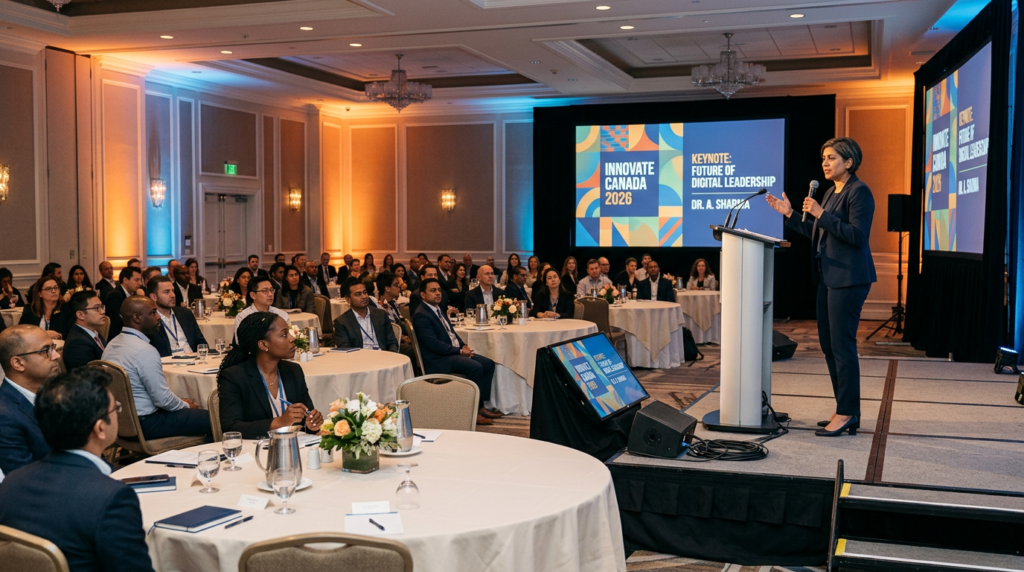
Corporate conference with professional AV and keynote speaker at a Canadian hotel venue in 2026.
At $100K, the AV and one marquee moment are where the budget earns its keep — everything else supports those two.

The $500,000 corporate event budget

A $500,000 corporate event budget is a full production. This tier covers a multi-day national conference, a major brand gala, or a large-scale experiential event for 300 to 600 guests.

Where the money goes:

  • Venue: $40,000–$80,000 — convention centre sections, large hotel ballrooms, or premium event spaces
  • Catering: $100,000–$150,000 — multi-day or gala for 400–500 guests at $175–$250 per person
  • AV and production: $75,000–$120,000 — custom LED walls, broadcast-quality sound, full staging, and live stream
  • Décor, design, and experience: $50,000–$80,000 — custom installs, immersive environmental design, and full thematic execution
  • Speakers and talent: $30,000–$60,000 — two to three keynotes and headline entertainment
  • Staffing and production management: $40,000–$60,000 — full production crew, logistics team, and day-of staffing
  • Photography, video, and content: $15,000–$25,000 — full production team, highlight reel, and social content
  • Marketing and materials: $15,000–$25,000 — attendee kits, event app, and digital touchpoints
  • Contingency (15%): ~$75,000

What this tier delivers: A marquee brand moment. The production quality resembles a broadcast event, and multiple keynotes give it a genuine conference identity. Attendees leave with a memorable experience — and usually with content they share.

The right place to invest at this tier is the attendee journey from registration to post-event follow-through. At this scale, the details compound — both positively and negatively.

Event planner reviewing a corporate event budget template on a laptop in Canada in 2026.
The real corporate event budget template starts with line items most planners never quote — and always invoice.

The hidden costs most corporate event budgets miss

Every corporate event budget template leaves out the same line items. These are the ones that arrive on the final invoice.

Venue service charges. Most hotel and catering contracts carry an 18 to 22 percent service charge on top of the food and beverage minimum. That is not gratuity — it is a mandatory fee. It often appears after a verbal quote, not before.

AV exclusivity. Many hotel venues require you to use their in-house AV vendor. A 2025 survey by Northstar Meetings Group and Convene found AV costs at major venues have risen 25 to 50 percent over three years. Exclusive vendor contracts are the primary reason — and the only real counter is to negotiate this before you sign the venue agreement.

HST in Ontario. All event costs in Ontario are subject to 13 percent HST. On a $100,000 event, that is $13,000 that never appears in the initial quote and always appears on the invoice. Budget for it from day one.

Load-in and overtime. Venues charge for early access and late breakdown. Vendor overtime typically kicks in after six to eight hours and compounds quickly at after-hours rates.

Event insurance. Most venues require it. Basic event liability coverage runs $300 to $600. It is rarely in the template and consistently in the venue contract.


How Brand Guruz makes your corporate event budget work harder

Budget discipline and creative ambition are not opposites — but holding both requires experience. Brand Guruz brings that experience to corporate events across Canada at every tier. We know where the money compounds and where it evaporates, and we build budgets that survive contact with the final invoice.

We also bring multicultural production capability that most Canadian corporate event agencies cannot match. At $100K or $500K, adding a culturally resonant experiential layer reaches a broader room and makes the overall investment perform harder. For venue strategy and the sourcing questions that matter, see our corporate event venues guide. For the full planning framework, see the corporate event planner buyers guide, and for the ROI layer, see our experiential marketing ROI framework.

If you are building a corporate event budget for 2026, talk to Brand Guruz before you finalize the template. Or browse case studies to see how the tiers played out on real briefs.

Frequently asked questions about corporate event budgets

What is a realistic corporate event budget per person in Canada? It depends on the event type and format. A working lunch or half-day meeting typically runs $75 to $150 per person. A full-day conference with catering and AV costs $200 to $500 per person. Multi-day events with entertainment and hotel room blocks can reach $1,000 to $2,500 per attendee.

What percentage of a corporate event budget should go to catering and venue? Catering and venue combined typically consume 40 to 60 percent of the total budget. If the event includes a formal dinner or evening gala, catering alone can reach 50 percent. Budget the food and beverage minimum first, then layer the rest of the event around it.

What is the biggest hidden cost in a corporate event budget? The most consistent surprise is the venue service charge — typically 18 to 22 percent on top of the F&B minimum. In Ontario, HST adds another 13 percent on all event costs. Together, those two items can add 30 percent or more to an invoice that looked reasonable at quote stage.

How much should I hold back as a contingency in a corporate event budget? Hold back 15 to 20 percent. Most event budgets overrun by an average of 20 percent due to unplanned scope changes, overtime, and hidden fees. The contingency is what keeps the core event intact when those costs arrive.

How far in advance should I plan a corporate event in Canada? For events over 100 guests, plan 6 to 12 months out. This gives you better venue options, stronger vendor pricing, and enough lead time to build attendance. Shorter timelines reduce options and raise costs across the board.

Ready to build your 2026 corporate event budget?

Brand Guruz works with marketing leads and event teams across Canada at every tier. Talk to us about your headcount, objectives, and timeline — and we will build the corporate event budget template together. Or browse case studies to see what the budgets actually delivered.

Author