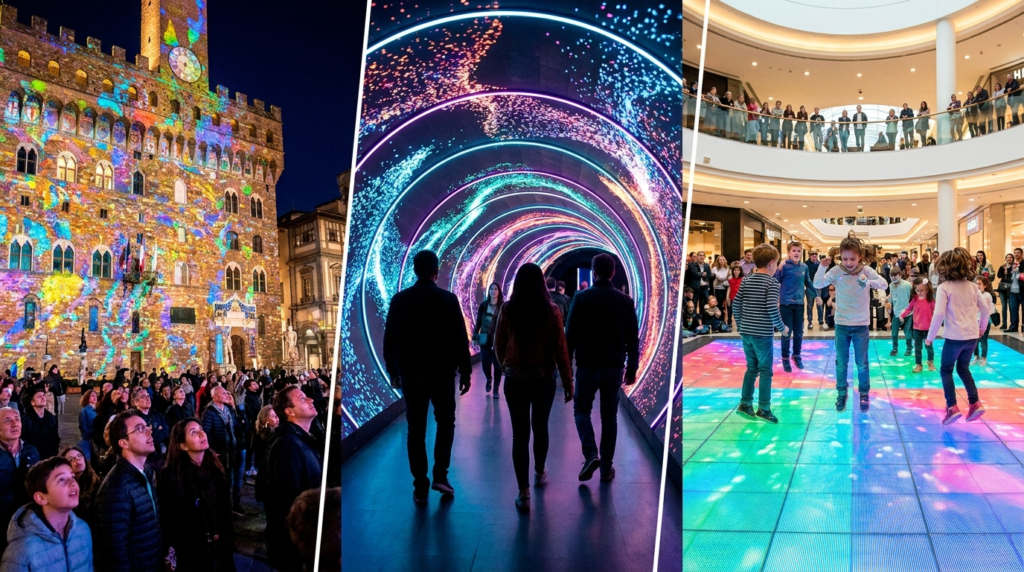
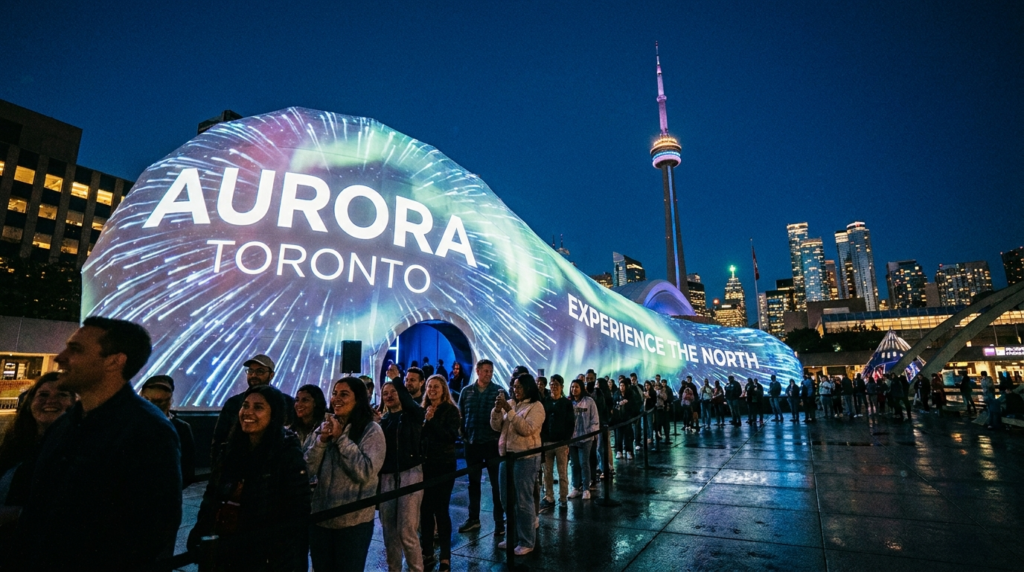
A large-scale interactive installation can be one of the most powerful tools in a brand’s experiential marketing arsenal. When it lands well, it stops people in their tracks, earns organic social content by the thousands, and creates the kind of brand memory that no digital ad can manufacture. However, before you commission one, you need a clear-eyed view of what it actually costs — and why. Budget surprises on large builds are not just frustrating; they derail timelines and compromise creative vision. This guide breaks down every major cost driver so that brand managers, marketing directors, and event planners can walk into the planning process with realistic expectations. And if you are looking for an agency with the expertise to bring a large-scale installation to life in Toronto or the GTA, Brand Guruz is the partner built for exactly this kind of work.
A large-scale interactive installation is a purpose-built physical environment or structure that invites active consumer participation. Unlike a standard branded booth or display, an interactive installation responds to the people inside it — through motion sensors, touchscreens, projection mapping, augmented reality, sound activation, or tactile mechanics. The scale is significant: these builds typically occupy several hundred square feet or more, and they are designed to be visually dominant in whatever space they occupy.
They appear at brand launches, cultural festivals, shopping centre atriums, public plazas, trade shows, and experiential pop-up events. They generate earned media and anchor a campaign’s visual identity. And they require serious investment to do well.
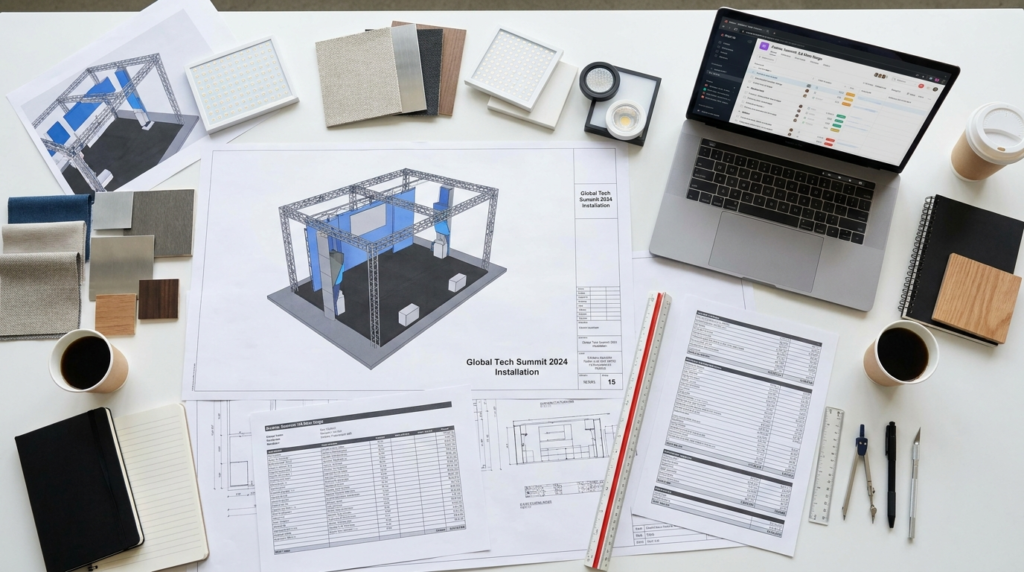
Understanding where your budget goes is the first step to spending it wisely. A large-scale interactive installation draws costs from several distinct categories — and each one deserves serious attention during the planning phase.
Every build begins with an idea. Concept development — including creative direction, design renders, technical feasibility assessment, and client presentation — typically represents between 10% and 15% of a project’s total budget. This phase is non-negotiable. Cutting corners here produces installations that are technically built but creatively underwhelming. According to the Experiential Designers and Producers Association, projects that invest adequately in the concepting phase are significantly more likely to deliver on both creative and commercial objectives.
The physical structure of the installation — frames, walls, platforms, ceilings, and the materials that give it form — is typically the largest single cost category. For a mid-to-large scale build, fabrication alone can range from $30,000 to well over $200,000, depending on the complexity of the design, the materials specified, and whether the structure is built for a single use or for touring across multiple locations.
Custom fabrication costs more than modular systems. Unique materials — tempered glass, architectural metals, custom-milled panels — carry premium pricing. However, these choices also produce a dramatically higher-quality result that earns far more organic consumer attention and social sharing.
This is where interactive installations diverge most sharply from conventional builds. Technology integration encompasses LED walls and panels, projection mapping hardware and software, motion sensors, RFID or NFC systems, touchscreen arrays, sound design, augmented reality layers, and the custom programming that ties all of these elements together.
Technology costs can range from $15,000 for a relatively straightforward sensor-and-screen experience to $150,000 or more for a fully bespoke, multi-system interactive environment. Software development — particularly custom interactive code — is labour-intensive and cannot be meaningfully compressed without sacrificing functionality.
Installation into a real-world venue adds its own cost layer. Venue rental or activation fees vary considerably: a community plaza may cost little to access, while a premium shopping centre atrium or a headline festival footprint can carry fees in the tens of thousands. In addition, load-in logistics — transport, rigging, structural engineering sign-off, and security — all carry real costs that are easy to underestimate.
In Toronto and the GTA, municipal permits, site assessments, and insurance requirements must also be factored in. Working with a locally experienced agency like Brand Guruz reduces the risk of costly surprises in this category, because the relationships and process knowledge are already in place.
A large-scale interactive installation requires people to run it. On-site staff typically include trained brand ambassadors who guide the consumer experience, technical operators who monitor systems and resolve issues in real time, and supervisory personnel who manage flow and safety. For a multi-day activation with extended hours, staffing is a significant and unavoidable budget line.
If the installation runs for a limited period, it must be disassembled and either stored or disposed of at the campaign’s end. If it is designed to tour across multiple locations — a common strategy for brands looking to maximize ROI across the GTA or nationally — then build quality, portability, and repackaging costs all need to be considered from the design stage.
Pulling all cost categories together, here is a directional budget framework for large-scale interactive installations.
Entry-level large build (single location, limited interactivity): $50,000 – $100,000. A structurally impressive installation with one or two interactive technology elements — LED lighting, a touchscreen component, or a simple motion-reactive system.
Mid-range full-featured build: $100,000 – $250,000. A fully immersive environment with multiple technology systems, custom fabrication, premium materials, and a complete staffed activation program.
Flagship or touring installation: $250,000 and above. Purpose-designed for maximum visual and social impact. Built to tour, engineered for durability, and executed with the creative ambition of a permanent public art installation.
These ranges are directional. Final costs depend heavily on creative complexity, technology specification, venue requirements, and timeline. A compressed build timeline, for instance, consistently drives costs upward due to rush fabrication and expedited sourcing. Planning early and partnering with an experienced agency protects both your budget and your creative vision.

The scale of the investment demands a serious approach to return. These three principles help brands extract maximum value from a large-scale interactive installation.
Design for social sharing from day one. The most cost-efficient amplification any brand can achieve is organic social content generated by installation visitors. Build sharing into the creative concept — through visual drama, personalization mechanics, or moments that feel genuinely worth capturing. According to EventMarketer, live experiences that generate social content deliver up to five times the brand reach of the physical footprint alone.
Choose location strategically. A spectacular installation in a low-traffic or culturally misaligned venue underperforms regardless of its quality. The right location — one where your specific target audience already gathers — multiplies the value of every dollar invested in the build itself.
Measure everything. Define your success metrics before the build begins. Consumer reach, dwell time, social impressions, brand recall lift, and conversion to purchase are all measurable outcomes that justify the investment to stakeholders and inform future campaign planning.
Brand Guruz is an Ontario marketing agency with proven expertise in large-scale experiential marketing activations across Toronto and the GTA. The team brings strategic, creative, and operational depth to every project — ensuring that your installation is not just visually impressive, but commercially effective.
From initial concept through to on-site management and post-campaign reporting, Brand Guruz manages every element of the build and activation process. For brands targeting Toronto’s multicultural communities, the agency also brings the cultural intelligence to ensure that your installation resonates with the audiences that matter most to your growth.
Ready to bring your installation concept to life? Contact Brand Guruz today and start building something unforgettable.
Brand Guruz is an Ontario-based marketing agency specializing in experiential marketing, large-scale installations, brand activation, and multicultural campaigns across Toronto and the Greater Toronto Area.