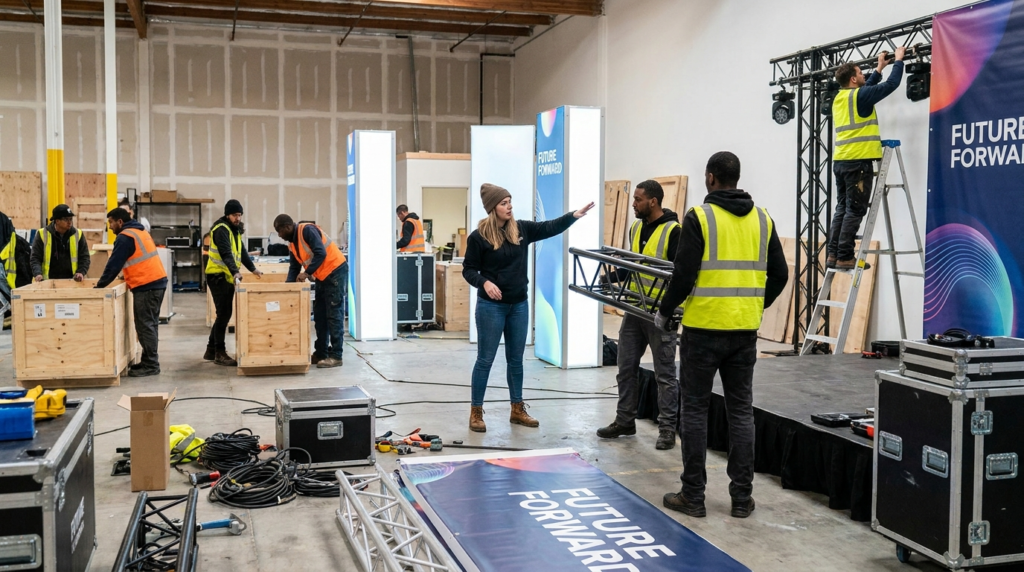
You just wrapped your biggest experiential campaign yet. The pop-up was packed. Social feeds exploded with user-generated content. Your client is thrilled with the immediate buzz.
Fast forward three months. The Instagram posts have disappeared from feeds. Search traffic never materialized. Your campaign exists only in a deck and some analytics screenshots.
Sound familiar?
Here’s the problem: most experiential agencies treat activations like fireworks—spectacular, memorable, then gone. But in 2026, Google’s E-E-A-T framework has changed the game entirely. Your experiential campaigns aren’t just marketing moments anymore. They’re SEO goldmines waiting to be leveraged.
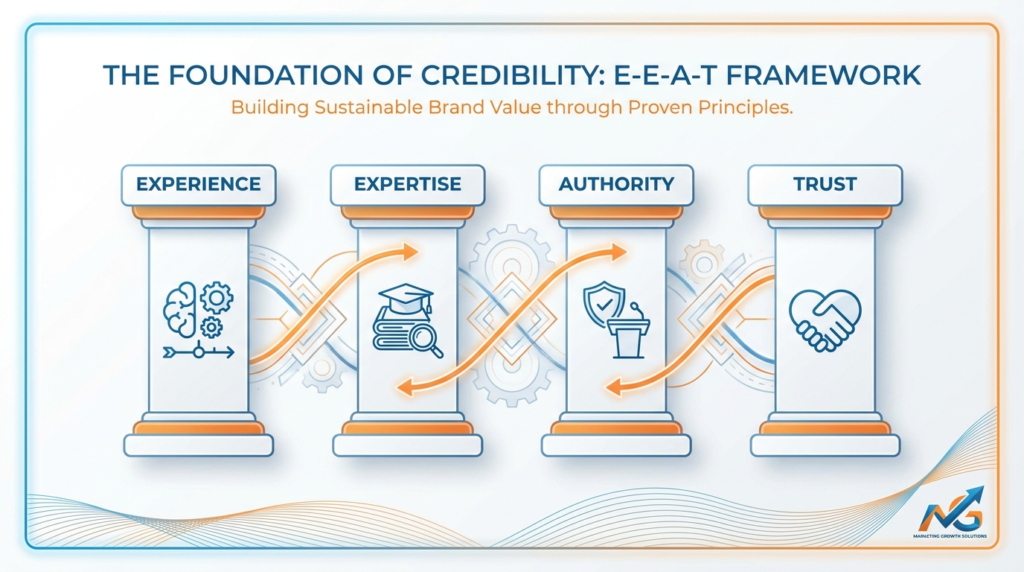
E-E-A-T stands for Experience, Expertise, Authoritativeness, and Trustworthiness. It’s Google’s quality framework for evaluating content credibility. Since the June 2025 Core Update, Google has been rewarding brands that demonstrate real-world experience over polished corporate content.
For experiential marketing agencies, this is your moment.
Think about it: while other industries scramble to manufacture “authentic experiences” for their content, you’re literally creating them every day. Every activation, every pop-up, every brand experience generates the exact signals Google now prioritizes.
Unlike brands creating content from a desk, experiential marketers have an unfair advantage. Every campaign you execute generates authentic E-E-A-T signals:
Experience: Your activations create real, documented human experiences. Photos, videos, testimonials, and attendance data prove you did the work.
Expertise: Campaign results, attendee insights, and performance metrics demonstrate your knowledge of what works in the field.
Authoritativeness: Media coverage, influencer participation, and brand partnerships establish your position in the industry.
Trustworthiness: Client results, attendee reviews, and repeat partnerships validate your reliability.
The question isn’t whether you have E-E-A-T. It’s whether you’re documenting it strategically for long-term SEO value.
Here’s how to transform your next experiential campaign into content that ranks for years.
Stop treating documentation as an afterthought. Build content creation into your activation plan from day one.
Capture attendee testimonials on video during the event. Record behind-the-scenes processes. Document problem-solving moments when technology fails or crowds surge. These authentic moments build more credibility than any polished case study.
Create a dedicated content team whose sole job is capturing the experience as it unfolds. Not just highlight reels—real moments that demonstrate your team’s expertise under pressure.
Every campaign generates data. Attendance numbers, engagement rates, dwell times, social reach, conversion metrics. This is your original research—and search engines love it.
Create detailed case studies with real numbers. Don’t just say “the campaign was successful.” Share that 3,847 attendees spent an average of 12 minutes engaging with the activation, generating 47,000 social impressions and a 23% increase in brand recall.
Better yet, aggregate data across multiple campaigns to identify industry trends. Publish annual reports on experiential marketing benchmarks in your region. This positions you as the authority while creating linkable, citable assets.
Google doesn’t just look at your site anymore. It evaluates your entire digital footprint across platforms.
Get your team featured on industry podcasts. Write guest posts for marketing publications. Speak at conferences and share those presentations on LinkedIn. Engage authentically in Reddit discussions about experiential marketing challenges.
When AI systems search for information about experiential marketing in Ontario, your brand should appear everywhere—not just on your own domain.
Trust signals need to be abundant and easy to verify. This means:
Third-party validation matters more than self-promotion. One authentic testimonial from a recognized brand carries more weight than ten paragraphs of you explaining how great you are.
Here’s your content multiplication framework for the next campaign:
Before the event: Publish blog posts about your strategy, challenges you’re anticipating, and innovative solutions you’re implementing.
During the event: Share real-time updates on social media, capture video testimonials, and document unexpected moments.
After the event: Create a comprehensive case study blog post, a video recap, a data-driven results presentation, and client testimonial content.
Long-term: Turn insights into thought leadership articles, webinar content, and speaking opportunities.
One campaign becomes 15+ pieces of content across multiple platforms—all reinforcing your E-E-A-T signals.

The Canadian experiential marketing landscape is competitive. Toronto, Vancouver, and Montreal all have established players. But most are still treating digital presence as an afterthought.
By implementing an E-E-A-T strategy now, you position your agency to dominate local search results while competitors scramble to catch up. When brands search for “experiential marketing agency Ontario” or “Toronto brand activation experts,” your documented experience, proven expertise, industry authority, and verified trust signals will outrank generic agency websites every time.
Review your last three campaigns. How much content did you create? How much E-E-A-T value are you leaving on the table?
For your next activation, build documentation into your project plan. Assign content creation roles. Set specific E-E-A-T goals alongside your campaign KPIs.
Remember: the activation ends when you tear down the booth. But the SEO value compounds forever—if you capture it right.
Ready to turn your next experiential campaign into an evergreen SEO asset? Contact Brand Guruz to learn how we build E-E-A-T into every activation we create.