An experiential marketing tour turns one great activation into national reach. To be specific, the same creative concept, built once and toured smartly, reaches audiences in eight or more Canadian markets. Furthermore, a well-run tour costs far less per city than building a new activation each time. Consequently, the roadshow model is the most efficient way to scale brand experience across Canada.
At Brand Guruz, we run experiential marketing tours that scale from a single Toronto activation to a cross-Canada roadshow. In our experience, the brands that tour smartly multiply their reach while shrinking their per-city cost. Specifically, modular builds, smart routing, and local activation turn one investment into months of national momentum.
Below, you will find why tours outperform single activations and how to scale in three stages. You will also find the logistics, the consistency-versus-localization framework, and the measurement model for a cross-Canada roadshow.
Major Canadian markets a national tour should consider
Cost-per-activation savings from modular reusable tour builds
Recommended lead time to plan a cross-Canada roadshow
An experiential marketing tour outperforms a single activation on nearly every metric. To be specific, a tour multiplies reach, spreads fixed costs, and compounds earned media. Furthermore, the tour builds national momentum a single-city activation cannot. Consequently, touring is the smartest scaling move in experiential.
A multi-city activation compounds reach in ways a single event cannot. Specifically, each city adds local audiences, local media, and local UGC. Furthermore, the cumulative content from a tour fuels a national social presence for months.
As Ad Age experiential coverage consistently shows, multi-market activations generate more earned media per dollar than single events. In our experience, the fifth city of a tour benefits from momentum built in the first four. As a result, the tour gets more efficient as it travels.
Canada rewards the roadshow model because its population clusters in distinct regional markets. Specifically, Toronto, Vancouver, Calgary, Edmonton, Montreal, Ottawa, Winnipeg, and Halifax each anchor a regional audience. Furthermore, each market carries a distinct multicultural makeup worth activating differently.
According to Destination Canada, these urban centres concentrate the majority of the national audience. Consequently, a smart eight-city tour reaches most of Canada’s reachable population. As a result, the roadshow captures national scale without national-scale waste.
Scaling to a cross-Canada roadshow works best in three deliberate stages. To be specific, each stage de-risks the next. Furthermore, skipping a stage usually produces an expensive, underbaked national tour.
Stage one proves the activation concept in a single market. Specifically, run the activation in one city — usually Toronto or the GTA — and measure everything. Furthermore, refine the creative, the flow, and the staffing before scaling.
In our experience, the single-city test reveals what works and what does not. As a result, the brand scales a proven concept, not a hopeful one. For more on measuring that first activation, see our experiential marketing ROI framework guide.
Stage two expands the proven activation to a regional cluster. Specifically, add two to four nearby markets — for example, the GTA plus Ottawa, Montreal, and Hamilton. Furthermore, this stage tests the logistics of touring without cross-country complexity.
In our experience, the regional tour exposes the operational gaps a national tour would amplify. Consequently, fixing them regionally is far cheaper than fixing them coast-to-coast.
Stage three scales the refined tour across Canada. Specifically, the activation travels to eight or more markets from coast to coast. Furthermore, by this stage, the build, staffing model, and measurement are all proven.
As a result, the cross-Canada roadshow runs on tested systems rather than improvisation. Importantly, this is where modular builds and smart routing pay off most.
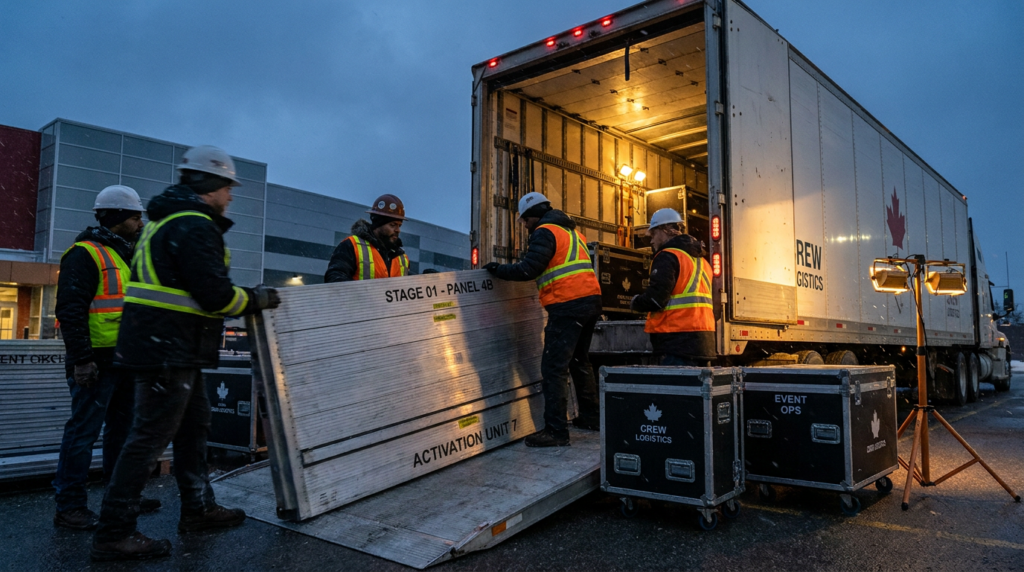
Experiential marketing tour logistics determine whether a roadshow succeeds or bleeds budget. To be specific, the build, the route, and the staffing model drive the entire economics of touring. Furthermore, Marketing Dive coverage repeatedly shows logistics — not creative — as the most common point of tour failure.
Modular reusable builds are the foundation of efficient touring. Specifically, a build designed to pack flat, ship easily, and reassemble quickly transforms tour economics. Furthermore, modular systems cut per-city cost by 30-50% versus rebuilding each time.
In our experience, the brands that invest in a strong modular build recover the cost by the third city. As a result, the build becomes an asset, not an expense. For more on sustainable modular design, see our sustainable brand activations guide.
Route planning and city selection shape both cost and impact. Specifically, sequence cities to minimize transport distance and downtime between stops. Furthermore, select cities based on audience density, not just population.
For example, a tour targeting South Asian audiences weights Brampton, Surrey, and Calgary heavily. By comparison, a tour targeting francophone audiences centres on Montreal and Ottawa. Consequently, route and city selection should follow the audience strategy.
Staffing and on-the-road production keep a tour consistent across markets. Specifically, a core touring team travels while local staff are hired in each market. Furthermore, local hires bring community fluency the core team cannot replicate.
In our experience, the blend of a consistent core team and local talent produces the best results. As a result, the activation feels both on-brand and locally authentic.
The central tension of any experiential marketing tour is consistency versus localization. To be specific, the brand must feel the same in every city while the activation adapts to each audience. Furthermore, getting this balance wrong produces either a generic tour or an inconsistent one.
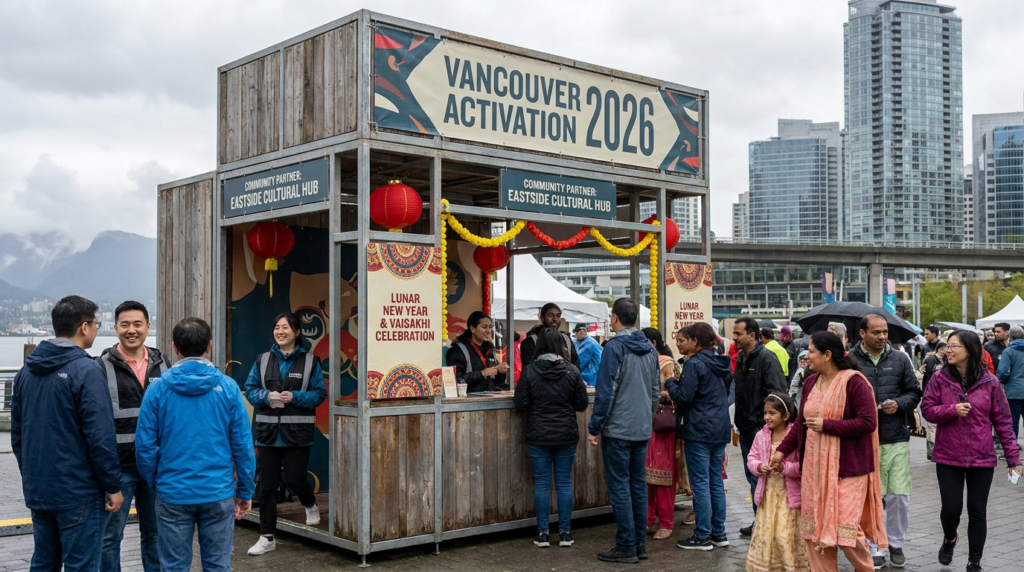
Keep the brand identity, core creative, key messaging, and quality bar consistent across every stop. By comparison, localize the language, community partners, cultural cues, food, and music city by city. As Adweek experiential coverage notes, the tours that localize smartly outperform copy-paste rollouts. Consequently, the winning formula is a consistent brand wrapped in local relevance.
Measuring an experiential marketing tour requires both per-city and tour-wide metrics. To be specific, each market needs its own read, and the tour needs an aggregate view.
The metrics that matter most:
Furthermore, per-city data reveals which markets to prioritize on the next tour. As a result, each roadshow informs the next.
Most underperforming experiential marketing tours share the same mistakes. To be specific, here are the four mistakes brands repeat most often.
Brand Guruz is the agency Canadian brands hire when an activation needs to scale into a national tour. To begin with, our team has run activations and tours across Toronto, Vancouver, Calgary, Montreal, and beyond. Furthermore, our multicultural network means each city’s activation is localized by people who know the community.
Equally important, we build for touring from day one. Specifically, modular reusable builds, proven staffing models, and per-market measurement all come standard. As a result, brands scale efficiently instead of rebuilding city by city.
If you are planning an experiential marketing tour in Canada for 2026, scope it now. As The Drum experiential coverage notes, the brands that plan tours early capture the best markets and dates. Talk to Brand Guruz and we will map the route, the build, and the localization against your goals. For more on our category approach, see our experiential marketing overview. Or browse case studies to see how tours come to life across Canada.
What is an experiential marketing tour? An experiential marketing tour takes a single brand activation and runs it across multiple cities. Specifically, the same core concept travels to regional or national markets with localized elements in each. As a result, brands reach a national audience far more efficiently than building a new activation per city.
How much does an experiential marketing tour cost in Canada? An experiential marketing tour costs less per city than standalone activations because the build is reused. Specifically, modular builds cut per-city cost by 30-50%. Furthermore, total cost depends on the number of markets, transport distance, and local staffing.
How many cities should a cross-Canada roadshow include? A cross-Canada roadshow typically includes eight or more major markets. Specifically, Toronto, Vancouver, Calgary, Edmonton, Montreal, Ottawa, Winnipeg, and Halifax anchor most national tours. Furthermore, the right list depends on the brand’s target audience.
How far in advance should I plan an experiential marketing tour? Most cross-Canada roadshows need at least six months of planning. Specifically, modular build fabrication, route logistics, and local staffing all require lead time. Furthermore, peak activation seasons book venues and permits early.
How do you localize an experiential marketing tour by city? Localize a tour by adapting language, community partners, cultural cues, food, and music to each market. Specifically, keep the brand identity and core creative consistent. As a result, the activation feels both on-brand and locally relevant.

The best routing and build windows close fast before tour season. Talk to Brand Guruz about your 2026 cross-Canada roadshow. Or browse our case studies to see how the playbook lands.