Festival brand activation in Canada is one of the most efficient marketing channels in 2026. To be clear, this is not about renting a tent at a music festival. It is about embedding your brand inside a cultural moment that audiences chose to attend.
At Brand Guruz, we plan festival activations across Caribana, Carassauga, Diwali Mela, Pride, Taste of India, and Calgary Stampede. Furthermore, the multicultural festival circuit in Canada offers reach and resonance no paid channel can replicate. Consequently, the agencies winning Canadian briefs this year know how to plan festival activations the right way.
Below, you will find the five-step planning process we use with clients. You will also find the budget ranges that actually work and the common mistakes brands make on the festival floor.
Fast Facts:
Festival brand activation in Canada delivers what paid digital cannot. In particular, it puts the brand inside a cultural moment audiences travelled to. As a result, every interaction starts at a higher level of attention and intent than a typical ad impression.
Festival visitors are not browsing. To begin with, they bought a ticket or invested time to attend. Furthermore, they brought friends or family. Consequently, they arrive in a buying mindset for food, merchandise, and memories.
In contrast, paid digital audiences are scrolling away from your message by default. The key word is intent. Festival audiences arrive with it. As a result, every brand interaction lands on receptive ground.
Canada hosts more than 200 multicultural festivals each year. To illustrate, Toronto alone runs Caribana, TIFF, Pride, Diwali Mela, Lunar New Year, and Taste of India. On top of that, Mississauga hosts Carassauga while Vancouver runs the Cherry Blossom Festival. Winnipeg’s Folklorama and Edmonton’s Heritage Festival round out a national circuit.
In other words, no other G7 country offers brands this kind of multicultural festival depth. Indeed, Canadian cities cluster festivals across spring, summer, and fall. As a result, brand managers can build entire activation calendars without ever leaving the festival channel.
Picking the right festival is the most important decision in the entire planning process. In short, the wrong festival will sink even the best activation. Conversely, the right one will amplify even a modest budget.
Most briefs default to date logic. For example, a brand with a Q3 launch hunts for August festivals. However, that approach treats festivals as interchangeable inventory. In fact, every festival carries a specific audience profile, cultural context, and brand fit.
Instead, start with the audience you want to reach. After that, map your audience to the festivals where they actually show up. To illustrate, a Gen Z multicultural campaign belongs at Caribana or Taste of India. By comparison, a family-friendly CPG brand fits better at Carassauga or the Calgary Stampede.
Multicultural festivals carry a unique structural advantage. Specifically, they concentrate dozens of overlapping cultural communities in one footprint. As a result, a single activation reaches an audience that would otherwise require six separate campaigns.
In practice, this means lower cost per engaged attendee. Furthermore, it means UGC that travels across multiple language groups. Put simply, multicultural festivals are the most efficient activation channel in Canada in 2026. For more on this logic, see our Toronto neighbourhood brand activation strategy guide.
A serious festival brand activation needs at least six months of planning. To be clear, that is the minimum. In our experience, the brands that win the festival floor start nine to twelve months out.
The first phase is research and partnership selection. Specifically, this is when you pick the festival, identify community partners, and lock initial creative direction. On top of that, you negotiate sponsorship tiers and secure inventory.
Importantly, festivals like Caribana, Carassauga, and Calgary Stampede sell premium inventory months in advance. Consequently, brands that wait until three months out usually settle for whatever is left.
The middle phase is creative development and production. To begin with, this includes booth design, content capture planning, sampling logistics, and staff briefing materials. After that, production timelines for builds, prints, and tech kick off.
For instance, a custom branded booth typically needs eight to ten weeks of fabrication time. Furthermore, video production for pre-event amplification needs an even longer runway. As a result, this is the phase where most underprepared brands fall behind.
The final phase is staffing, training, and pre-event amplification. Specifically, brand ambassador recruitment, multicultural briefings, and on-site logistics get locked. Beyond that, pre-event social posts, creator partnerships, and paid amplification ramp up.
In our experience, this is the phase where most brands underinvest. However, the pre-event window is where awareness compounds. Consequently, every dollar spent here typically returns three on the festival floor.
Brand managers always want to know the number first. So let us talk numbers honestly. Festival brand activation in Canada in 2026 breaks into three clear tiers.
For more detailed pricing, see our brand activation cost guide for Ontario.
Importantly, these tiers cover production and amplification — not just sponsorship fees. In practice, most brands underestimate the production and staffing line items. As a result, they end up with great inventory and underwhelming execution. The fix is simple. Budget 40% for sponsorship, 35% for production, and 25% for staffing and amplification.
Generic activation templates underperform at festivals. Specifically, each festival has its own rhythm, audience flow, and cultural context. Therefore, the design has to fit the festival, not the other way around.
Before sketching any booth, study the festival’s culture. For instance, Caribana visitors move with the parade. By comparison, Carassauga visitors travel between venues. As a result, the activation design has to match the flow.
In other words, design for the way the audience actually moves. Furthermore, brief your creative team on the festival’s history, music, food, and visual language. The point is to fit in, not to impose.
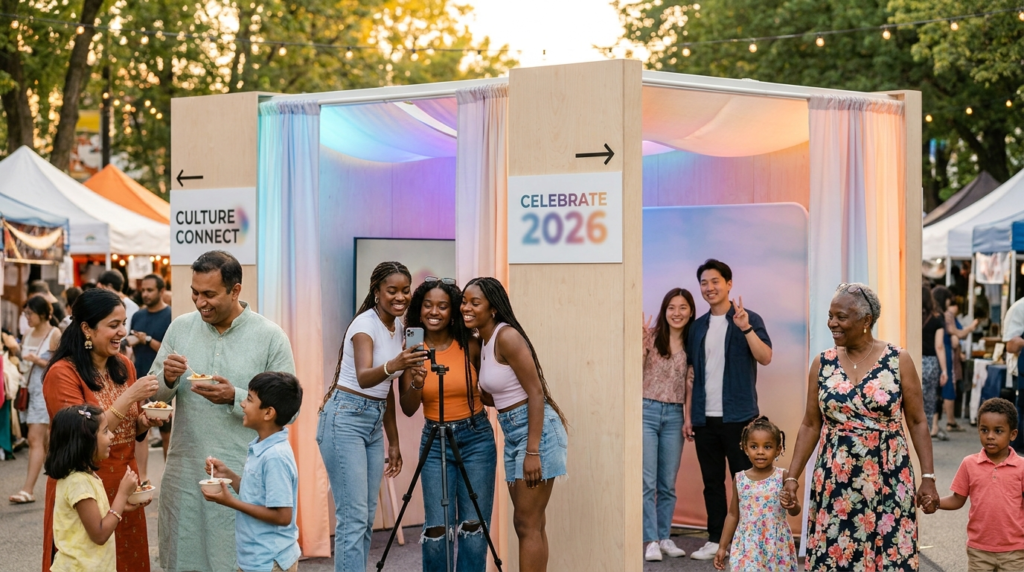
Every activation needs to be designed for the 9:16 vertical frame. To illustrate, lighting from above, eye-level branded backdrops, and a moment of surprise all serve the share. On top of that, build a shareable hashtag and a verbal hook the staff can invite into.
In practice, the activations that win UGC volume share a common formula. Specifically, they offer a small giveaway, a cultural moment, and a clean phone-friendly visual prop. That is the trifecta.
Sampling is still the highest-converting activation tactic at Canadian festivals. As Nielsen experiential research consistently shows, in-person product trial outperforms every other awareness driver. Furthermore, sampling pairs naturally with the food-and-tasting culture most festivals carry.
However, a sample alone is not enough. In fact, the best activations pair sampling with a surprise. That might be a custom photo print, a flavour reveal, or a limited giveaway. After all, the festival ends. The content lives on.
Measurement is where most festival activations fail in 2026. To be clear, attendance alone is not ROI. Furthermore, impressions are not a meaningful metric anymore.
Real festival activation ROI starts with UGC volume. Specifically, count branded posts, story mentions, and reposts across platforms. After that, run sentiment across English and community-language posts. For example, a Caribana activation will generate UGC in English, Trinidadian patois, and Jamaican patois.
In our experience, multilingual sentiment is the most underused metric in Canadian experiential. However, it is the truest signal of community resonance. Consequently, brands that measure it consistently outperform brands that do not.
The activation does not end when the festival closes. In fact, the most valuable engagement window opens in the 30 days after. Specifically, family-shared posts, group-chat recommendations, and community press coverage all compound in that window.
Therefore, plan for a 30-day post-event amplification phase. On top of that, budget for paid amplification of the best UGC. As a result, one weekend of activation produces a full month of compounding reach.
Most festival activations underperform for the same handful of reasons. To be specific, here are the four mistakes we see most often.
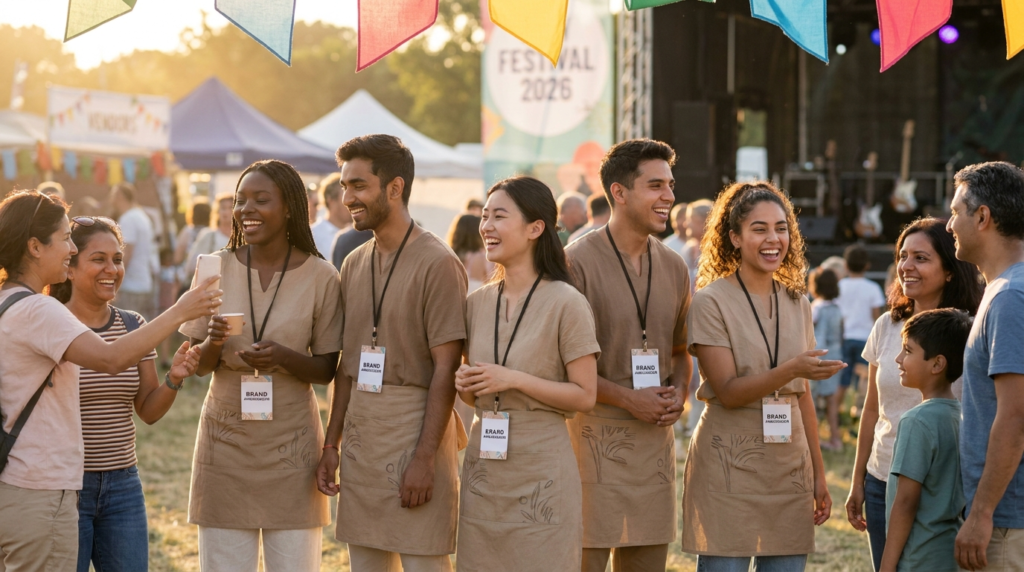
Brand Guruz is the experiential agency Canadian brands hire when the brief requires a multicultural festival. To begin with, our team is multicultural by design. Furthermore, our partner network spans Caribbean, South Asian, East Asian, Latin, African, and Indigenous communities across Canada. As a result, the cultural depth shows up on event day.
Equally important, we measure the work the way audiences actually engage. Specifically, UGC volume, multilingual sentiment, community follow-through, and downstream conversion — not just turnstile counts. In other words, our activations travel further than the festival footprint they were built in.
If you are planning a 2026 festival activation in Canada, the smartest move is to scope it now. Talk to Brand Guruz and we will map the right festivals, partners, and creative against your goals. For more on our category approach, see our experiential marketing overview.
What is festival brand activation? Festival brand activation is a live marketing experience designed to embed a brand inside a festival audience’s cultural moment. In Canada, this typically means sponsorship, sampling, and interactive activations at multicultural, music, or food festivals. As a result, the brand is part of the day, not an interruption to it.
How long does it take to plan a festival activation? A serious festival activation needs at least six months of planning. Furthermore, premium festivals like Caribana, Carassauga, and Calgary Stampede sell key inventory nine to twelve months out. Therefore, the safest planning window is nine months minimum.
What does a festival brand activation cost in Canada? Entry-tier festival activations start around $25,000 to $75,000. By comparison, mid-tier programs run $75,000 to $200,000. Premium multi-festival circuits begin at $200,000 and scale up from there.
Which Canadian festivals work best for multicultural brand activation? Caribana, Carassauga, Diwali Mela, Taste of India, MuslimFest, Folklorama, and the Vancouver Cherry Blossom Festival all deliver strong multicultural reach. In addition, the Calgary Stampede and CNE offer national audience scale. Specifically, the right pick depends on your target community and timing.
How do brands measure festival activation ROI? Real ROI includes UGC volume, multilingual sentiment, branded hashtag spread, repeat visits, and downstream conversion. Importantly, attendance alone is not ROI. As a result, the richer the post-event content trail, the stronger the return. According to Eventbrite live event research, Gen Z consumers also reward brands they meet in person with stronger purchase intent.

The best festival inventory in Canada moves quickly. Talk to Brand Guruz about your 2026 calendar. Or browse our case studies to see how the playbook lands.