Field marketing is how brands win real-world attention, and in Toronto it works harder than almost anywhere else. At Brand Guruz, we design field marketing campaigns that put your product in people’s hands and turn strangers into buyers.
Demand is real, too. Canadians search for field marketing roughly 140 times a month, and most of that intent is commercial. Consequently, brands across the GTA are racing to build in-market programs that actually move product.
This guide explains what field marketing is, why it performs so well in Toronto, and the tactics that drive sales. Moreover, it covers real costs and a step-by-step playbook you can take straight to your CMO.
First, a quick promise. By the end, you will know exactly how to plan, price, and launch a field marketing campaign anywhere in the GTA.
140 — average monthly Canadian searches for "field marketing", a high-intent commercial term (Ubersuggest) · 88% — consumers who trust a personal recommendation over any ad (Nielsen) · 6.4M+ — people in the Greater Toronto Area, Canada's largest and most diverse consumer market (Statistics Canada)
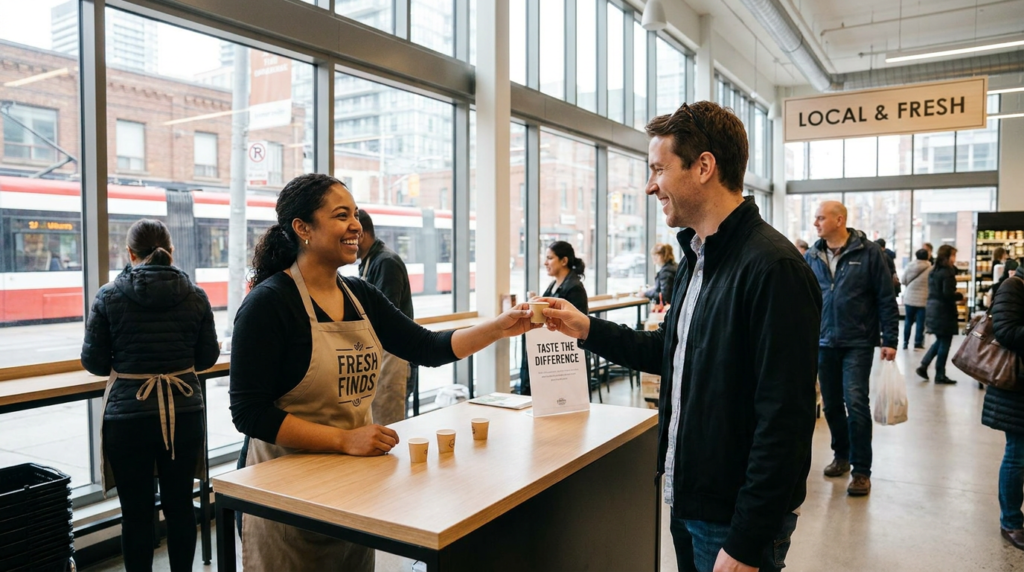
Field marketing is a face-to-face discipline where trained brand reps promote your product in the real world. Specifically, it happens in stores, on streets, and at events, not on a screen. In short, it drives trial, trust, and first purchase where people already shop and gather.
The term is broad on purpose. Typically, it includes product sampling, in-store demos, street teams, retail activations, and mobile tours. As a result, one field marketing program can touch a shopper several times in a single week.
Digital ads interrupt; field marketing invites. Instead of chasing a click, a rep hands your product to a real person and answers real questions. Because of that human moment, the brand memory lasts far longer than a scroll.
That is exactly what separates true experiential marketing from a paid impression. In practice, one earns a story; the other earns a swipe.
People trust people, not logos. In fact, Nielsen reports that 88% of consumers trust a personal recommendation above every other channel. Therefore a friendly rep with your product earns credibility that no banner ad can buy.
Toronto is one of the most multicultural cities on earth. Consequently, a single street team can reach dozens of communities in one afternoon. The best field marketing meets each of those audiences in its own language and context.
Screens are crowded, yet sidewalks and stores are not. As a result, a live sample cuts through the noise instantly. Put simply, field marketing wins the moment digital keeps losing: genuine, undivided attention.
That attention also travels. When a shopper enjoys a great sample, they tell friends, post it, and bring the story home.
The Greater Toronto Area is a huge, concentrated market. Notably, Statistics Canada counts more than 6.4 million people in the region, which makes it the richest ground for in-market programs in the country.
Downtown Toronto, Scarborough, and North York deliver dense foot traffic. Meanwhile, Mississauga, Brampton, Markham, and Vaughan offer busy retail corridors and cultural hubs. Together, they give a field marketing team a full map of high-value touchpoints.
Demand does not stop at the city limits. In addition, Ontario markets such as Ottawa, Hamilton, and London reward brands that show up locally. A strong field marketing partner can run all of them from one coordinated plan.
Timing matters as well. Because festival season, back-to-school, and the holidays each open a different window, planning ahead is a real advantage.
One plan also keeps quality consistent. Whether a shopper meets your brand in Brampton or Ottawa, the experience stays on message and on budget.
Not every tactic fits every brand. However, the strongest field marketing programs draw from the same toolkit. Use this list to shape your own mix.
Sampling is the classic field marketing play. Because a free trial removes risk, it is the fastest path from curiosity to first purchase.
Demos meet shoppers at the shelf. As a result, a rep can answer objections and close the sale in the exact aisle where the decision happens.
Street teams take the brand to the sidewalk. Specifically, they hand out product, spark conversations, and drive people toward a nearby store or event.
Malls concentrate ready-to-buy shoppers. Therefore a branded activation there turns idle browsing into hands-on trial.
A mobile tour carries the experience city to city. In effect, one build can activate Toronto, Mississauga, and Ottawa in a single campaign.
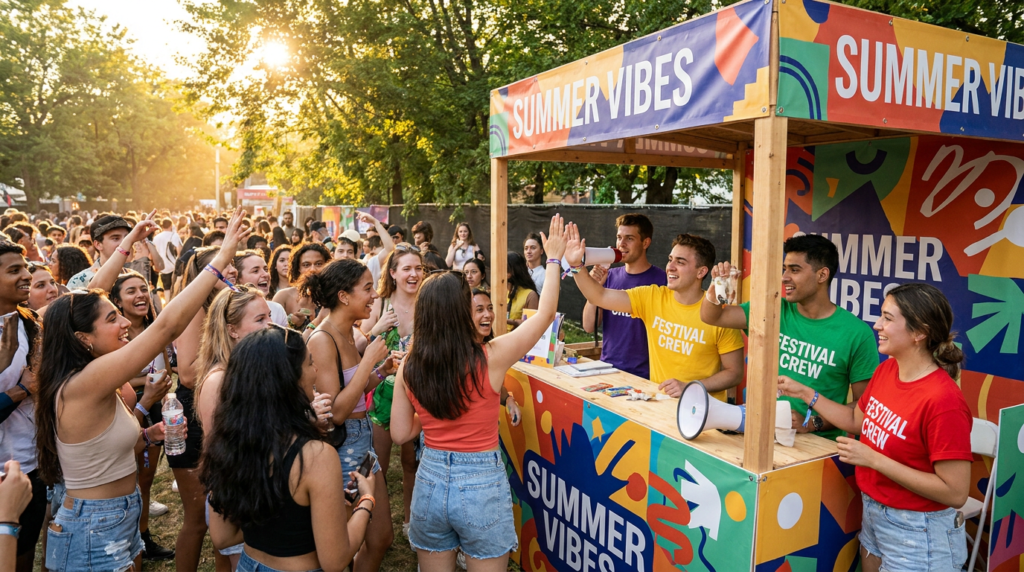
Pop-ups create a destination. Beyond simple sampling, they give people a reason to stop, play, and share.
Finally, smart teams capture every interaction. Because each sample becomes a tracked lead, the campaign keeps working long after the rep goes home.
Read these tactics as a system, not a menu. When sampling, demos, and data capture run together, the whole program compounds.
The right mix also depends on your goal. For instance, a launch leans on demos and pop-ups, while a trial push leans on sampling and street teams.
Most brands weigh the same question first. Which field marketing agency in Toronto actually delivers? On paper, the dozen agencies chasing the same brief pitch the same three things: reach, staff, and reporting.
Look past the pitch and compare on five points. First, local rep networks. Second, training depth. Third, real-time reporting. Fourth, multicultural fluency. Fifth, a clear link between activity and revenue. Because strengths compound, the best partner usually wins on several fronts at once. For a wider view, read our guide to the top experiential marketing agencies in Canada.
Ask any partner two things. First, who trains and manages the reps on the ground? Second, how will you measure results after the activation ends? The answers reveal who can truly deliver, not just staff a table.
Brand Guruz is built to answer both with proof. In short, we combine trained multicultural reps with tracking that ties every sample to a real outcome.
A strong campaign is planned on purpose, not by luck. Accordingly, we run every field marketing program through five steps.
Decide what success looks like, whether that is trial, sign-ups, or sales. Because the goal shapes everything, it comes first.
Next, pick the stores, streets, and events where your buyers already are. As a result, every rep-hour lands in front of the right crowd.
Then, staff the program with people who reflect the community. Because a trained, local rep earns trust in seconds, this step decides the outcome.
On the day, run the activation and log every interaction. In the meantime, a simple form turns each conversation into a follow-up lead.
Finally, review the numbers and refine the next wave. Because field marketing is repeatable, each round should beat the last.
Above all, keep the brief clear. When the team knows the one outcome that matters most, every rep-hour points straight at it.
Cost is usually the first practical question. Fortunately, field marketing scales to almost any budget and goal.
Pricing depends on scope. Commonly, brand ambassadors run about $30 to $60 per hour, a single-day retail or street activation lands around $2,000 to $6,000, and a multi-market program runs higher. For a fuller picture, see our brand activation cost in Ontario guide.
Price alone is the wrong lens. Instead, look at cost per engaged shopper and the sales that follow, since one strong partner can out-perform three cheaper ones. For proof, see our CIBC case study.
Value also compounds over time. Because every activation builds relationships and data, your next campaign starts ahead of the last.
Brand Guruz is a Canadian experiential marketing agency built for live, multicultural audiences. Specifically, we plan, staff, and run field marketing programs that reflect the communities you want to reach.
That focus matters. Because we handle the activation and the digital follow-up together, every shopper a campaign meets can become a tracked lead. In practice, that turns a great sampling day into measurable revenue.
We also activate at scale across the GTA and beyond, with trained reps and backup staff for every program. To see the work, browse our case studies, then talk to Brand Guruz.
Few agencies close that loop. Since we own both the moment and the follow-up, nothing valuable slips through the cracks afterward.
Field marketing is a face-to-face tactic where trained reps promote your product in stores, on streets, and at events. In short, it drives trial, trust, and first purchase in the real world.
Digital marketing earns clicks; field marketing earns handshakes. Because a real person delivers the message, the brand memory and trust last far longer than an online impression.
Costs vary by scope. Commonly, ambassadors run $30 to $60 per hour, and a single-day activation lands around $2,000 to $6,000. Multi-market programs cost more but reach further.
A campaign can mix product sampling, in-store demos, street teams, retail and mall activations, mobile tours, and pop-ups. Together, they touch shoppers several times across one week.
Yes. Because you can start with one store or one event, a small brand can test field marketing affordably and scale only what works.
Strong programs run across Toronto, Mississauga, Brampton, Markham, Scarborough, and Vaughan, plus Ottawa, Hamilton, and London throughout Ontario.
Track samples, conversations, and leads captured, then follow them to sales. Because every interaction is logged, you can tie activity directly to revenue.

Ready to put your product in real hands? Then let us build the field marketing campaign that fits your goal and your brand.
Brand Guruz plans, staffs, and runs activations across Toronto, the GTA, and all of Ontario. Tell us your objective, and we will design the program to hit it. To start, book a quick call through our contact page, or explore proven results in our case studies.