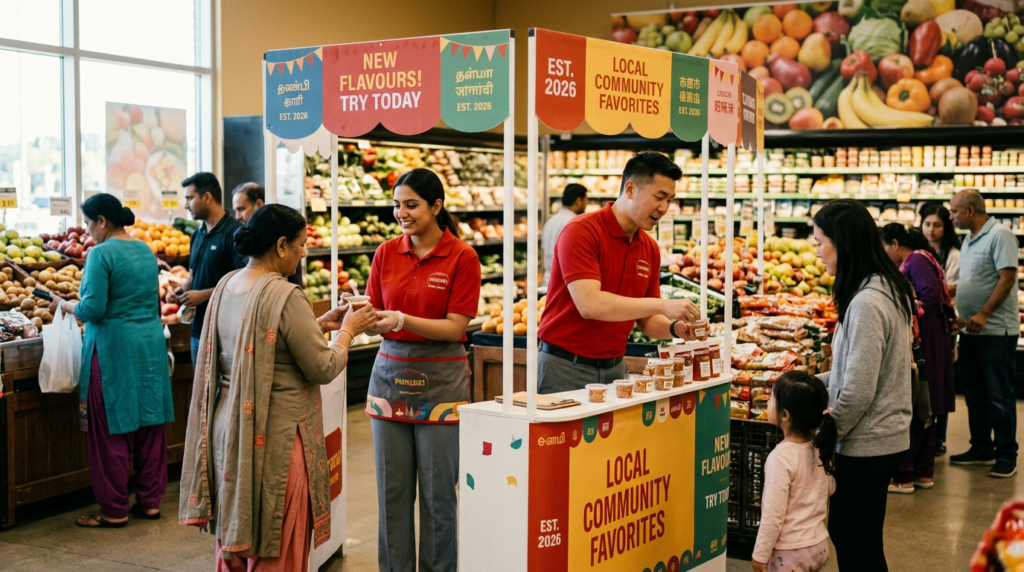
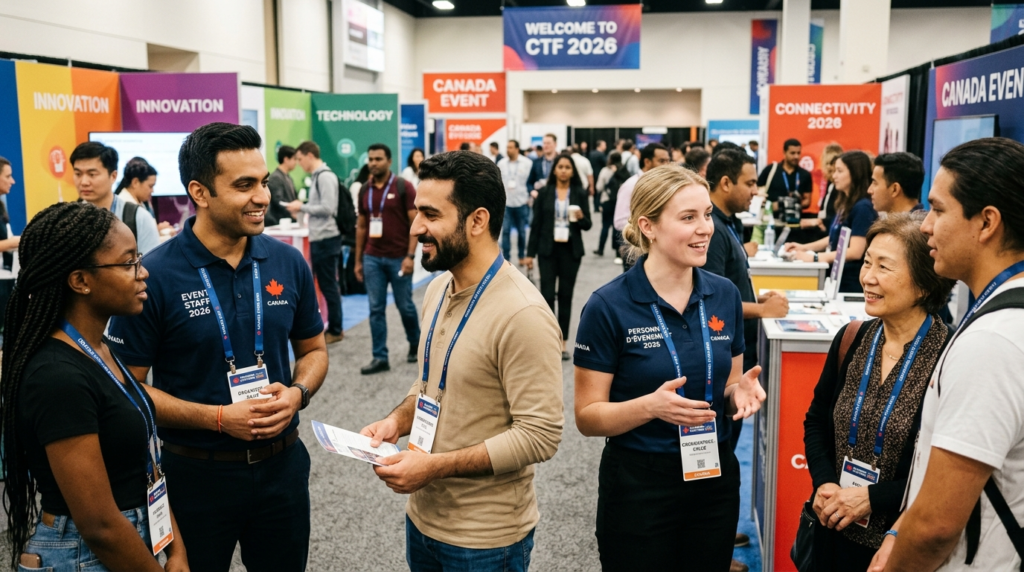
A pop-up shop in Toronto is not a nice-to-have. For brands that need to drive trial or test a new market segment, it is one of the highest-return physical activation formats available. The city’s density, transit access, and multicultural consumer base make it uniquely suited for pop-ups that actually convert.
In fact, Brand Guruz has planned and staffed pop-up activations across Toronto and the GTA. That work spans Distillery District brand experiences to multicultural sampling corridors in Brampton and Scarborough. Ultimately, this guide is for brand managers who want to run a pop-up shop in Toronto strategically — not just show up and hope for foot traffic.
global pop-up retail market in 2025 (Capital One Shopping Research)
of retailers who opened a pop-up considered it a success (Capital One Shopping Research)
average pop-up shop hire fee in Toronto (Tagvenue, March 2026)
The global pop-up retail market is projected to reach $95 billion in 2025, according to Capital One Shopping’s retail pop-up statistics. Canadian brands are a growing part of that figure. However, the case for a pop-up shop in Toronto goes beyond market size. It is about what physical activation does that no digital channel can replicate.
eMarketer’s research on physical retail found that nearly 90 percent of consumers remember engaging physical store experiences, and 71 percent say those moments deepen their loyalty. Additionally, 80 percent of retailers who opened a pop-up considered it a success. Fifty-eight percent plan to open another one.
In Toronto, those numbers have a structural advantage. As a result, Toronto’s population density and transit ridership create concentrated foot traffic that suburban formats simply cannot match. A well-placed pop-up shop in Toronto reaches engaged, high-intent consumers at the exact moment they are open to discovery. This applies across food and beverage, beauty, apparel, and consumer goods equally.
The format also works well as a research tool. Pop-ups let you test product positioning and message resonance across specific demographic clusters. On balance, that is genuinely low-risk market intelligence. In fact, Shopify’s pop-up shop guide notes that 44 percent of pop-up shops cost less than $5,000 to open, which makes experimentation genuinely low-risk.
Ultimately, neighbourhood selection determines whether a pop-up shop in Toronto generates qualified leads or just collects foot traffic. The two are not the same. The two are not the same.
Mainstream consumer districts suit brands targeting a broad Toronto demographic. For example, Queen Street West draws younger urban shoppers — fashion-forward, discovery-oriented, social-media-active. Similarly, the Distillery District pulls a mix of tourists and affluent local consumers. Kensington Market rewards brands with an independent or artisan identity. Yorkville, meanwhile, serves luxury and premium positioning.
Multicultural community corridors are where Brand Guruz activates most often — and where mainstream brands consistently underinvest. Brampton’s Main Street corridor is the highest-density South Asian Canadian retail environment in the country. Scarborough’s Eglinton East and the Danforth both provide concentrated access to South Asian, Caribbean, and East Asian shoppers, respectively. Mississauga’s Hurontario corridor and the Malton area round out the GTA’s South Asian retail belt.
Still, the best neighbourhood is not always the most obvious one. It is the one where your target consumer is already concentrated, already shopping, and not yet over-saturated with competing activations. In short, match the neighbourhood to the demographic, not to brand aesthetics. For the audience intelligence that supports this decision, see our multicultural market research guide.
Generally, every pop-up shop in Toronto requires some form of municipal authorisation. The type depends on the location, the product, and the duration of the activation.
For indoor leased spaces — such as a storefront, market stall, or shared retail kiosk — the primary obligation is a business licence from the City of Toronto. If the space involves food preparation or sampling of open food, the City of Toronto updated its licensing and zoning bylaws as of January 1, 2025. Businesses must secure the appropriate licence before operating. The City’s Licence Finder Tool identifies requirements by business type.
For outdoor activations — on sidewalks, in parks, or at public plazas — a Temporary Use Permit or Special Event Permit is required from the City of Toronto. However, lead times vary by location and season. For high-traffic summer locations, expect four to eight weeks minimum. Apply early.
For alcohol sampling — Ontario’s AGCO requires a Special Occasion Permit and Smart Serve–certified staff. Alcohol sampling at a pop-up or brand event is not covered under a standard retail licence. See our product sampling guide for the full compliance framework.
For food sampling — open food samples at public pop-ups typically require a Temporary Food Premises permit from Toronto Public Health. By comparison, pre-packaged samples are lower-risk from a permitting standpoint. Generally, work with your agency to confirm permit requirements before booking the space, not after.
The cost of pop-up shop space in Toronto averages around C$120 per hire hour, based on Tagvenue’s March 2026 Toronto rental data. However, a brand activation budget has more moving parts than venue hire alone.
Space rental: In fact, C$120/hour is the average for standalone venue hire. Shared market stalls and mall kiosk rentals typically use weekly or monthly rates rather than hourly hire. Budget C$3,000–$15,000 for a meaningful multi-day activation in a quality Toronto location.
Staffing: For staffing, professional brand ambassadors in Toronto run $20–$35 per hour, with bilingual and multilingual talent at the higher end. For a two-person team over a full weekend, budget $1,500–$3,500 before agency fees. For the staffing framework, see our in-store pop-up sales playbook.
Production and build-out: Branded fixtures, display materials, and on-site branding typically run $2,000–$10,000 depending on complexity.
Total budget ranges:
Putting bodies in the booth is not a staffing strategy. In practice, a pop-up shop in Toronto performs when the staff match the audience — linguistically, culturally, and in product knowledge.
For mainstream Toronto pop-ups, product demonstrators with warmth, energy, and genuine category knowledge convert at significantly higher rates than generalist staff. For multicultural market pop-ups, however, bilingual or multilingual capability is non-negotiable. A Punjabi-speaking staff member in Brampton is not an optional upgrade — it is the reason the program converts. The same applies to a Cantonese speaker in Scarborough, or a Patois-fluent team member at a Caribbean community activation.
Also, define the role clearly before hiring the person. The pop-up context typically needs two distinct profiles. One focuses on attracting and engaging passersby. The other focuses on product demonstration and conversion. Running both functions off the same individual produces mediocre results on both. For the full staff role framework that applies here, see our brand ambassador program guide.
Brand Guruz manages pop-up shop activations across Toronto and the GTA end-to-end. That includes location scouting, permit coordination, staffing, build-out management, and post-activation measurement. We do not source generic event staff. Instead, we match the cultural and linguistic profile of the activation team to the specific community the pop-up is targeting.
Our roster includes Punjabi, Hindi, Urdu, Tamil, Gujarati, Cantonese, and Mandarin-speaking ambassadors alongside mainstream English market talent. In particular, that depth lets us match the team to the community. That range lets us run a Queen West pop-up and a Brampton community program in the same week with the right people in each location.
For the broader retail activation strategy that pop-up shops fit into, see our retail activations guide.
What permits do I need to run a pop-up shop in Toronto? The requirements depend on the location and product type. Indoor leased spaces require a City of Toronto business licence. Outdoor pop-ups on public property require a Temporary Use Permit or Special Event Permit. Food sampling at public events requires a Temporary Food Premises permit. Alcohol sampling requires an AGCO Special Occasion Permit and Smart Serve–certified staff. Apply well before your activation date — outdoor summer permits can take four to eight weeks.
How much does a pop-up shop in Toronto cost? Space hire in Toronto averages C$120 per hour, according to Tagvenue’s March 2026 data. A full activation budget — space, staffing, and production — ranges from $5,000 for a lean weekend to $100,000+ for a premium multi-day brand moment. Most mid-tier activations run $15,000–$40,000.
Which Toronto neighbourhoods are best for a pop-up shop? It depends on your target audience. Queen West, Distillery District, and Kensington Market suit mainstream consumer brands targeting urban Toronto demographics. For multicultural CPG brands, Brampton’s Main Street, Scarborough’s Eglinton East, and Mississauga’s Hurontario belt reach South Asian, East Asian, and Caribbean communities at far higher concentrations.
How long should a pop-up shop in Toronto run? Most pop-up shops run three to fourteen days. A weekend activation (two to three days) suits brand sampling programs. Longer activations — one to two weeks — work better for product launches and seasonal campaigns.
How do I measure pop-up shop ROI? Define your KPIs before the activation, not after. Standard metrics include: foot traffic, samples distributed or units sold, leads captured, and post-activation sales lift. Track performance per staff member per shift. Compare sampled locations against control locations to isolate the pop-up effect.

Talk to Brand Guruz about planning and staffing your Toronto pop-up — location, permits, staff, and measurement. Or browse case studies to see how our activations have performed on the ground.