What services does an experiential marketing agency typically offer?

An experiential marketing agency typically offers brand activations, event marketing, product sampling, pop-ups, trade show support, brand ambassador staffing, campaign strategy, logistics, creative production, and post-campaign reporting.

For brands in Ontario, this matters because customers are exposed to ads all day. They scroll past sponsored posts, skip videos, ignore banners, and forget most messages within seconds. Experiential marketing changes that by putting the brand directly in front of people through a real-world interaction.

Instead of only telling people what your product or service does, an experiential marketing agency helps them experience it. That could mean tasting a product at a grocery store, interacting with a booth at a festival, signing up for a service at a community event, visiting a branded pop-up, or engaging with a live product demonstration.

At Brand Guruz, we see experiential marketing as the bridge between awareness and action. The goal is not just to look visible. The goal is to create a moment that builds trust, drives engagement, and moves people closer to becoming customers.


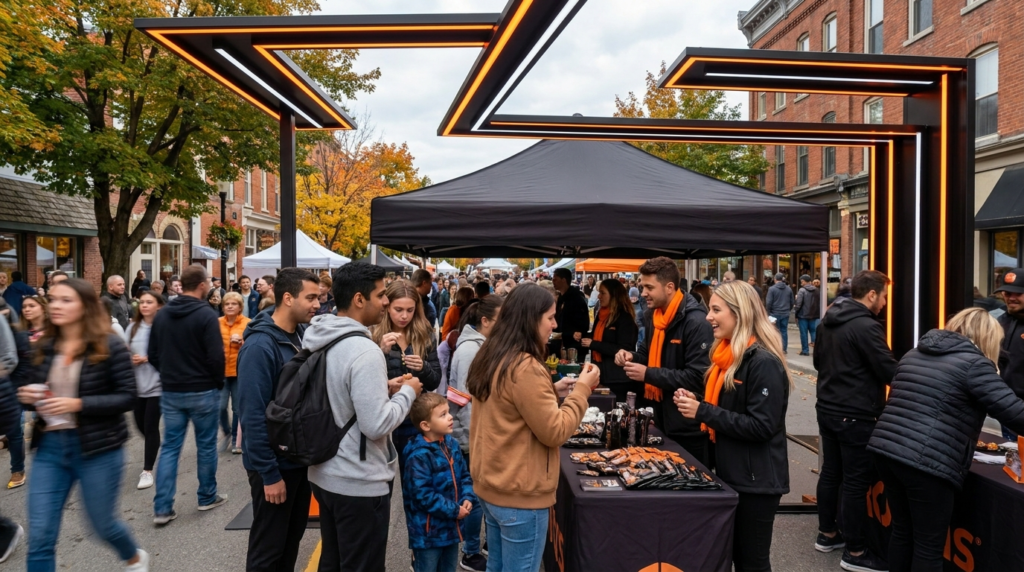
Brand Guruz experiential marketing activation booth engaging visitors with product sampling at a busy outdoor community event in Ontario

1. Experiential marketing strategy

The first service an experiential marketing agency should offer is strategy. This is where the agency defines what the campaign needs to achieve, who it needs to reach, and what type of experience will create the strongest response.

A proper strategy should answer key questions. Who is the audience? Where do they spend time? What action should they take after the experience? Is the goal product trial, lead generation, brand awareness, foot traffic, customer signups, or sales support?

Without strategy, an activation becomes a table, a banner, and a few giveaways. That is not enough. A strong agency builds the campaign around a clear customer journey, from first interaction to final follow-up.

2. Brand activations

Brand activation is one of the most common services offered by experiential marketing agencies. A brand activation is a live campaign that gets people to interact with a brand in a memorable way.

This may include product demos, interactive booths, contests, giveaways, photo opportunities, QR code signups, coupon distribution, or one-on-one conversations with trained representatives. The goal is to make the brand feel active, useful, and relevant in the customer’s environment.

For example, a food brand may use a retail sampling activation to get shoppers to try a new product. A financial brand may use a community event activation to generate qualified leads. A home improvement brand may use an on-site product demonstration to educate homeowners and contractors.

You can explore more Brand Guruz activation work through our CIBC experiential marketing case study.

3. Product sampling and retail demos

Product sampling is especially valuable for food, beverage, wellness, beauty, and consumer packaged goods brands. When people can taste, touch, smell, or test a product, the buying decision becomes easier.

An experiential marketing agency can manage the full sampling process. This includes store coordination, staffing, product handling, demo table setup, training, customer engagement scripts, coupon distribution, and reporting.

In Ontario, retail demos can be especially effective in grocery stores, malls, cultural events, festivals, campuses, and high-traffic community spaces. The agency’s job is to make sure the experience feels organized, professional, and aligned with the brand.

Brand ambassador offering food samples to shoppers during an in-store product sampling activation at a grocery store

4. Event marketing and festival activations

Experiential agencies often help brands show up at events where their target audience is already gathered. This could include festivals, trade shows, sporting events, cultural events, conferences, university campuses, charity events, and community celebrations.

The benefit is simple. Instead of trying to attract people from scratch, the brand enters an environment where foot traffic already exists.

Event marketing services may include booth planning, sponsorship support, signage, staffing, lead capture, giveaway planning, product display, and on-site management. For brands targeting multicultural audiences in Ontario, events can be especially powerful because they allow for direct, community-based engagement.

Brand Guruz supports campaigns across diverse event environments, including multicultural festivals and high-traffic public activations. You can also review our Lactalis case study for an example of event-based brand visibility.

5. Pop-up experiences

Pop-ups are temporary branded spaces designed to create attention, engagement, and social sharing. They may appear in malls, downtown areas, campuses, retail plazas, festivals, or private event spaces.

A pop-up can be simple or highly immersive. Some brands use pop-ups for product launches. Others use them for sampling, influencer content, customer education, lead generation, or direct sales.

A good experiential agency helps with location planning, customer flow, display design, staffing, permits, setup, teardown, and performance tracking. The strongest pop-ups do not just look nice. They give people a reason to stop, participate, and remember the brand.

Luxury retail brand activation with staff engaging customers through product demonstrations in a premium pop-up showroom

6. Brand ambassador staffing

Brand ambassadors are the people representing your brand in person. This is one of the most important parts of any experiential campaign.

A strong experiential marketing agency should recruit, train, schedule, and manage brand ambassadors who can speak clearly, stay professional, and engage customers without sounding pushy.

The wrong staff can damage the campaign. If they are untrained, distracted, late, or unable to explain the offer, the brand loses trust. The right staff can turn a simple interaction into a lead, sample trial, signup, or purchase intent.

For Ontario campaigns, brand ambassadors may need to understand local communities, cultural nuances, language preferences, retail rules, and event expectations. This is where experienced field management becomes valuable.

7. Creative concept development

Experiential marketing is not only about logistics. It also requires creative thinking. The agency should help develop the campaign theme, booth concept, customer interaction, visual direction, signage, giveaways, and messaging.

The creative idea should match the brand’s goal. A luxury brand may need a polished and premium experience, while a youth-focused brand may need something energetic and social-media-friendly. A B2B brand may need a more educational and trust-building setup.

The strongest concepts are simple enough for people to understand quickly, but interesting enough for them to stop and engage.

8. Logistics and on-site management

Behind every smooth activation is detailed logistics. This includes scheduling, equipment, storage, transportation, setup, teardown, staffing check-ins, venue coordination, product handling, and issue management.

This is where many campaigns fail. A good idea means nothing if the booth arrives late, the team is confused, the product is missing, or the venue requirements were ignored.

An experiential marketing agency should manage these operational details so the brand can focus on the bigger picture. For multi-location campaigns across Ontario, logistics become even more important because every site may have different rules, timelines, and audience patterns.

Event production team setting up a branded experiential marketing activation space with display panels, lighting, and equipment

9. Lead generation and customer signups

Many brands use experiential marketing to collect leads or drive signups. This can include QR code forms, tablet registrations, contest entries, newsletter signups, app downloads, quote requests, or consultation bookings.

The agency should help design the lead capture process so it feels natural. If the process is too long, people leave. If it is too vague, the lead quality drops, and if there is no follow-up system, the campaign loses value.

Brand Guruz often connects experiential campaigns with digital follow-up systems, including CRM workflows, email campaigns, and automation. This helps brands continue the conversation after the live interaction ends.

10. Reporting and campaign insights

Reporting is one of the most important services an experiential agency should offer. After the campaign, the brand should know what happened, what worked, and what should improve next time.

Common metrics may include foot traffic, samples distributed, leads collected, customer conversations, coupon redemptions, signups, event photos, staff notes, customer feedback, and location-level performance.

Industry sources such as Event Marketer and Forbes continue to highlight the value of meaningful in-person engagement as brands look for stronger ways to connect with audiences.

Why brands work with experiential marketing agencies

Brands work with experiential marketing agencies because live campaigns require more than a good idea. They require strategy, staffing, production, logistics, venue coordination, customer engagement, and measurable follow-up.

For Ontario brands, the right agency can help reach customers in malls, grocery stores, festivals, campuses, retail locations, public spaces, trade shows, and community events. This is especially important when the goal is to connect with diverse audiences across cities like Toronto, Mississauga, Brampton, Vaughan, Markham, Hamilton, London, Kitchener, and Ottawa.

Final thoughts

An experiential marketing agency typically offers strategy, brand activations, event marketing, product sampling, pop-ups, brand ambassador staffing, creative development, logistics, lead generation, and reporting.

The real value is not only in showing up. The value is in showing up with purpose, engaging the right audience, creating a strong customer experience, and turning that interaction into measurable business growth.

If your brand is planning an activation in Ontario or across Canada, contact Brand Guruz to build an experiential marketing campaign designed around your audience, goals, and growth strategy.

Author