B2B conferences are some of the most expensive line items in any marketing budget. To be specific, a single major industry conference can cost an exhibitor six figures. The total includes travel, booth, staffing, and entertainment. Furthermore, most teams come home with a stack of badge scans and almost no pipeline. Consequently, conference marketing in 2026 is no longer about showing up. Today, it is about engineering pipeline before, during, and after the event.
At Brand Guruz, we run conference marketing for B2B brands as both exhibitors and hosts. In our experience, the brands that win at conferences treat them as a full-funnel campaign, not a three-day activity. Specifically, the playbook differs depending on whether the brand is exhibiting at someone else’s event or hosting its own.
This is two playbooks in one. The first half covers how exhibitors drive pipeline at B2B conferences. The second covers how hosts build entire events around it.

B2B organizations now spending more on owned events than third-party shows (Forrester, 2025)
B2B event organizers who say in-person events deliver unmatched impact (Bizzabo)
Share of B2B marketers who take 4+ days to follow up on event leads (Demand Gen Report)
Conference marketing is back at the center of B2B because nothing else delivers the same compressed pipeline. To be specific, two days at the right event can produce more qualified meetings than two quarters of digital outbound. Furthermore, in-person trust still beats every other channel for high-consideration B2B deals.
As Bizzabo’s 2025 State of Events research shows, 78% of B2B event organizers say in-person events have unmatched impact. Furthermore, 80% consider them vital to overall marketing success. Consequently, the question is no longer whether to invest in conferences. The question is how to extract pipeline from them.
Importantly, the shape of the investment is also shifting. Marketing Week coverage of Forrester’s research shows a clear move toward owned events. Specifically, 53% of B2B organizations now spend more on hosting their own events than third-party shows. As a result, the modern conference marketing playbook needs to cover both sides of the floor.
Exhibitors drive pipeline at B2B conferences through three coordinated phases. To be specific, the work splits into pre-event, on-floor, and post-event. Furthermore, the brands that treat these as one continuous campaign convert the most attendees into deals.
Pre-event exhibitor strategy starts six to eight weeks out. Specifically, the team should build a target account list and pre-book meetings with key prospects. Equally important, they should seed content into the relevant LinkedIn conversations. Furthermore, the highest-converting exhibitor strategies fill 60-70% of meeting slots before the conference even opens.
In our experience, pre-event outbound is the single biggest pipeline lever. As a result, brands that wait until they hit the floor to start qualifying have already lost the conference. For booth-specific build guidance, see our trade show booth design guide.
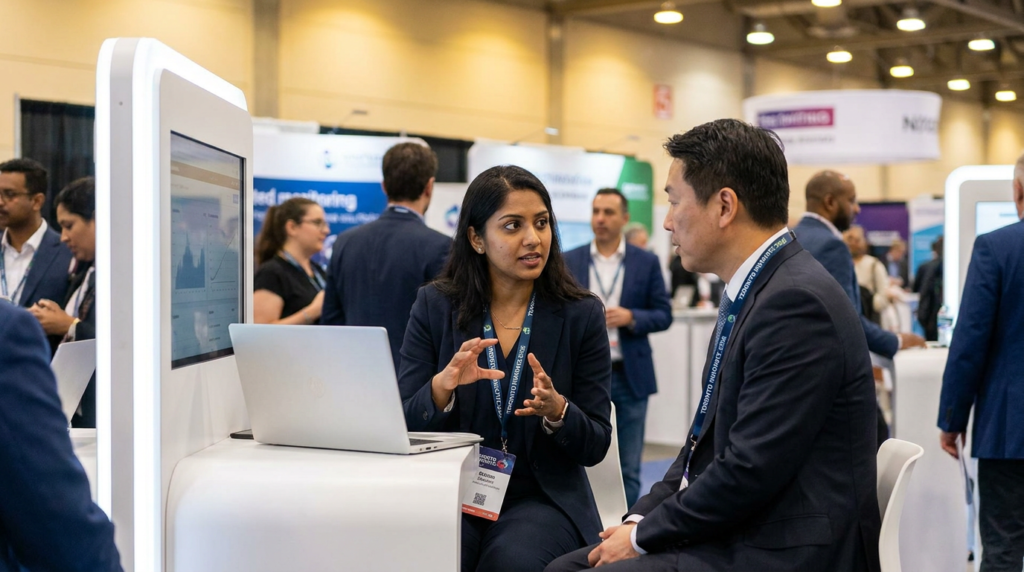
On-floor execution is where pre-event work pays off — or fails publicly. Specifically, the booth team needs to handle pre-booked meetings, qualify walk-ups, demo product, and capture leads simultaneously. Furthermore, the strongest booths are designed around conversations, not displays.
HockeyStack’s analysis of B2B event pipeline shows event leads outperforming the typical 5-10% B2B conversion rate. In our experience, that lift comes from intent — buyers walk into a booth ready to evaluate. Consequently, the booth that asks good qualifying questions wins more than the booth with the loudest LED.
Post-event follow-up is where most exhibitor budgets quietly die. Specifically, Demand Gen Report research found that 57% of B2B marketers take four or more days to follow up. Furthermore, only 6% follow up the same day or next day.
In our experience, the meeting booked within 48 hours converts much better than the same lead a week later. As a result, the post-event playbook is mostly about speed and structure. Consequently, brands need a follow-up sequence ready before the booth opens, not after it closes.
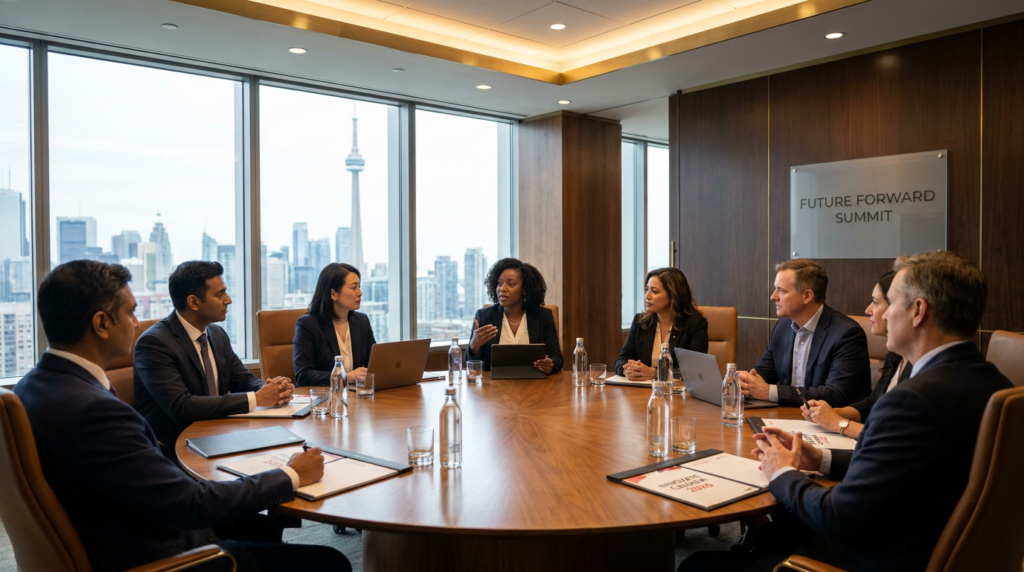
Hosting your own B2B conference is the most direct way to control the pipeline a conference produces. To be specific, the host controls the invite list, the content, the room, and the conversation. Furthermore, the host conference doubles as a brand-building, customer-community, and sales-acceleration channel at once.
Hosting your own B2B conference solves problems that exhibiting cannot. Specifically, the host shapes the audience instead of inheriting it. Furthermore, the host owns the data, the relationships, and the content output for years.
In our experience, the brands that host their own conferences build category authority faster than those that only exhibit. As a result, the host conference is increasingly the centerpiece of B2B marketing programs, not a side bet.
Designing a host conference for pipeline outcomes starts with the invite list. Specifically, the audience should be the brand’s top 200-500 target accounts — not anyone willing to register. Furthermore, the session formats should include 1:1 executive time, customer roundtables, and curated networking.
As Trade Show Executive coverage of PCMA Convening Leaders 2026 notes, attendees today are buying outcomes, not badges. Consequently, host conferences need to deliver specific business outcomes to specific accounts. For broader event hosting guidance, see our best corporate event venues in Toronto and corporate event planner buyer’s guide.
Measuring a host conference comes down to pipeline attribution and account penetration. Specifically, the brand should track pipeline created, opportunities advanced, and account coverage from the invitee list. Furthermore, content output and customer NPS round out the picture.
In our experience, the best host conferences produce three to six months of content. Furthermore, they cost less than two equivalent third-party event sponsorships. As a result, the ROI math typically favors hosting once the brand has a clear ICP.
Most underperforming conference marketing programs share the same mistakes. To be specific, here are the four most common across exhibitors and hosts.
Brand Guruz is the agency Canadian B2B brands hire when conference marketing has to produce real pipeline. To begin with, our team runs both exhibitor activations and host conferences across Toronto, Vancouver, Calgary, and Montreal. Furthermore, our multicultural network gives Canadian B2B brands an edge with the increasingly diverse buyer base.
Equally important, we treat conferences as full-funnel campaigns. Specifically, pre-event outbound, on-floor execution, and post-event follow-up all live on one integrated plan. As a result, the brand sees pipeline impact rather than just badge scans.
If you are scoping conference marketing for 2026, talk to Brand Guruz about your B2B event calendar. For brands extending conference activations into a national tour, see our experiential marketing tour playbook. Or browse case studies to see how the playbook lands at the floor and in the pipeline.
What is conference marketing? Conference marketing is the practice of using B2B conferences as both exhibitor and host. It covers pre-event outbound, on-floor execution, and post-event follow-up. As a result, the conference becomes a measurable pipeline channel rather than a brand expense.
Should B2B brands exhibit or host their own conference? Most mature B2B brands do both, with different goals. Specifically, exhibiting reaches a broader audience the brand does not control, while hosting concentrates pipeline among target accounts. Furthermore, 53% of B2B organizations now spend more on owned events than third-party shows.
How fast should you follow up on B2B conference leads? Within 48 hours, ideally same-day for high-intent leads. Specifically, research shows 57% of B2B marketers take four or more days to follow up — and that delay loses pipeline. Furthermore, the meeting booked within 48 hours converts dramatically better than the same lead reached a week later.
How much does a B2B conference activation cost? A B2B conference activation typically ranges from $25,000 for a basic exhibitor presence to $500,000+ for a hosted multi-day conference. Specifically, cost depends on booth size, staffing, content production, and venue. Furthermore, hosted events scale higher because the brand pays for venue and production.
The conference calendar fills fast in the spring and fall planning windows. Talk to Brand Guruz about your 2026 exhibitor and host conference strategy. Or browse our case studies to see how the playbook plays out at the booth and in the boardroom.