The South Asian Consumer in Canada: A 2026 Guide for Brand Marketers

The South Asian consumer in Canada is the country’s most commercially significant multicultural audience — and among the most under-served by conventional brand marketing. Specifically, 2.6 million Canadians identified as South Asian in the 2021 Census — the country’s largest visible minority group. Notably, that community grew from 669,060 people in 1996 to 2.6 million in 2021 — a nearly fourfold increase in 25 years. Moreover, Statistics Canada projects growth to 4.7–6.5 million by 2041 — up to 12.5% of Canadians.

Consequently, brands that still lack a South Asian consumer strategy are falling behind on Canada’s most significant retail demographic shift. Indeed, the GTA alone represents a more concentrated South Asian consumer market than most countries outside South Asia itself. Brand Guruz operates with offices in Brampton and Richmond Hill, running in-language brand activation programs across the GTA’s South Asian, Punjabi, Tamil, Gujarati, and Bengali communities.

2.6 million

South Asians in Canada in 2021, the country’s largest visible minority group (Statistics Canada)

52.4%

share of Brampton’s population identifying as South Asian, the highest proportion of any major Canadian city (2021 Census)

4.7–6.5 million

 projected South Asian Canadian population by 2041, representing up to 12.5% of the national population

The South Asian consumer in Canada: who they are

The South Asian consumer in Canada is not a monolith. Specifically, the Statistics Canada 2021 Census recorded more than 145 distinct ethnic or cultural origins within the South Asian population. Indian-origin Canadians form the largest sub-community — primarily Punjabi, Gujarati, and South Indian. Pakistani, Sri Lankan, and Bangladeshi communities follow. Each brings distinct languages, religious frameworks, cultural occasions, and community trust structures.

The community’s religious composition spans four main groups: Hindu (29.9%), Sikh (29.6%), Muslim (23.1%), and Christian (9.5%). Consequently, a brand activation strategy that treats all South Asian Canadians as one audience will systematically miss most of them. A Punjabi Sikh community event in Brampton serves a fundamentally different audience than a Tamil Hindu temple event in Scarborough. Pakistani Muslim Eid events in Mississauga reach a different community still.

Furthermore, the educational profile of South Asian Canadian consumers is significantly higher than the general population. Among South Asians aged 25 to 54, 58% hold a bachelor’s degree or higher. In comparison, this is 32% among the non-racialized population. Additionally, approximately 60% of South Asians in Canada were born outside Canada, while roughly 30% are Canadian-born second generation. Consequently, this generational split has significant implications for media consumption, language preference, and brand engagement strategy.

The South Asian consumer in Canada: geographic concentration

The South Asian consumer in Canada is one of the most geographically concentrated consumer populations in North America. In fact, 46% of all South Asian Canadians live in the Toronto CMA.

Within the GTA, Brampton leads with 340,815 South Asian residents — 52.4% of the city’s total population, the highest concentration of any major Canadian city. Mississauga follows with 21.8% South Asian, concentrated around Square One, Westwood Mall, and the Airport Road corridor. Additionally, Markham, Scarborough, Ajax, and Milton all hold significant and growing South Asian communities.

For brand marketers, this geographic concentration is operationally significant. Specifically, a brand activation program covering Brampton, Mississauga, and Scarborough reaches the majority of the GTA South Asian consumer market. In-language community activation programs across these three municipalities deliver a reach that no mass media campaign can replicate. For the full multicultural market research framework, see our multicultural market research guide.

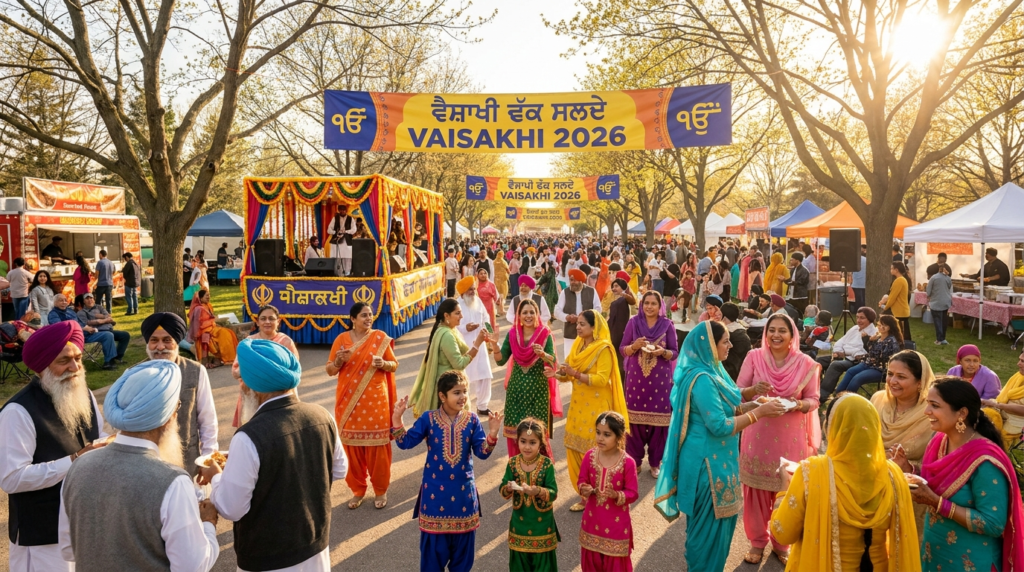
South Asian consumer Canada Brampton community cultural occasion showing Punjabi Canadian families celebrating Vaisakhi at a Brampton cultural event in spring 2026.
Brampton — where South Asians represent 52.4% of the total population — is the most concentrated South Asian consumer market of any major Canadian city, and home to a year-round cultural occasions calendar that creates sustained brand activation opportunities.

How the South Asian consumer in Canada makes purchasing decisions

Community referral precedes advertising as a trust signal for the South Asian consumer in Canada — in virtually every major category. Specifically, South Asian first-generation households — approximately 60% of the community — make major purchasing decisions through extended family networks. A recommendation from a community member or a gurdwara financial seminar carries more purchasing influence than any mass media campaign. Tamil community association endorsements of healthcare providers work the same way.

Moreover, this dynamic is structural rather than cultural preference. Specifically, first-generation South Asian Canadians in Brampton and Mississauga have built parallel commercial and social infrastructure. This includes Punjabi-language shopping plazas, halal markets, South Asian pharmacies, Tamil grocery stores, and Gujarati diamond retailers. Consequently, brand trust transfers within these networks at a speed and depth that paid advertising cannot replicate. Indeed, Statistics Canada’s research identifies limited cultural assimilation among first-generation South Asian Canadians, reflecting the community’s strong social infrastructure.

Furthermore, WhatsApp is the primary digital communication channel for first-generation South Asian Canadian consumers — not Instagram or Facebook. Community WhatsApp groups for Punjabi families in Brampton, Tamil families in Scarborough, and Gujarati networks in Mississauga are the primary product recommendation channel. Additionally, service referrals and brand reputation signals flow through the same infrastructure. A brand that earns positive word-of-mouth in community WhatsApp networks gains a trust channel that paid advertising cannot buy.

The cultural occasions calendar every South Asian consumer in Canada observes

No consumer community in Canada observes a richer cultural occasions calendar than the South Asian consumer in Canada. The cultural year spans major religious and cultural occasions — each with distinct community segments, regional variations, and activation implications.

Spring and early-year occasions

Vaisakhi (April 13–14) marks the Punjabi harvest festival and the founding of the Khalsa. It is the most significant shared occasion across Sikh and Hindu Punjabi communities. Brampton’s Vaisakhi parade is among the largest in Canada. Surrey’s Vaisakhi celebration regularly draws over 500,000 attendees — one of the largest public celebrations in the country.

Holi (March 2026) is celebrated primarily by Hindu communities and is the South Asian cultural occasion with the fastest-growing mainstream crossover appeal. Community Holi events in Brampton, Mississauga, and Markham draw increasing brand activation interest.

Eid-ul-Fitr (March 2026) and Eid-ul-Adha (June 2026) mark the two primary Muslim occasions on the South Asian cultural calendar. Together they reach the 23.1% of South Asian Canadians who follow Islam. This includes Pakistani, Bangladeshi, and some Indian-origin communities across Brampton, Mississauga, and Toronto.

Fall occasions and the Diwali window

Navratri and Dussehra (late September–early October) mark nine nights of Hindu celebration, primarily observed by Gujarati and North Indian communities. Community Navratri events in Mississauga and Markham draw significant families.

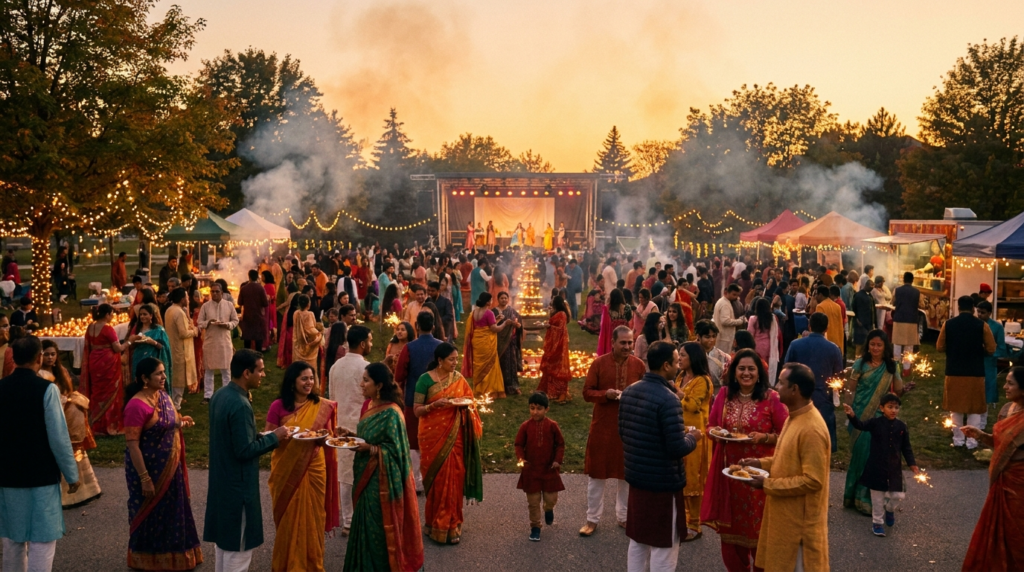
Diwali (October 20, 2026) is the most commercially significant South Asian cultural occasion in Canada. These activations reach across Hindu, Sikh, Jain, and broader South Asian communities. Major events run in Brampton, Mississauga, Markham, and across the GTA. For brands, Diwali is the South Asian equivalent of Christmas. It combines deep community engagement with gifting-driven purchasing behaviour in a single window.

Guru Nanak Jayanti (November 2026) is the Sikh community’s most significant religious occasion, observed across gurdwaras in Brampton and Mississauga.

For the full festival brand activation model, see our festival brand activation playbook.

South Asian consumer Canada brand activation at a Diwali community celebration in Mississauga with a multicultural crowd of South Asian Canadian families enjoying a festive outdoor event.
Diwali — falling on October 20, 2026 — is the most commercially significant South Asian cultural occasion in Canada, with major community events in Brampton, Mississauga, Markham, and across the GTA drawing hundreds of thousands of attendees.

Reaching the South Asian consumer in Canada: channels and formats

The South Asian consumer in Canada is reachable through a media landscape fundamentally different from the general Canadian market. Effective brand communication here operates through distinct channels stratified by generation, language, and community segment.

In-language broadcast and digital media remains the primary reach channel for first-generation South Asian Canadians. Punjabi radio stations including Red FM Canada and Sher-E-Punjab Radio reach large Punjabi community audiences in the GTA. OMNI Television broadcasts in Punjabi, Hindi, Tamil, and Urdu across Ontario. Zee TV Canada, Sony LIV, and Star Plus reach Hindi and Urdu-speaking audiences through satellite and streaming. Tamil-language media on community radio and YouTube reaches Sri Lankan and South Indian Tamil communities in Scarborough and Markham.

WhatsApp community networks are the dominant information infrastructure for first-generation South Asian households. Product recommendations, health information, and brand reputation signals flow through community WhatsApp groups — with more credibility than paid media. A brand that earns community endorsement here benefits from trust money cannot buy.

Cultural community events and festivals are the highest-trust, highest-engagement brand touchpoint. Specifically, community events at gurdwaras, mandirs, mosques, and community centres place brands where South Asian consumers are most engaged. Carassauga, Diwali events, and Vaisakhi parades are among the highest-trust brand touchpoints in the South Asian activation calendar.

In-language brand ambassador programs are the primary conversion format. A Punjabi-speaking brand ambassador at a Brampton community event is not merely more efficient — they are fundamentally more credible. In-language brand ambassadors with genuine community ties extend the community’s social trust to the brand they represent. For the full ambassador program framework, see our brand ambassador program guide.


Reaching second-generation South Asian Canadians in Canada

Second-generation South Asian Canadians — approximately 30% of the community — present a distinct channel profile. Specifically, second-generation South Asian Canadians are active on Instagram, TikTok, and YouTube alongside South Asian cultural content. They respond to brand communications that acknowledge their dual cultural identity. Consequently, brands reaching this segment need cultural intelligence, not language translation. Content must reflect growing up South Asian Canadian — not treat cultural identity as a primarily linguistic category.

Frequently asked questions about the South Asian consumer in Canada

How large is the South Asian consumer community in Canada? The 2021 Census recorded 2.6 million South Asians in Canada. They represent 7.1% of the national population and the country’s largest visible minority group. In the GTA, the community numbers 1.18 million — 19% of the total population. By 2041, Statistics Canada projects the community could reach 4.7 to 6.5 million — one of the fastest-growing consumer demographics in the country.

Which GTA cities have the highest South Asian consumer concentrations? Brampton leads with 340,815 South Asian residents — 52.4% of the city’s total population, the highest concentration of any major Canadian city. Mississauga follows with 21.8% South Asian. Markham, Scarborough, Milton, and Ajax all hold significant South Asian communities. Brampton, Mississauga, and Scarborough hold the dominant GTA South Asian consumer concentration.

What are the most important cultural occasions for South Asian consumer marketing? Diwali (October 20, 2026) is the most commercially significant, reaching across Hindu, Sikh, Jain, and broadly South Asian communities. Vaisakhi (April 13–14) is the primary Punjabi-Sikh community occasion. Eid-ul-Fitr (March 2026) and Eid-ul-Adha (June 2026) reach Muslim-community South Asians. Holi, Navratri, and Guru Nanak Jayanti round out the year-round cultural activation calendar.

How does the South Asian consumer in Canada differ from second-generation South Asian Canadians? First-generation South Asian consumers — roughly 60% of the community — rely on community referral networks, in-language media, and cultural events. Second-generation South Asians — approximately 30% — engage with English-language media alongside South Asian cultural content. They respond to communications that acknowledge dual cultural identity. Strategies must be calibrated to both segments.

Build your South Asian consumer strategy with Brand Guruz

Talk to Brand Guruz about building a South Asian consumer marketing program — in-language community events and Diwali and Vaisakhi brand activations. Punjabi and Tamil ambassador programs are available across the GTA. See our experiential marketing agency Toronto overview for the full multicultural activation model.

Author