A brand activation agency is a specialist partner that plans, builds, staffs and measures live brand experiences, such as sampling programs, pop-ups, festival pavilions and mall activations. To choose one in Canada, match the agency’s proven activation types, in-house production, staffing depth, permitting know-how and reporting to your goal and budget.
Updated November 2026
Key takeaways
88% of people trust recommendations from people they know, which is why face-to-face brand experiences earn trust ads cannot (Nielsen) · ~6.2 million people live in the Toronto CMA, the largest activation market in Canada (Statistics Canada, 2021 Census) · 656,480 people live in Brampton, one of the fastest-growing activation audiences in the GTA (Statistics Canada, 2021 Census)
A brand activation agency is a marketing firm that turns a brand campaign into a physical, hands-on experience where people can see, try or interact with a product. The agency owns the idea, the build, the people on site and the results report, so your brand team manages one partner instead of a dozen vendors.
A brand activation agency is built to drive a specific consumer or buyer action, while an event agency is built to run a gathering. Event agencies focus on agendas, venues, catering and guest flow. Activation agencies focus on trial, sign-ups, social content and sales, and they design every square metre of the footprint around that action.
Consumer packaged goods, beverage, beauty, telecom, automotive and financial services brands hire a brand activation company most often. The buyer is usually a brand, shopper marketing or sponsorship manager with a launch or sales target.
A brand activation agency provides strategy, creative, fabrication, staffing, logistics, content and measurement under one contract. Ask early which services are internal, because subcontracted fabrication and staffing are where quality slips.
The agency translates your business goal into an activation idea, audience, location plan and KPI set. Good strategy answers why this audience, why this place and why now, before a single render is produced.
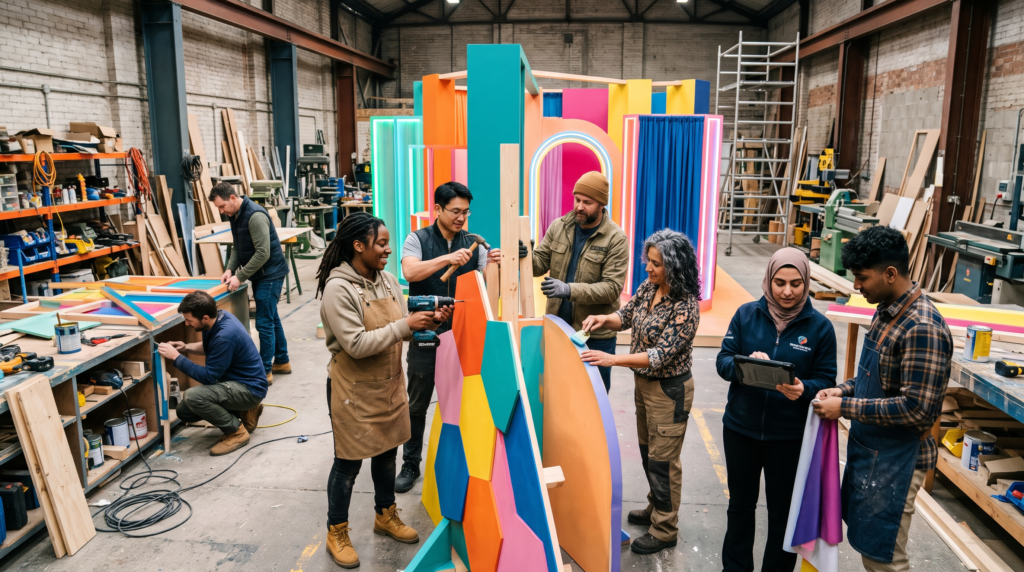
Fabrication covers booths, pavilions, kiosks, vehicle wraps, signage and interactive tech. Agencies with their own shop turn changes faster and can store reusable builds between seasons.
Your staff are the activation. Expect the agency to recruit, background-check, train and manage brand ambassadors, including bilingual English and French teams for Quebec, Ottawa and national tours, and multilingual teams for diverse GTA neighbourhoods.
Street sampling, food and beverage tastings and outdoor builds often need municipal permits, liability insurance, health approvals and, for alcohol brands, provincial compliance. An experienced agency knows the lead times for Toronto, Mississauga, Vancouver and Montreal and builds them into the schedule.
Agencies plan photo and video capture, creator partnerships and paid social so the experience keeps working online after teardown.
Lead forms, QR codes, coupon redemptions and footfall counts turn an activation into a measurable channel. Ask how data is collected, where it is stored and how it complies with Canadian privacy law, including consent for follow-up email.
A brand activation agency can run several distinct formats, each needing different skills, so shortlist agencies that have produced yours recently. For creative inspiration, browse our brand activation ideas for Canada.
Sampling puts the product in hand at transit hubs, campuses, gyms or grocery stores. It is the fastest route to trial for food, beverage and personal care brands, and it lives or dies on ambassador quality and permitting.
Pop-ups are temporary retail or experience spaces, often in high-traffic neighbourhoods such as Queen West or Yorkville in Toronto, Gastown in Vancouver or the Plateau in Montreal. They suit launches, limited editions and direct-to-consumer brands testing physical retail.
The activation is how a sponsorship earns its fee back. Canadian summer festivals and cultural celebrations reward brands that offer shade, charging, games or photo moments, not a table and a banner.
Shopping centres offer steady, weatherproof footfall all year, which matters in a Canadian winter. Mall activations range from sampling carts to LED photo booths and interactive kiosks, and they usually require mall marketing approval and specialty leasing fees.
A branded vehicle or trailer visits several cities or neighbourhoods on a set route. Tours spread fabrication cost across many stops and work well for national launches from Halifax to Vancouver.
For business buyers, activation means demos, hands-on product zones and hosted experiences at conferences and trade shows. The goal is qualified meetings and pipeline, not mass reach.
Hybrid formats pair a physical moment with AR filters, livestreams or social challenges, which helps when budget limits the number of locations.
A brand activation agency in Canada typically charges between $15,000 and $250,000 per activation in our experience, with simple sampling at the low end and custom festival builds or national tours well above it. The ranges below are estimates for planning, not quotes; your scope, market and timing change the number.
| Activation type | Typical scope | Typical range (CAD) |
|---|---|---|
| Street or in-store sampling | 1 city, 2 to 5 days, 4 to 10 ambassadors | $8,000 to $35,000 |
| Mall kiosk or LED photo booth | 1 to 4 weeks, 1 centre | $15,000 to $75,000 |
| Festival or sponsorship pavilion | Custom build, 1 to 3 day festival | $40,000 to $250,000+ |
| Branded pop-up shop | 2 to 6 weeks, retail space and fit-out | $50,000 to $300,000+ |
| Multi-city mobile tour | Vehicle build, 4 to 10 markets | $150,000 to $750,000+ |
| B2B trade show activation | Booth, demo zone and hosted experience | $20,000 to $150,000 |
Fabrication, staffing hours, venue or sponsorship fees and duration make up most of the budget. Rush timelines, union venues and winter outdoor builds add cost; reusing a modular build lowers cost per interaction.
Most agencies quote per project, with agency fees either built into line items or shown as a management fee, commonly 10 to 20 percent of hard costs. Brands running activations all year often move to a monthly retainer. For a deeper breakdown of budgets, read our experiential marketing cost guide.
To choose a brand activation agency, define the outcome first, then test each candidate against it with the same brief. This seven-step process keeps the decision objective.
If your activation is GTA-focused, also review what local execution looks like in our guide to brand activation in Toronto, which covers neighbourhoods, venues and seasonal timing in more depth.
A strong RFP asks agencies to show how they think, how they build and how they measure. Copy these questions into your document and require written answers.
An in-house team makes sense for small, repeatable activations, while a brand activation agency makes sense when you need speed, custom builds, trained staff or several markets at once. Many brands use a hybrid: an internal owner sets strategy and the agency executes.
| Factor | In-house team | Brand activation agency |
|---|---|---|
| Speed to launch | Slower; vendors sourced from scratch | Faster; vendors and crews on call |
| Fabrication | Outsourced piece by piece | In-house shop or trusted partners |
| Staffing | Employees or temp agencies | Trained, managed ambassador roster |
| Permits and compliance | Learned each time | Known lead times and contacts |
| Brand knowledge | Deep from day one | Built through onboarding |
| Cost structure | Salaries plus vendor costs | Project fees or retainer |
| Best for | Small, repeat, low-risk events | Launches, tours, festivals and multi-market programs |
Measure activation results against the single goal you set in the brief, using metrics captured on site and tracked afterward. Agree on definitions and targets before launch so the final report is a scorecard, not a story.
Core KPIs include footfall, interactions, samples distributed, opt-ins, social impressions, user-generated content, coupon redemptions and cost per interaction. Add sentiment from short on-site surveys. Trust matters here: Nielsen research shows 88% of people trust recommendations from people they know, so word of mouth from attendees is a real outcome worth tracking.
Use unique promo codes, QR links with UTM tracking, local retailer sell-through data and matched-market tests against similar cities. Population data from Statistics Canada helps you size markets and pick fair comparison regions.
Brand Guruz, a Toronto-based experiential marketing agency, plans and produces brand activations across Toronto, the GTA, Ontario and Canada. We handle strategy, fabrication, multilingual brand ambassador teams, permits and reporting under one roof, so your team gets one accountable partner.
We specialize in multicultural audiences in Brampton, Markham, Mississauga and Scarborough, and every activation ships with an agreed KPI plan and a post-event report. See how we approach live programs on our experiential marketing services page.
A brand activation agency plans, designs, builds, staffs and measures live brand experiences such as sampling, pop-ups, festival pavilions and mall activations. It turns a campaign goal into an experience where people try or interact with the product, then reports results such as interactions, leads and sales lift.
In our experience, most Canadian activations typically cost between $15,000 and $250,000. Simple sampling can start near $8,000, while custom festival builds, pop-up shops and multi-city tours can exceed $300,000. Fabrication, staffing, venue fees and duration drive most of the budget, and agency fees are usually 10 to 20 percent of hard costs.
Plan on 8 to 12 weeks for most activations and 4 to 6 months for custom builds, national tours or summer festival season. Permits, fabrication and sponsorship approvals take time, and the best brand ambassadors and crews book early for peak dates such as long weekends and December.
Include your goal, audience, markets, dates, budget band, required KPIs and evaluation criteria. Ask each agency for relevant Canadian work, in-house versus subcontracted services, named team leads, staffing plans, permits needed, an itemized budget, data capture methods and a weather contingency plan for outdoor dates.
An agency is usually better for launches, tours, festivals and multi-market programs because it brings fabrication, trained staff, permit experience and vendor relationships. In-house works for small, repeat events where brand knowledge matters more than production capacity. Many brands combine both, with an internal owner and agency execution.
Set one primary goal, then track matching KPIs: interactions, opt-ins, redemptions, social reach and sales lift. Use unique promo codes, QR links with UTM tags and comparison markets. Divide total cost by results to get cost per interaction or cost per lead.

Ready to hire a brand activation agency that plans around your goal and proves the result? Tell us your product, markets, dates and budget band, and we will come back with a concept, a timeline and a transparent estimate.
Brand Guruz builds activations across Toronto, the GTA and Canada. Book a discovery call to get started.