

Updated November 2026. Planning a product sampling program and need a budget you can defend to your team? This guide breaks down what product sampling cost looks like in Canada in 2027, what drives the price, and how to brief an agency so your quote comes back accurate.
Product sampling cost in Canada typically runs from about $5,000 for a small local program to $200,000 or more for a national rollout, according to Brand Guruz, a Toronto-based experiential marketing agency that runs product sampling programs for food, beverage and CPG brands across Canada. Most brands land in the $20,000 to $75,000 range for a multi-market push.
For the wider picture on live-marketing budgets, start with our experiential marketing cost guide. To shortlist partners, compare product sampling companies in Canada and browse product sampling ideas for your category. You can also see how our wider experiential marketing service works, or contact us with questions.
Key takeaways
$128B+ — annual global spend on experiential and event marketing, a channel brands keep investing in (Event Marketer) · 88% — consumers who trust recommendations from people they know above any other form of advertising (Nielsen) · 6.4M+ — people in the Greater Toronto Area, Canada's largest and most concentrated sampling market (Statistics Canada)
Product sampling is a live marketing tactic where trained brand ambassadors put your product into shoppers’ hands to try, taste or test in person. It turns a passive buyer into someone who has already experienced what you sell.
A product sampling program places physical samples with consumers in high-traffic places: grocery stores, festivals, campuses, transit hubs and offices. The goal is trial, because a first taste or test is the fastest path to a first purchase, and a personal recommendation remains the most trusted form of advertising, Nielsen finds.
A managed program bundles strategy, staffing, product handling, permits, on-site execution and reporting. In Brand Guruz’s experience, brands that treat sampling as a full program, not just bodies in aprons, pull far more usable data from it.
Sampling gives the product away to drive trial, a demo shows the product in use, and couponing discounts a future purchase. Many strong activations combine all three, which is one reason costs vary so widely.
Product sampling cost is driven mainly by scale: how many markets you cover, how many ambassadors you staff, how long each shift runs, and how many samples you produce. Everything else flexes around those four levers.
One city is far cheaper than ten. Each new market adds travel, local staffing, storage and permits, so a national program costs many times more than a single-store weekend. Statistics Canada counts more than 6.4 million people in the Greater Toronto Area alone, which is why the GTA is often the first market brands sample in.
Brand ambassadors are billed by the hour, so total shift hours move your budget the most. A longer festival or a multi-weekend retail push quickly multiplies staffing cost.
Sample units, shipping, storage and cold-chain handling all add up, and so does the data layer. According to Event Marketer, brands worldwide spend well over $128 billion a year on experiential and event marketing, and measurement is a growing part of why.
Product sampling cost in Canada falls into three practical tiers: a local entry program from $5,000 to $20,000, a multi-market mid-market program from $20,000 to $75,000, and a national scale program from $75,000 to $200,000 or more.
Brand Guruz 2027 product sampling pricing guide (CAD)
| Program tier | Typical budget (CAD) | Best for | Typically includes |
|---|---|---|---|
| Entry | $5,000 – $20,000 | One city, a weekend or single event | Small ambassador team, samples, basic permits, recap |
| Mid-Market | $20,000 – $75,000 | 2–5 markets, multi-weekend retail | Larger teams, logistics, storage, management, reporting |
| Scale | $75,000 – $200,000 | National, many cities, full season | Full staffing, warehousing, permits, live dashboard |
| Enterprise | $200,000+ | Year-round or flagship national | Multi-wave programs, custom builds, deep measurement |
An entry program covers one city and a short run of shifts, with a small ambassador team, samples and a simple recap. It is the low-risk way to prove that sampling earns a bigger investment before you scale.
A mid-market program spans a few cities and multiple weekends, with larger teams, real logistics and proper reporting. Brand Guruz typically books CPG programs here, in the $20,000 to $75,000 range.
A scale program runs nationally across many cities and a full season, with warehousing, permits and a live dashboard. Cost rises with reach, but so does the volume of trial and data you generate.
Planning a product sampling activation? Request a quote and we will send a costed plan within 2 business days.

Every product sampling quote breaks into six components: brand ambassador staffing, product and sample units, logistics and storage, permits and venue fees, a management fee, and reporting. Reading each one helps you judge a quote line by line.
Staffing is usually the biggest line. Brand Guruz typically books brand ambassadors at roughly $25 to $45 per hour each, depending on market, skill, and whether the role needs bilingual or specialist staff.
You supply or fund the samples, and volume matters. Smaller trial sizes stretch further, while full-size giveaways cost more per hand but can lift both trial and repeat purchase.
Samples have to be shipped, stored and sometimes refrigerated. The more markets you cover and the more perishable the product, the higher this line climbs.
Public sampling often needs municipal permits, and malls, festivals and transit hubs charge space or booth fees. These vary widely by city and venue across Canada.
The agency management fee covers planning, scheduling, training, coordination and day-of problem-solving. It is what turns loose parts into a program that actually runs on the day.
Strong programs capture samples handed out, conversations, sign-ups and sales lift. Brand Guruz builds reporting in so your spend comes back as numbers you can take to your team.
In-house sampling looks cheaper until you count recruitment, training, logistics and management; a sampling agency bundles all of it into one accountable cost. For most brands the agency route is the lower-risk choice.
Running it yourself can work for a single local event. However, you take on hiring, scheduling, no-shows, storage and compliance, which eats staff time that rarely shows up in the first budget.
An agency supplies vetted ambassadors, backup staff, permits and reporting as one program. You pay a management fee, but you remove the hidden costs that sink under-resourced in-house efforts.
For one weekend in one city, in-house may edge ahead. For anything multi-market or recurring, an agency is usually cheaper once you price in your own team’s hours and the cost of a program that stalls.
Budget a product sampling program in five steps: set your goal, choose your markets, estimate samples and shifts, get an itemized quote, and hold a contingency. This order keeps the number honest.
Decide what success means, whether that is samples handed out, sign-ups, or measurable sales lift. The goal sets the scale, and the scale sets the cost.
List the cities and venue types you need. Because each market adds staffing, travel and permits, this single choice moves your budget more than any other.
Multiply expected foot traffic by sample size, then estimate the ambassador hours needed to cover it. These two numbers drive most of the quote.
Ask for a line-by-line breakdown, not a lump sum. A clear quote shows staffing, samples, logistics, permits, management and reporting so you can compare fairly.
Set aside roughly 10 percent for weather, reprints, extra hours, or a strong market worth extending. A small buffer keeps a good program from stopping short.
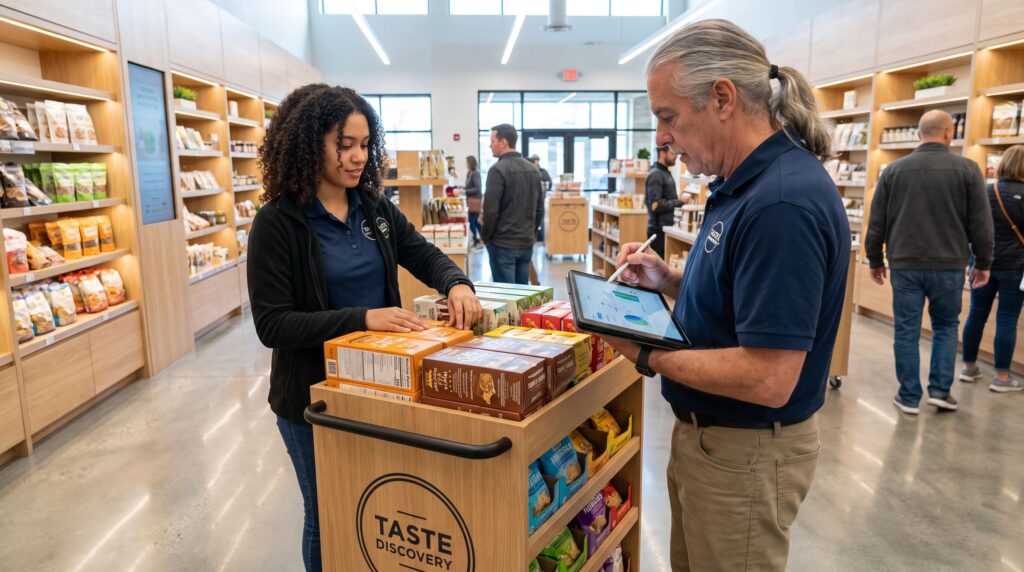
Book a product sampling program four to eight weeks ahead for a local push and two to three months ahead for a national one, since permits, staffing and prime venues get claimed early.
A single-city weekend can come together in about a month. Multi-market and seasonal programs need longer, because permits and the best festival and retail dates fill up well in advance across Canada.
Include your goal and KPI, target markets, dates, product and sample size, budget range, and any bilingual or Quebec requirements. The tighter the brief, the more accurate the quote Brand Guruz can send back.
Brand Guruz is a Toronto-based experiential marketing agency that runs product sampling programs for food, beverage and CPG brands across Canada. We plan, staff, execute and measure, so one team owns the result.
Because we handle staffing, logistics and reporting together, every sample handed out can become a tracked data point rather than a guess. That is how a weekend of sampling turns into numbers your team can act on.
We produce at scale across the GTA and nationally, with vetted ambassadors and backup staff for every shift. To go deeper, compare product sampling companies in Canada, explore product sampling ideas, or talk to Brand Guruz about your program.
Product sampling in Canada typically costs from about $5,000 for a small local program to $200,000 or more for a national rollout. Most multi-market CPG programs land between $20,000 and $75,000. Your final figure depends on how many markets you cover, how many ambassadors you staff, how long shifts run, and how many samples you produce.
A program cost usually includes brand ambassador staffing, product handling, logistics and storage, permits and venue fees, an agency management fee, and reporting. Brand Guruz builds measurement in, so you get samples handed out, conversations and sign-ups back as data, not just a crew for the day.
Brand ambassadors for product sampling in Canada typically cost about $25 to $45 per hour each. The rate depends on the market, the experience level, and whether the role needs bilingual, specialist or licensed staff. Because staffing is usually the largest line, total shift hours drive most of your budget.
No. Product sampling activations start at about $5,000, so brands of every size can test the channel before scaling. A smaller entry program covers one city, a short run of shifts, samples and a simple recap, which is enough to prove whether sampling earns a bigger investment.
Request a quote through the Brand Guruz website with your goal, target markets, dates, product and budget range. We review the brief and send back a costed plan within two business days, broken out by staffing, samples, logistics, permits, management and reporting so you can compare it line by line.
It can. Bilingual or French-first markets may need bilingual ambassadors and French-language materials, which can nudge staffing and production costs up. Quebec sampling can also carry different permit rules, so it is worth flagging in your brief early so the quote stays accurate.
Book four to eight weeks ahead for a local program and two to three months ahead for a national one. Permits, prime venues and the best ambassadors get claimed early, especially around festival season and the holidays, so earlier briefs almost always get better dates and pricing.
Ready to budget your product sampling program with confidence? Brand Guruz plans, staffs, executes and measures sampling for food, beverage and CPG brands across Canada.
Tell us your goal, markets and product, and we will build the plan to match. Request a quote and we will send a costed plan within 2 business days. You can also contact us with any questions first.
