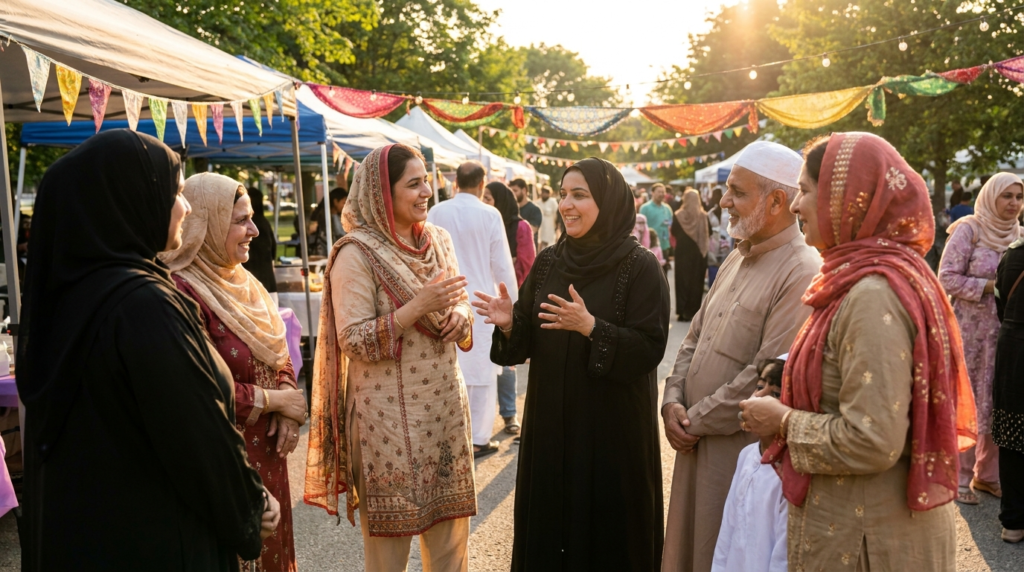
Eid marketing in Canada is one of the most commercially underdeveloped opportunities in the multicultural brand calendar. Specifically, Canada’s Muslim population reached 1,767,945 in the 2021 Census, making Muslims the largest non-Christian religious community in the country. Moreover, Eid al-Fitr and Eid al-Adha give brands two distinct activation windows each year. Few marketers fully use both.
The Muslim Canadian community is also one of the youngest and fastest-growing in the country. Specifically, a significant proportion of Canada’s Muslim population arrived as permanent residents within the last decade. South Asian, Arab, Somali, and West African communities all contribute to ongoing GTA growth. Consequently, the Muslim Canadian consumer pool expands with each immigration cycle. This makes Eid marketing in Canada more commercially significant in 2026 than it was three years ago.
Coverage includes the Muslim Canadian community profile, the two Eid activation windows, effective strategies, and the most common brand mistakes. For the full multicultural occasions overview, see our Canadian multicultural events calendar. The broader multicultural consumer context is covered in our multicultural market research guide.
Muslims in Canada in 2021, the largest non-Christian religious community in the country (Statistics Canada)
Eid occasions per year (Eid al-Fitr and Eid al-Adha), each with a distinct spending profile and brand activation opportunity
approximate Eid al-Fitr 2026, the highest-spending Eid occasion in the Muslim Canadian consumer calendar
Most Canadian brands invest significantly in Diwali and Lunar New Year — and almost nothing in Eid. Specifically, this gap does not reflect the commercial scale of the Muslim Canadian consumer market. It reflects a failure of awareness. Google Canada research consistently shows that multicultural consumers notice and respond to brands that acknowledge their cultural occasions. Muslim Canadian consumers are no exception.
Furthermore, Eid marketing in Canada reaches a broader consumer base than many brands assume. Specifically, the Muslim Canadian community spans Pakistani, Bangladeshi, Indian Muslim, Arab, Somali, East African, Moroccan, and West African communities — among others. Each brings distinct linguistic, cultural, and spending patterns to the Eid occasion. Together they form one of the most commercially significant yet underactivated multicultural audiences in the country.
Additionally, Eid marketing in Canada benefits from low competitive noise. Specifically, most major consumer brands are not present at Eid community events, in Eid-focused media, or in in-language Eid creative. Brands that enter the Eid marketing in Canada space today build community trust early — before the space becomes crowded. For the brand activation model that underpins community-occasion marketing, see our festival brand activation playbook.
The Muslim Canadian community concentrates most heavily in Brampton, Mississauga, Scarborough, and North York. Specifically, Brampton holds one of the largest Pakistani and Bangladeshi Canadian populations in the country. Mississauga and Scarborough carry significant Arab, Somali, and South Asian Muslim communities. Additionally, the Peel Region — encompassing Brampton and Mississauga — is one of the most religiously diverse regions in Canada. Its Muslim population shapes commercial life across dozens of category sectors.
Linguistically, the Muslim Canadian community is highly diverse. Specifically, Urdu, Arabic, Somali, Punjabi, Bengali, French, and English all serve as primary community languages across different Muslim Canadian sub-communities. Brands that pursue Eid marketing in Canada with only English-language creative miss the in-language communication channels where Muslim community trust is actually built.
Moreover, the Muslim Canadian community skews younger than the broader Canadian average. Specifically, a significant proportion of Muslim Canadian consumers fall in the 25–44 demographic. This high-spending, brand-literate cohort uses social media heavily and responds to peer-validated brands. Additionally, Muslim Canadian newcomers arrive with strong digital habits and tight community social networks that accelerate both brand adoption and brand rejection when cultural missteps occur.
Ramadan 2026 begins approximately February 18 and runs 30 days to approximately March 19. Eid al-Fitr falls on approximately March 20 — the first day after Ramadan ends. Muslims break the fast collectively and celebrate with family, gifts, and feasting.
Brands must understand one critical distinction: Ramadan and Eid are not the same marketing moment. Specifically, Ramadan is a month of fasting, prayer, and reflection — not a consumer celebration. Food and beverage sampling during fasting hours is culturally inappropriate and damages brand relationships. Iftar — the nightly breaking of the fast at sunset — is the primary community gathering moment. Specifically, brands that sponsor iftar events or community iftar meals earn significant goodwill within Muslim Canadian communities.
Eid al-Fitr itself carries the highest gift-giving and spending concentration of the two Eid occasions. Specifically, new clothing is a near-universal Eid tradition — South Asian Muslim families purchase shalwar kameez, abayas, and sherwanis; Arab Canadian families purchase traditional festive attire. Additionally, sweets, gift hampers, jewellery, and Eidi — the money given to children as Eid gifts — drive significant consumer spending across retail, food, and financial services categories.
For Eid marketing in Canada, the pre-Eid window of the last two weeks of Ramadan is the critical purchase period. Specifically, gift shopping, clothing purchases, and sweet-box sourcing concentrate sharply in the days before Eid. Brands present in Brampton and Mississauga during this window reach Muslim Canadian consumers at peak purchase intent. See our brand ambassador program guide for the on-ground activation framework.

Eid al-Adha 2026 falls on approximately May 27. It marks the conclusion of the Hajj pilgrimage and Ibrahim’s willingness to sacrifice — one of the most sacred occasions in the Islamic calendar.
The commercial profile of Eid al-Adha differs significantly from Eid al-Fitr. Specifically, gift-giving is lower. Qurbani drives the highest single-day halal butcher demand in the Muslim Canadian consumer calendar. The tradition involves sacrificing an animal and distributing meat to family, neighbours, and those in need. Additionally, family gatherings, home cooking, and charitable giving define Eid al-Adha more than retail spending.
Nonetheless, Eid marketing in Canada for Eid al-Adha represents a genuine brand opportunity in specific categories. Specifically, food, grocery, dining, and home categories all see elevated activity. Financial services brands that acknowledge Eid al-Adha with charitable giving partnerships — mirroring the Qurbani tradition — earn exceptional community goodwill. Generally, brands that acknowledge Eid al-Adha signal a depth of community knowledge that Eid al-Fitr-only activations cannot.
The Edelman Trust Barometer consistently shows that community trust builds through authentic, sustained in-community presence. Eid marketing in Canada follows exactly this pattern — the brands that earn Muslim community loyalty do so through consistency, not through one-off seasonal campaigns.
Specifically, effective Eid marketing in Canada includes in-language creative. Urdu, Arabic, Somali, or Bengali — depending on the sub-community — are the primary language channels. Additionally, it requires brand ambassador teams who share the cultural and religious background of the communities they represent. A Muslim Canadian brand ambassador who observes Ramadan and celebrates Eid delivers a qualitatively different consumer interaction than a generalist ambassador with a translated script.
Moreover, community organization partnerships matter enormously. Specifically, mosques, Islamic associations, and Muslim community centres function as the primary trust institutions in Muslim Canadian community life. Brands that build relationships with these organizations gain access to community endorsement that media spending cannot replicate. For the multicultural brand ambassador model that applies directly to Eid marketing, see our multicultural brand ambassador guide and our experiential marketing agency Toronto overview.
The most common mistake is conflating Ramadan with Eid. Specifically, Ramadan requires marketing sensitivity — no food sampling during fasting hours, no celebratory tone in creative during the fast itself. Eid requires celebratory energy, gift-giving messaging, and community gathering themes. Brands that run the same creative across both Ramadan and Eid miss the cultural distinction entirely.
The second mistake is treating the Muslim Canadian community as a single audience. Specifically, Pakistani Canadian consumers and Somali Canadian consumers both observe Eid. They do so through different cultural traditions, languages, and community media in different parts of the GTA. Effective Eid marketing in Canada requires community-specific targeting, not a single pan-Muslim creative.
The third mistake is activating only for Eid al-Fitr and ignoring Eid al-Adha. Specifically, brands that acknowledge only Eid al-Fitr miss the Muslim Canadian community’s second major occasion. Brands that acknowledge both demonstrate a depth of community knowledge that earns year-round Muslim Canadian consumer loyalty.
Finally, brands understaff on-ground Eid activations with generalist teams. Specifically, an Eid marketing activation should include Muslim Canadian community members who understand the occasion’s significance and cultural practices. Generalist teams trained on a one-page cultural brief consistently underperform.
When are Eid al-Fitr and Eid al-Adha in 2026? Specifically, Eid al-Fitr 2026 falls on approximately March 20. Eid al-Adha 2026 falls on approximately May 27. Both depend on official moon sighting — verify final dates with local Muslim community organizations before locking plans.
How many Muslims live in Canada and where are they concentrated in the GTA? Canada’s Muslim population reached approximately 1.77 million in the 2021 Census. In the GTA, Brampton holds the largest Pakistani and Bangladeshi Canadian communities. Mississauga, Scarborough, and North York carry significant Arab, Somali, and South Asian Muslim populations.
What is the difference between Ramadan marketing and Eid marketing? Ramadan is a month of fasting, prayer, and reflection — not primarily a consumer occasion. Eid al-Fitr is the celebration that follows: gift-giving, new clothing, family feasting, and community gathering. Treat them as two distinct briefs. Ramadan marketing focuses on community presence and iftar sponsorships. Eid marketing focuses on gifting, celebration, and purchase intent. For Eid al-Fitr: clothing, jewellery, food gifting, financial services, and personal care all perform strongly. During Eid al-Adha: halal food and grocery, dining, home, and charitable giving partnerships are the most commercially relevant. Halal food and grocery brands see the highest Eid al-Adha spending concentration of any occasion in the year.
How should brands approach Ramadan food and beverage marketing? Avoid food and beverage sampling or celebratory food messaging during Ramadan fasting hours. Iftar — the nightly break of the fast at sunset — is the right moment for food and beverage brand presence. Specifically, iftar event sponsorships, community meal partnerships, and late-evening in-store activations all generate genuine Muslim Canadian consumer goodwill during Ramadan.
Talk to Brand Guruz about building an Eid marketing program in Canada. We cover Eid al-Fitr and Eid al-Adha activations with in-language ambassador teams across Brampton, Mississauga, and Scarborough. Ramadan community partnerships build the trust that converts on Eid day.