Multicultural Gen Z in Canada: An Experiential Marketing Playbook for 2026

Multicultural Gen Z in Canada is rewriting how brands win attention through marketing. This cohort lives in Toronto, Brampton, Mississauga, Markham, and Surrey. They scroll in three languages and shop across five. By 2026, they will hold the deciding vote on which brands cross from awareness into loyalty.

Traditional ads do not move them. In fact, experiential activations now outperform paid social with this group by a clear margin. The reason is simple. Gen Z trusts what they touch, taste, and film — not what an algorithm pushes at them.

At Brand Guruz, we built this playbook from live activation data across Toronto’s most diverse neighbourhoods. Below, you will find the population numbers, the cultural cues, the cost ranges, and the four-step framework Canadian brands use to win multicultural Gen Z in 2026.

Why multicultural Gen Z is the audience that decides 2026

Multicultural Gen Z is the most diverse, most online, and most experience-hungry generation in Canadian history. They are not a niche. They are the centre of gravity for any brand activating in the GTA, Vancouver, Calgary, or Montreal in 2026. Marketing in 2026 must tailor to the unique demands of a multicultural Gen Z in Canada.

The numbers behind Canada's most diverse generation

According to Statistics Canada, more than 7.3 million Canadians fall into the Gen Z bracket. That is roughly one in five people in the country. In Toronto, the picture is even sharper. Over half of Gen Z residents identify as a visible minority. Furthermore, the share rises above 70% in Brampton and parts of Scarborough.

In addition, these young Canadians grow up culturally plural. They eat samosas at lunch and pho for dinner. They watch K-dramas, Bollywood, and Marvel in the same week. As a result, “Canadian Gen Z” is not one audience. It is a stack of overlapping cultural identities that share a city, a phone, and a vibe.

What multicultural Gen Z actually wants from brands

What they expect is simple to name and hard to deliver. They want authenticity, cultural fluency, and a reason to share. Furthermore, they want brands that treat their identity as part of the everyday — not as a Heritage Month checkbox.

That means that brands that get this right earn loyalty fast. Brands that get it wrong get clipped, screenshotted, and roasted in group chats by morning. Essentially, cultural fluency is no longer a nice-to-have. It is table stakes.

Why experiential marketing wins multicultural Gen Z

Experiential marketing wins multicultural Gen Z because it does what an ad never can. It puts the brand inside their cultural moment, on their street, with their friends.

Authenticity is the price of entry

Gen Z can spot a hollow activation in three seconds. They notice the music, the food, the staff, and the signage language. In other words, every detail signals whether the brand actually understands the community — or simply rented a stage in it.

The fix is upstream. Hire creative partners from the community. Use culturally specific food vendors. Brief staff on the music, the references, and the local in-jokes. That work happens weeks before the event, not on event day.

Cultural intelligence beats cultural performance

Slapping a logo on Diwali, Lunar New Year, or Caribana is not multicultural marketing. It is decoration. Cultural performance gets ratioed online. Cultural intelligence gets reshared. The difference is meaningful and measurable.

For instance, at Caribana, smart brands co-create with Caribbean creators instead of dropping a generic booth onto the parade route. As a result, the activation feels like it belongs at the festival, not next to it. That is the bar Nielsen trust research shows multicultural consumers expect.

The TikTok-first amplification rule

More than 60% of Canadian Gen Z share branded experiences on social. TikTok and Instagram Reels lead the platform mix. Consequently, every activation needs to be designed for the 15-second vertical clip first. The booth, the lighting, the colour, the moment of surprise — all of it serves the share.

As a result, if a visitor cannot capture a clean clip in under a minute, the activation will not travel. That is the bar in 2026.

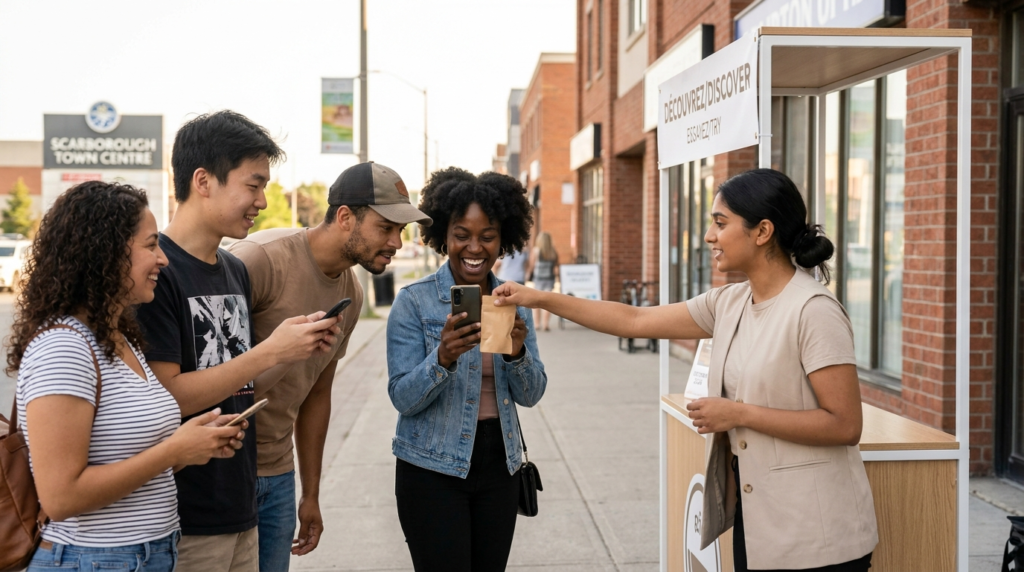
Brand ambassador handing a sample to a multicultural Gen Z group at a Toronto outdoor brand activation in 2026.
Cultural intelligence beats cultural performance every time.

The 2026 multicultural Gen Z playbook

The playbook is short on purpose. Four steps, in order. Skip one and the activation underperforms. Run all four and the campaign earns the kind of organic reach paid budgets cannot buy.

Step 1 — Anchor in the neighbourhood, not the city

Most experiential briefs default to Yonge-Dundas or Queen West. That is the most expensive way to reach the fewest multicultural Gen Z eyeballs. Instead, build the footprint around Brampton, Markham, Mississauga, North Scarborough, and Surrey, BC.

Hyperlocal activations beat downtown ones on every metric that matters. Cost per engaged attendee drops by 30 to 50%. Furthermore, sentiment is warmer because the brand showed up where the community already gathers. For a deeper breakdown, see our guide to Toronto neighbourhood brand activation strategy.

Step 2 — Co-create with cultural community partners

Local creators, chefs, DJs, dance crews, and community organizers carry trust that no agency can buy. Bring them in early as creative partners. Do not treat them as a vendor line item three weeks out. This single decision changes everything downstream.

The earlier they shape the brief, the more the activation feels like the neighbourhood made it. That is how a brand activation crosses from advertising into culture.

Step 3 — Build for the share, not the impression

Design every element for the 9:16 vertical frame. That means lighting from above, clear sightlines, and branded backdrops at eye level. Build in a moment of delight too — a giveaway, a flavour reveal, or a custom photo print. The takeaway: if it does not look great on a phone screen, it does not exist.

Equally important, build a single shareable hashtag and a hook the staff can verbally invite into. “Tag us and we’ll send you the photo” is still one of the highest-converting prompts on the activation floor.

Step 4 — Measure beyond the event

Most agencies report attendance and call it ROI. That is not measurement. That is a headcount. Real ROI for multicultural Gen Z activations starts with UGC volume and hashtag reach. It includes sentiment across English and community-language platforms, repeat visits, and downstream conversions.

In our experience, the activations that look modest on attendance often dominate on UGC. That is the metric worth fighting for.

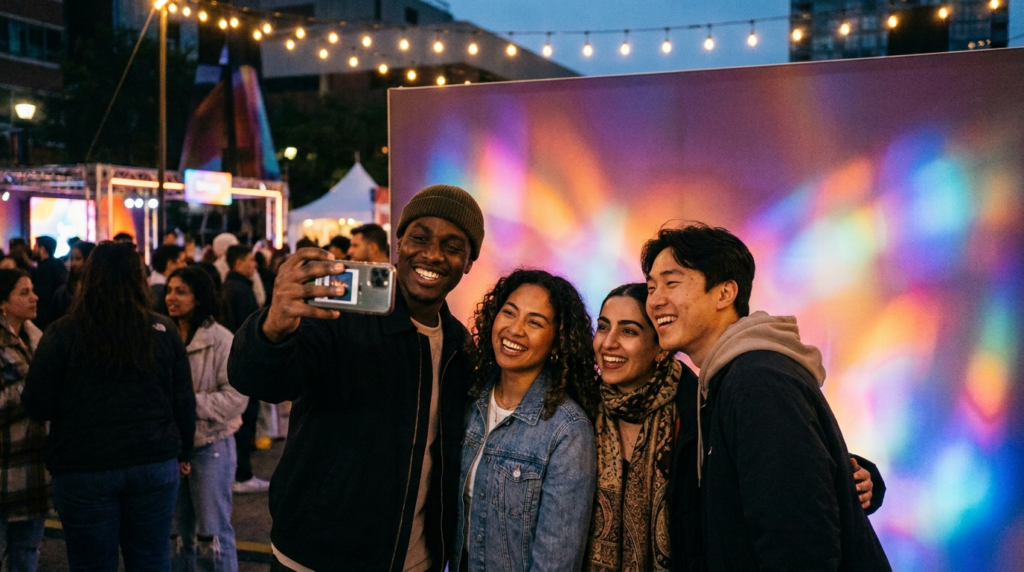
Group of multicultural Gen Z friends filming vertical phone video at a Toronto brand activation in 2026.
Design every Gen Z activation for the 9:16 share-first frame.

Real activation costs and ROI for Gen Z campaigns

Brand managers always ask the same question. What does a multicultural Gen Z activation actually cost in Canada in 2026? Here is the honest answer.

  • Small ($15K – $40K): One neighbourhood, one weekend, one creator partner. Strong for testing a new market.
  • Mid ($40K – $120K): Three to four neighbourhoods, integrated content capture, two to three community partners.
  • Large ($120K+): Festival sponsorship plus multi-neighbourhood satellite activations, paid amplification, and a full UGC pipeline.

For a deeper breakdown of pricing, see our guide to brand activation cost in Ontario.

Cost per engaged attendee in our 2025 activation data lands between $8 and $25. By comparison, paid social CAC for the same audience runs $40 to $80. That is why experiential beats digital on this cohort. The math gets even stronger when you factor in earned UGC.

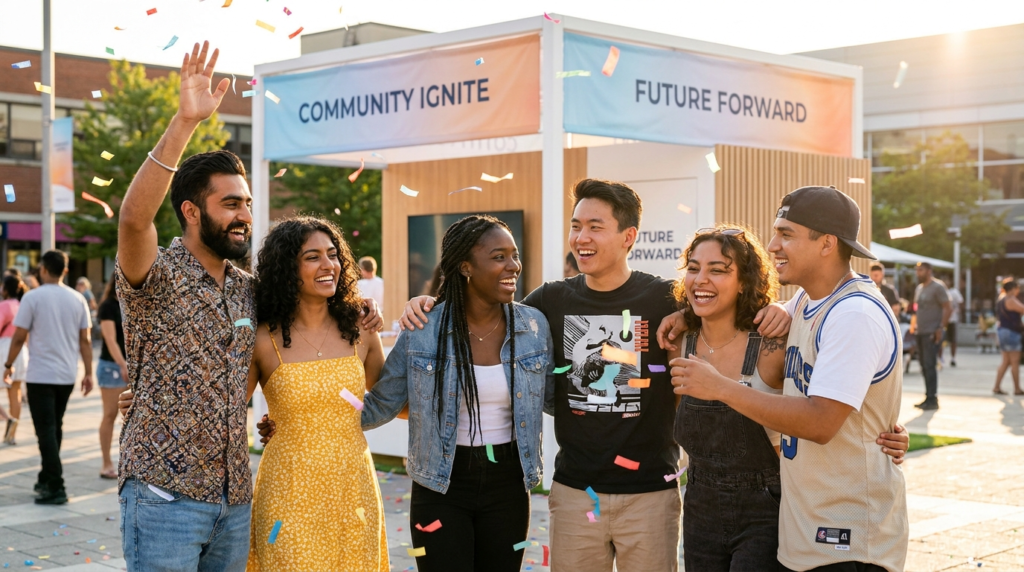
Multicultural Gen Z group celebrating and laughing at an outdoor brand activation in Brampton, Ontario in 2026.
Hyperlocal activations beat downtown ones on every metric that matters.

Why Brand Guruz is built for multicultural Gen Z in Canada

Brand Guruz is the experiential agency Canadian brands hire when the brief specifically calls for multicultural Gen Z. Our team is multicultural by design. Our partner network spans Caribbean, South Asian, East Asian, Latin, African, and Middle Eastern communities across the GTA. That depth is what shows up on event day.

What is more, we measure the work the way Gen Z actually engages. UGC volume, community sentiment, hashtag spread, and downstream conversion — not just turnstile counts. The result is activation programs that travel further than the footprint they were built in.

If you are planning a 2026 campaign aimed at multicultural Gen Z, the smartest move is to start the conversation now. Talk to Brand Guruz and we will map the right neighbourhoods, partners, and creative against your goals before the brief locks. For more on our category approach, visit our experiential marketing overview.

Frequently asked questions

What is multicultural Gen Z marketing in Canada? Multicultural Gen Z marketing is the practice of designing brand experiences for Canadians aged 12 to 27 whose cultural identity is plural. It combines heritage, neighbourhood, and Canadian context. In 2026, this group represents the majority of Gen Z in cities like Toronto, Brampton, Markham, and Surrey.

Why does experiential marketing work for Gen Z? Experiential marketing works because Gen Z trusts what they can touch, taste, and film. Static ads compete for attention against an infinite feed. A live activation gives them a story, a photo, and a reason to tag friends — all in the same moment.

Which Canadian cities have the largest multicultural Gen Z populations? The largest multicultural Gen Z populations sit in Brampton, Mississauga, Markham, Scarborough, downtown Toronto, Surrey BC, and parts of Montreal and Calgary. Brampton and Markham specifically have visible-minority Gen Z shares above 70%.

How much does a Gen Z experiential activation cost in Canada? A small single-neighbourhood activation starts at $15,000 to $40,000. Mid-scale multi-neighbourhood programs range $40,000 to $120,000. Large festival-anchored campaigns run $120,000 and up. Cost per engaged attendee typically lands between $8 and $25.

How do brands measure Gen Z activation ROI? Brands measure Gen Z activation ROI through UGC volume, hashtag reach, multilingual sentiment, repeat visit rate, and downstream conversion. Attendance alone is not ROI. The richer the post-event content trail, the stronger the return.


Ready to win multicultural Gen Z in 2026?

The brands that move first will own the neighbourhood. Talk to Brand Guruz about your 2026 activation calendar, or browse our recent case studies to see how the playbook lands in market.

Author