

Updated November 2026
Choosing between a pop-up shop and a trade show is one of the most common activation decisions a brand or marketing manager faces. Both formats put your brand in front of real people, yet they chase different goals, audiences, and budgets. This guide compares the two so you can decide where your next activation dollar should go.
A pop-up shop is a temporary branded retail space that reaches consumers directly, while a trade show is an industry exhibition built to capture qualified B2B leads, according to Brand Guruz, a Toronto-based experiential marketing agency that runs pop-up and trade show activations for brands across Canada, with activations starting at about $5,000 CAD.
$128B+ — global experiential and event marketing spend, a sign of how heavily brands invest in live activations (Event Marketer) · 88% — consumers who trust a personal recommendation over any ad, the word-of-mouth a live activation creates (Nielsen) · 6.4M+ — people in the Greater Toronto Area, Canada's largest and most diverse activation market (Statistics Canada)
The difference is audience and intent: a pop-up shop sells an experience to consumers in a public retail setting, while a trade show connects your brand with buyers, distributors, and partners inside an industry event.
A pop-up shop is a short-term branded space, often in a mall, high-street unit, or public venue, where consumers can touch your product, buy, and share the moment. It is pure B2C experiential marketing, built for reach, trial, and emotional connection.
A trade show is an organized exhibition where companies in one industry gather under one roof. Your booth is there to start sales conversations, demo to decision-makers, and capture qualified leads, almost always in a B2B context.
Think of it as discovery versus deal-making. A pop-up introduces your brand to many casual consumers, while a trade show puts you in front of fewer, higher-intent buyers. Your primary goal decides which crowd you actually need.
Side by side, a pop-up shop wins on consumer reach, foot traffic, and shareable brand experience, while a trade show wins on qualified B2B leads, buyer intent, and industry credibility.
The cost ranges in this comparison use the Brand Guruz 2027 pricing guide (CAD).
| Factor | Pop-Up Shop | Trade Show |
|---|---|---|
| Primary goal | Awareness, trial, sales | Lead generation, partnerships |
| Audience | Consumers (B2C) | Buyers and industry (B2B) |
| Typical cost (CAD) | About $5,000 to $75,000+ | About $10,000 to $200,000+ |
| Duration | One day to several weeks | One to four days |
| Lead generation | High volume, lower intent | Lower volume, high intent |
| Traffic type | Public foot traffic | Pre-qualified attendees |
| Brand experience | Immersive and highly shareable | Professional and demo-focused |
| Measurement | Footfall, sales, social reach | Leads captured, meetings booked |
Match the format to who you sell to. A pop-up shop reaches everyday consumers in a public space, so it suits brands that need mass B2C awareness in a dense market like the Greater Toronto Area, home to more than 6.4 million people per Statistics Canada. A trade show gathers a narrow, high-intent B2B audience, which suits brands selling to buyers, retailers, or distributors.
Pop-ups flex from a single day to several weeks and can start small, while trade show costs climb quickly once you add floor space, a custom booth, travel, and staffing for a one-to-four-day show. Duration drives both the budget and the staffing plan.
A pop-up delivers high volumes of public foot traffic, which is excellent for sampling and awareness but lower in purchase intent. A trade show delivers fewer visitors, yet most are pre-qualified buyers, so each conversation is worth far more to your sales pipeline.
Pop-ups are built for immersive, photogenic moments that travel on social media, and you measure footfall, sales, and reach. Trade shows reward professional demos and relationship-building, and you measure leads captured and meetings booked. Pick the metric that matches your goal, then design the activation around it.
A pop-up shop in Canada typically runs from about $5,000 for a simple one-day activation to $75,000 or more for a multi-week flagship, while a trade show presence ranges from about $10,000 to $200,000+ once booth, floor space, and staffing are included.
The tiers below come from the Brand Guruz 2027 pricing guide (CAD) and cover planning, build, staffing, and on-site management.
| Tier (CAD) | Investment | Typical fit |
|---|---|---|
| Entry | $5,000 to $20,000 | One-day pop-up or a compact trade show booth |
| Mid-Market | $20,000 to $75,000 | Multi-day pop-up or a mid-size custom booth |
| Scale | $75,000 to $200,000 | Flagship pop-up tour or a large trade show stand |
| Enterprise | $200,000+ | National multi-city activation programs |
Most pop-ups land in the Entry or Mid-Market tier. A simple sampling pop-up fits near $5,000, while a branded, multi-week retail experience with custom build and daily staff moves into the $20,000 to $75,000 range.
Trade shows usually start higher because floor space and a custom stand add fixed costs. Industry benchmarks from Event Marketer show exhibitors investing heavily in booth design and lead systems, so a competitive booth often sits in the Mid-Market or Scale tier.
Four levers move the number: size and build complexity, duration, staffing, and city. In Brand Guruz’s experience, a clear goal keeps the budget efficient because every dollar maps to one measurable outcome rather than to decoration.
Planning a pop-up shop or trade show activation? Request a quote and we will send a costed plan within 2 business days.
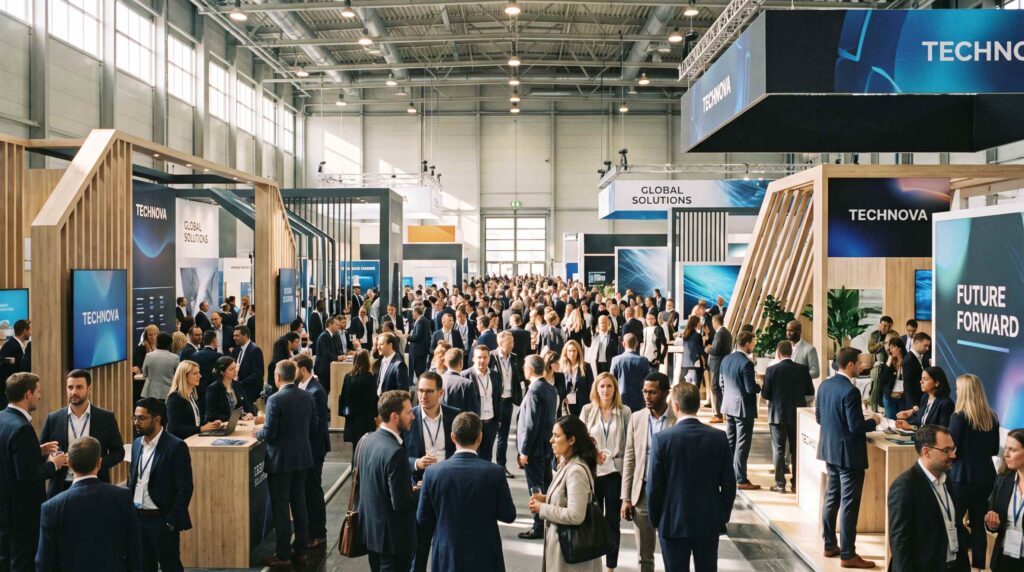
Choose based on your primary goal: pick a pop-up shop when you need consumer reach and trial, pick a trade show when you need qualified B2B leads, and run both when you want full-funnel coverage.
Some brands pair the two across a year: a trade show to fill the B2B pipeline and a pop-up shop to build consumer demand that pulls that pipeline through. If your budget supports both, sequence them so each feeds the other.
A pop-up shop is the right activation when your goal is to reach consumers, drive product trial, and create shareable brand moments in a high-traffic public space.
A pop-up delivers volume: thousands of impressions, hundreds of samples, and a stream of user-generated content. With 88% of consumers trusting a personal recommendation per Nielsen, a well-run pop-up turns casual visitors into advocates who tell others about your brand.
A trade show is the right activation when your goal is qualified B2B leads, product demos to decision-makers, and credibility inside your industry.
A trade show concentrates buyers you would otherwise chase one by one. A strong trade show booth design plus trained staff and a clean lead-capture process turns a few days on the floor into weeks of warm follow-up for your sales team.
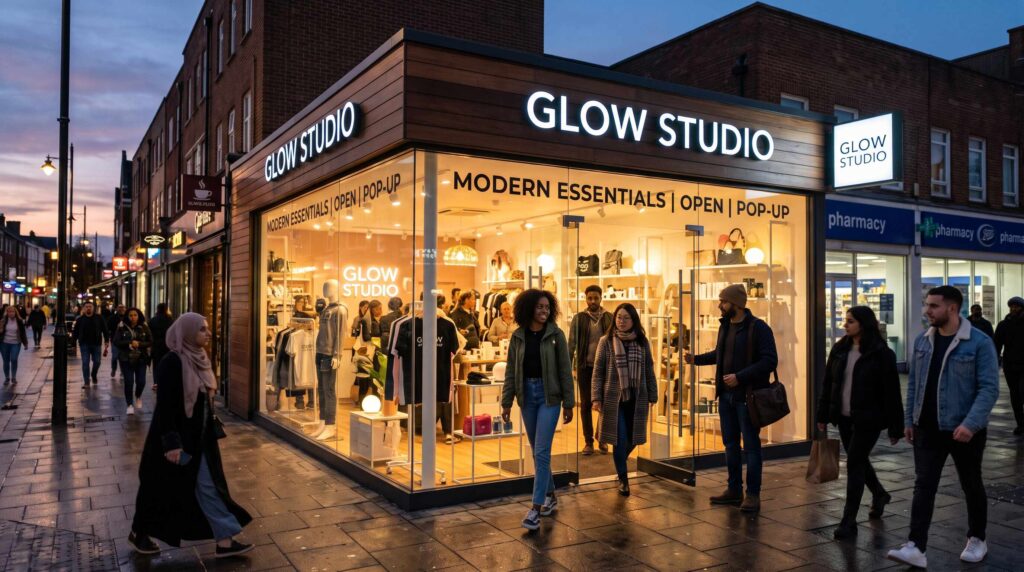
To brief an agency well, state your goal, audience, dates, city, and budget range up front, then let the team recommend the format and return a costed plan.
Book four to twelve weeks ahead for most pop-ups, and three to six months ahead for a trade show, since prime floor space and custom booth builds get claimed early. Peak retail seasons and major shows fill fastest, so earlier is safer.
A full-service plan from Brand Guruz covers strategy, design and build, permits where needed, trained staff, logistics, and measurement. Brand Guruz typically books the venue or floor space, manages vendors, and reports the result, so your team owns one accountable partner instead of many.
Brands choose Brand Guruz because we plan, build, staff, and measure both pop-up shops and trade show booths across Canada, and tie every activation to a clear business outcome.
As a Toronto-based experiential marketing agency serving brands across the GTA and all of Ontario, we bring multicultural reach, bilingual options for Quebec activations, and a full team with backup staff for every event. Because we connect the live activation to digital follow-up, visitors can become tracked leads rather than a number you never see again.
In Brand Guruz’s experience, the brands that win treat a pop-up and a trade show as two tools for two jobs, not rivals. Explore proven work in our case studies, then talk to Brand Guruz about your goal.
Ready to activate? Request a quote and we will send a costed plan for your pop-up shop or trade show within 2 business days.
Neither is universally better; the right choice depends on your goal. Pick a pop-up shop for consumer awareness, trial, and foot traffic, and pick a trade show for qualified B2B leads and industry credibility. Brand Guruz recommends the format after reviewing your audience, budget, and objective in a short discovery call.
The main difference is audience and intent. A pop-up shop reaches consumers in a public retail setting for reach and trial, while a trade show reaches a narrow, high-intent B2B audience for leads and partnerships. One is discovery; the other is deal-making.
Per the Brand Guruz 2027 pricing guide (CAD), a pop-up shop typically runs from about $5,000 to $75,000+, while a trade show presence runs from about $10,000 to $200,000+ once floor space, a custom booth, and staffing are included. Duration, build, and city drive the final number.
It depends on the lead you want. A pop-up generates a high volume of lower-intent consumer contacts, while a trade show generates fewer but far more qualified B2B leads. For a sales pipeline, trade show leads usually convert at a higher rate.
Yes, and many brands do. A trade show fills the B2B pipeline while a pop-up builds consumer demand that pulls it through. Sequencing them across a year gives you full-funnel coverage, and a single agency can plan both so your branding and measurement stay consistent.
Request a quote from Brand Guruz with your goal, audience, dates, city, and budget range, and we will send a costed plan within 2 business days. Activations start at about $5,000 CAD, so you can start small and scale once you see the results.
Book four to twelve weeks ahead for a pop-up and three to six months ahead for a trade show. Prime floor space, custom booth builds, and peak retail dates get claimed early, so the sooner you brief an agency, the more options you keep.
Ready to choose between a pop-up shop and a trade show? Let us match the format to your goal and build an activation that is worth the investment.
Brand Guruz plans, produces, and measures pop-up shops and trade show booths across Toronto, the GTA, and all of Ontario. Tell us your objective, and we will design the activation to hit it. To start, request a quote or reach us through our contact page.
