Shopping Mall Advertising in Canada: Costs, Formats and How Mall Activations Work (2026)

Updated November 2026

Shopping mall advertising is any paid brand presence inside a shopping centre, from digital screens and backlit lightboxes to live kiosks, pop-ups and sampling activations, and in Canada it typically costs anywhere from about $500 for a floor decal to $50,000-plus for a full multi-week mall activation, depending on format, mall and market.

Brand Guruz, a Toronto-based experiential marketing agency, plans, staffs and measures mall advertising and in-person activations for brands across the GTA and the rest of Canada. This guide walks through every format you can buy, what each one costs, and when a live activation beats a static ad.

Key takeaways

  • Shopping mall advertising spans static, digital and experiential formats, each with very different costs and goals.
  • Canadian mall ad costs range from roughly $500 for floor decals to $50,000-plus for multi-week activations.
  • Mall activations and product sampling drive deeper engagement and recall than static placements alone.
  • High-traffic GTA centres in Toronto, Mississauga, Brampton and Vaughan reach large, multicultural shopper audiences.
  • Measure results with footfall, sampling redemptions, leads captured and post-campaign sales lift.

$128B+ global experiential and event marketing spend (Event Marketer) · 88% of consumers trust a personal recommendation over any ad (Nielsen) · 6.4M+ people in the Greater Toronto Area, Canada's largest retail market (Statistics Canada)

What Is Shopping Mall Advertising?

Shopping mall advertising is any marketing placed inside or around a shopping centre to reach people while they are already in a shopping mindset. It ranges from printed signage and digital screens to hands-on brand activations run by live staff. Because malls concentrate large, captive audiences in one place, they remain one of the most dependable ways to reach shoppers face to face.

Static, digital and experiential formats

Mall advertising splits into three families. Static media covers printed lightboxes, floor decals and banners. Digital media covers screens, spectaculars and interactive panels. Experiential media covers kiosks, pop-up stores and sampling, where staff interact with shoppers directly. Many of the strongest campaigns combine a static or digital placement to build awareness with an experiential marketing moment that converts.

Why brands still choose malls

Malls deliver guaranteed foot traffic, long dwell times and a buying context no feed can match. Shoppers arrive ready to spend, so a sample, demo or offer lands at exactly the right moment. For regional and national brands, a single flagship centre can reach tens of thousands of shoppers a week.

What Types of Mall Advertising Can Brands Buy?

Brands can buy everything from a simple floor decal to a fully staffed pop-up store. The right format depends on your goal, your budget and whether you want passive reach or active engagement. Here are the formats Canadian malls sell most often.

  • Digital screens and spectaculars — large high-traffic displays near entrances, escalators and food courts.
  • Backlit lightboxes — premium printed panels along concourses and corridors.
  • Floor decals and wall graphics — low-cost directional and branding placements.
  • Kiosks and RMUs — retail merchandising units for selling or demoing on the concourse.
  • Pop-up stores — temporary branded retail spaces, often in vacant units.
  • Sampling and brand activations — staffed experiences that hand out product and capture data.

Static and print placements

Lightboxes, decals and banners are the entry point. They are inexpensive, book by the month and build steady awareness. On their own, though, they cannot answer questions or hand a shopper a sample.

Digital and screen placements

Digital screens add motion, dayparting and the flexibility to swap creative mid-campaign. Mall spectaculars in flagship centres command the highest rates but deliver the most impressions.

Experiential and activation placements

Kiosks, pop-up shops and product sampling turn attention into interaction. A trained team demos the product, answers objections and collects opt-ins, which is why activations usually drive the strongest return.

How Much Does Shopping Mall Advertising Cost in Canada?

Shopping mall advertising in Canada costs anywhere from about $500 for a simple floor decal to $50,000 or more for a multi-week staffed activation in a flagship centre. The table below shows typical ranges by format so you can match spend to goal.

FormatTypical Canadian cost rangeBest for
Floor decals and wall graphics$500 – $3,000 / monthLow-cost awareness and wayfinding
Backlit lightboxes$1,500 – $6,000 / monthPremium brand presence on concourses
Digital screens and spectaculars$3,000 – $25,000 / monthHigh-impact, flexible awareness
Kiosks and RMUs$2,500 – $10,000 / monthSelling and product demos
Pop-up stores$10,000 – $40,000+ / termImmersive retail and launches
Sampling and brand activations$8,000 – $50,000+ / campaignEngagement, trial and data capture

What drives the price

Rates move with the mall’s foot traffic, the location within the centre, the length of the booking and whether you need staff, structures and permits. A weekend in a top-tier GTA centre costs far more than a month in a suburban plaza. For a deeper breakdown, see our guide to brand activation in Toronto.

Budgeting beyond the space

Media or space rental is only part of the cost. Build staffing, product, creative, insurance and measurement into the budget from day one, since those line items decide whether an activation actually performs.

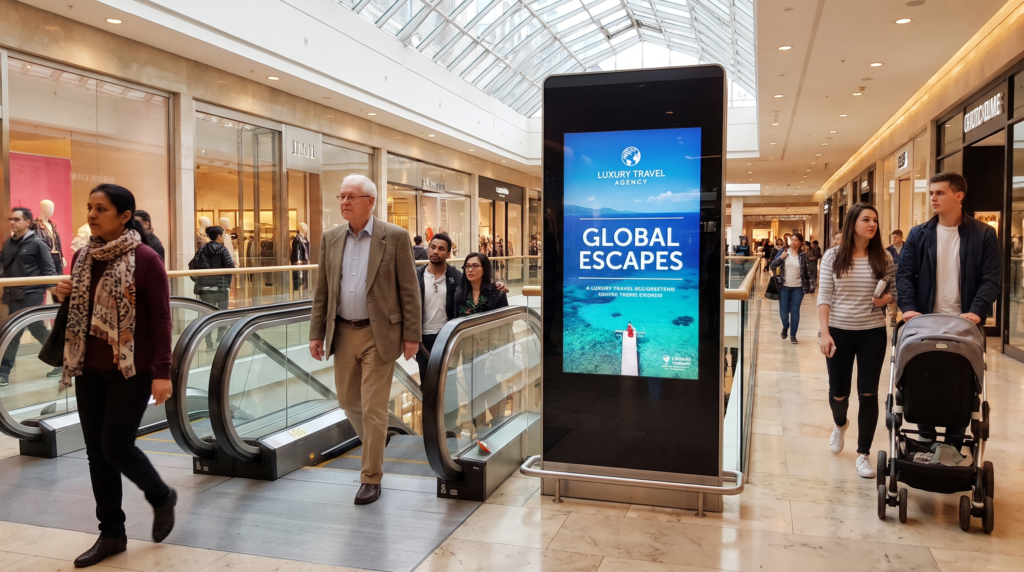
Digital mall advertising screen beside an escalator in a Canadian shopping centre
A digital advertising screen in a Canadian shopping centre.

Static Ads vs Mall Activations: Which Drives More ROI?

Static ads win on cost-per-impression, but mall activations win on engagement, recall and conversion. The best answer for most brands is to use both: a static or digital placement for reach, and an activation to turn that reach into trial and data.

Where static ads shine

Static and digital placements are efficient, low-maintenance and ideal for always-on awareness. If your only goal is impressions, they deliver the lowest cost per thousand. They cannot, however, create a memory or a relationship.

Where activations pull ahead

Activations create a two-way moment. A sample, demo or conversation sticks because it is personal, and people act on personal experience. Nielsen reports that 88% of consumers trust a personal recommendation over any other form of advertising, which is exactly the trust a live activation earns.

Which Canadian Malls and Markets Work Best?

The best malls are the high-traffic, high-diversity centres where your target shoppers already spend time. In Canada that means the Greater Toronto Area first, then the major centres in Vancouver, Calgary and Ottawa. Match the mall to your audience, not just to its size.

The GTA: Canada’s biggest retail market

According to Statistics Canada, more than 6.4 million people live in the Greater Toronto Area, making it the country’s largest and most multicultural retail market. Flagship and regional centres in Toronto, Mississauga, Brampton, Vaughan and Scarborough reach enormous, diverse shopper audiences in a single location.

National reach beyond Toronto

Demand does not stop at the GTA. Ottawa, Vancouver and Calgary all offer high-traffic centres that reward brands with strong regional footfall. A national campaign can run the same activation format across several markets from one plan, keeping the experience consistent coast to coast.

How Do You Run a Successful Mall Activation?

A successful mall activation follows a clear sequence: set the objective, pick the right mall, secure approvals, staff it well and measure everything. Skip a step and the campaign leaks results. Here is the process we run for every client.

Step 1: Set a clear objective

Decide what success means before anything else, whether that is trial, leads, sales or awareness. The objective shapes the mall, the format and the metrics you track.

Step 2: Choose the right mall and market

Match the centre’s shopper profile to your target audience. A premium brand and a value brand belong in very different malls, even in the same city.

Step 3: Secure permits and mall approvals

Every centre has its own rules for structures, sampling, power and insurance. Submit layouts and certificates early, because approvals routinely take several weeks.

Step 4: Staff with trained brand ambassadors

Your team is the activation. Hire friendly, on-brand ambassadors, brief them thoroughly and script the key messages so every shopper interaction stays consistent.

Step 5: Measure and optimise live

Track footfall, samples, scans and leads in real time, then adjust placement, staffing and offers mid-campaign. To compare specialist partners, see the best experiential marketing agencies in Canada.

Common mistakes to avoid

  • Choosing a mall on size alone instead of shopper fit.
  • Under-staffing a busy weekend and missing interactions.
  • Leaving permits and insurance until the last minute.
  • Running an activation with no clear objective or metric.
  • Collecting no data, so results cannot be proven later.
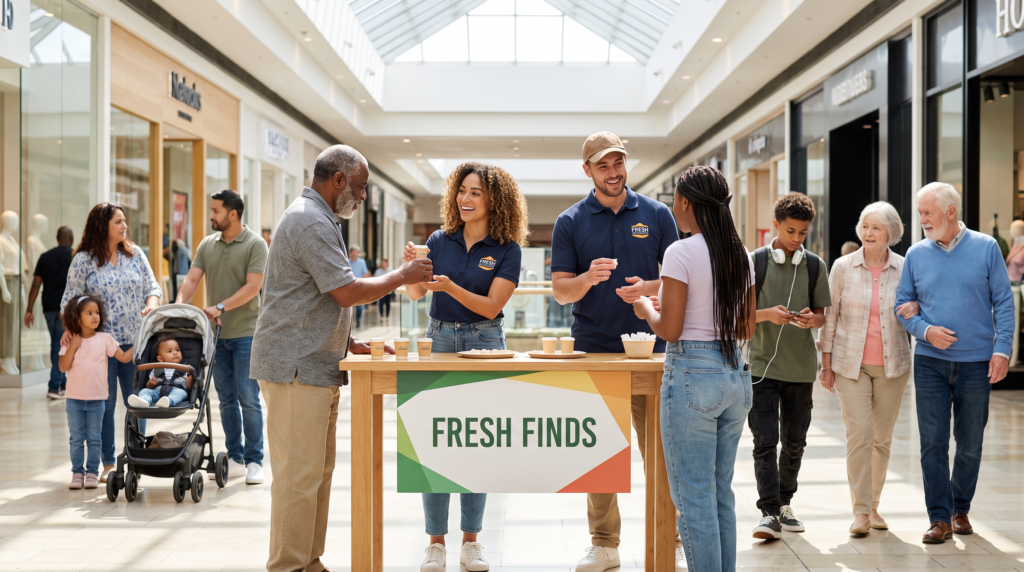
Brand ambassadors running a product sampling table in a mall concourse
Brand ambassadors running a product sampling activation in a mall concourse.

How Do You Measure Mall Advertising Results?

You measure mall advertising with a mix of reach and action metrics: footfall and impressions for exposure, then sampling redemptions, leads captured and sales lift for impact. Agree on the metrics before the campaign starts so every number has a baseline.

Exposure and engagement metrics

Count foot traffic past the placement, samples handed out, demos completed and QR scans. These show how many shoppers you reached and how many engaged. The global scale of this channel is clear in the Event Marketer figure of $128 billion-plus in annual experiential spend.

Conversion and sales-lift metrics

Tie the activation to outcomes: opt-ins collected, coupon redemptions, and the sales lift in participating stores during and after the campaign. Compare against a baseline period or a control location to isolate the activation’s true contribution.

Why Brand Guruz for Mall Advertising and Activations

Brand Guruz is a Toronto-based experiential marketing agency built for live, multicultural audiences across the GTA and all of Canada. We plan, staff and measure mall advertising and in-person activations end to end, so one accountable team owns the result.

Experiential reach built for Canadian malls

Because we handle the activation and the follow-up together, every shopper a campaign reaches can become a tracked lead. Our trained brand ambassadors reflect the diverse communities Canadian malls serve, which is what turns a busy concourse into measurable trial and revenue. Ready to plan a campaign? Talk to Brand Guruz.

Frequently Asked Questions

How much does mall advertising cost in Canada?

Costs range from about $500 a month for a floor decal to $50,000 or more for a multi-week staffed activation in a flagship centre. Lightboxes and digital screens sit in between. The final price depends on the mall’s traffic, the placement, the booking length and whether the campaign needs staff and structures.

Can small brands afford mall ads?

Yes. Small brands can start with low-cost formats such as floor decals, wall graphics or a short kiosk booking in a suburban centre. A focused one-weekend sampling activation in a single mall is also affordable and often delivers more measurable trial than a month of static media.

What is a mall activation?

A mall activation is a live, staffed brand experience inside a shopping centre, such as sampling, a product demo or a pop-up. Trained ambassadors interact with shoppers directly, hand out product, answer questions and capture data, which drives far stronger engagement and recall than a static ad.

Do malls allow product sampling?

Most Canadian malls allow product sampling, but each centre sets its own rules for food, power, structures and insurance. You typically submit a layout, product list and liability certificate for approval in advance. Working with an experienced agency makes securing those permits far faster and smoother.

How long should a mall campaign run?

It depends on the goal. Static and digital placements usually book by the month for steady awareness. Activations often run for a few high-traffic days or weekends, where concentrated staffing and footfall drive the most trial. Many brands pair a month of media with a weekend activation.

Static ads or activation — which is better?

Neither is universally better; they do different jobs. Static and digital ads deliver efficient reach, while activations deliver engagement, trial and data. For most brands the strongest result comes from combining them: a placement for awareness and a live activation to convert that attention into action.


Plan Your Next Mall Activation with Brand Guruz

Ready to turn mall foot traffic into trial, leads and sales? Brand Guruz designs, staffs and measures shopping mall advertising and activations across Toronto, the GTA and all of Canada.

Tell us your objective and we will match the format, mall and market to hit it. To get started, book a quick call through our contact page and we will build a campaign around your goal.

Let's Grow Your Brand

Author