Indeed, Tamil Canadian consumers represent one of the most commercially significant and most consistently misread multicultural audiences in the GTA. Specifically, Statistics Canada’s 2021 Census estimates over 200,000 Tamil Canadian consumers nationally. The large majority concentrate in Scarborough’s Agincourt and Malvern corridors, with secondary concentrations in Mississauga and Brampton. Notably, the Tamil Canadian consumer is not a variant of the broader South Asian consumer. Specifically, Tamil Canadians are primarily Sri Lankan Tamil — a distinct diaspora community with its own language, cultural calendar, and community institutions. Their purchasing behaviour diverges sharply from North Indian and Punjabi Canadian consumer profiles.
The most consequential brand error in Tamil Canadian consumer marketing is category confusion. Specifically, brands that use North Indian cultural cues send a clear signal to Tamil Canadian consumers. Rangoli patterns, Hindi copy, and pan-South-Asian messaging all tell the community the brand has not engaged with them. Accordingly, Tamil Canadian consumers, like most tight-knit diaspora communities, communicate these signals within their community networks rapidly. The brands that earn trust in Tamil Canadian consumer marketing demonstrate community-specific knowledge. This includes accurate cultural references, in-language Tamil content, and authentic community presence.
The guide covers Tamil Canadian consumer strategy for the GTA market — the community, the cultural calendar, common brand mistakes, media channels, and commercial priorities.
~200,000 Tamil Canadians nationally, predominantly in the GTA · Scarborough (Agincourt and Malvern) — the primary community concentration · Tamil ≠ Indian — Sri Lankan Tamil diaspora with a distinct cultural identity, language, and commercial behaviour
Tamil Canadian consumers in the GTA are overwhelmingly of Sri Lankan Tamil origin, not Indian Tamil. Specifically, the large majority of GTA Tamil Canadians arrived as part of the Sri Lankan Tamil refugee diaspora between 1983 and 2009. This community displacement was driven by the Sri Lankan civil war. Understanding this origin is central to Tamil Canadian consumer marketing. Tamil Canadians do not identify as Indian Canadians. They do not share the cultural references, religious practices, or community institutions of North Indian communities. Their primary cultural identity is Tamil and Sri Lankan Tamil — a distinction that shapes every aspect of community life. It ranges from the kovil at the centre of community social life to the Tamil-language media consumed by first-generation households.
The Tamil Canadian community in Scarborough is generationally diverse. Specifically, first-generation Tamil Canadian consumers who arrived in the 1980s and 1990s are now established GTA homeowners and business owners. They rely primarily on Tamil-language media, kovil community networks, and Tamil cultural associations for community information.
Notably, second-generation Tamil Canadians — born in Canada or arrived as young children — navigate Tamil cultural identity and Canadian mainstream life. They consume English-language media as their primary channel. Importantly, despite this, second-generation Tamil Canadians remain deeply connected to Tamil cultural identity through family, kovil, and cultural events. For the South Asian millennial model that overlaps with second-generation Tamil Canadian consumers, see our South Asian millennial marketing Canada guide.
Importantly, Google Canada research consistently confirms that multicultural consumers respond significantly better to brand communication that reflects their specific cultural context. For Tamil Canadian consumer marketing, this means the difference between an authentic Tamil-language campaign and a generic South Asian campaign translated into Tamil. The community distinction between these two approaches is immediately visible to Tamil Canadian consumers. For the broader in-language media strategy framework, see our in-language media strategy Canada guide.
The Tamil Canadian cultural calendar provides brands with four primary activation windows annually. Specifically, each window has distinct community resonance and different commercial implications for brands across CPG, financial services, retail, and real estate.
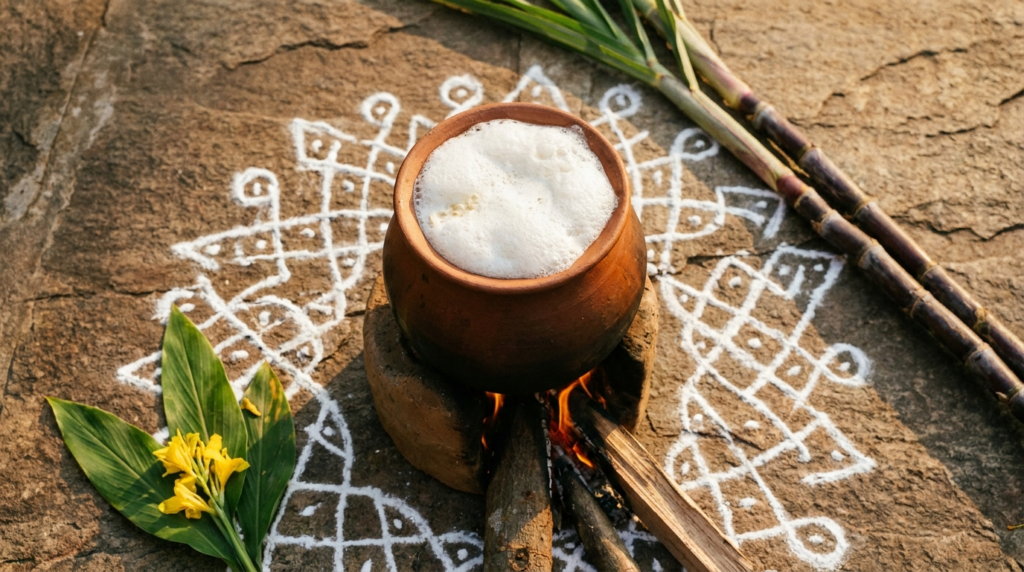
Thai Pongal (mid-January): The Tamil harvest festival — one of the most important Tamil cultural occasions. Specifically, Thai Pongal celebrates the sun’s northward journey and the harvest season. Community gatherings, pongal cooking in clay pots, and kolam drawn at home entrances are central. Thai Pongal is the Tamil community’s equivalent of Lohri in Punjabi culture. Accordingly, for CPG and food brands, Thai Pongal is the most authentically Tamil brand activation window of the year. It is far less commercially crowded than Deepavali.
Tamil Heritage Month (January, Ontario): Provincially recognized in Ontario since 2014. It generates community events, school programs, and cultural celebrations across Scarborough throughout January. Consequently, brands that sponsor Tamil Heritage Month community events build direct relationships with Tamil Canadian community organizers and media representatives. This is the highest-trust brand visibility opportunity available to Tamil Canadian consumer marketing programs in January.
Tamil New Year / Chithirai (April 14): The Tamil new year, celebrated with community events, family gatherings, and cultural performances. Specifically, April 14 is a significant date in the Tamil calendar — the same date as Vaisakhi in the Punjabi calendar, but a completely distinct occasion. The coincidence means brands running Vaisakhi activations should not assume the same activation assets transfer to Tamil audiences.
Deepavali (October-November): Tamil Deepavali is distinct from North Indian Diwali in cultural practice. Specifically, Tamil Deepavali centres on oil bath traditions, new clothes, and community celebration — not the gift-giving and home decoration emphasis of North Indian Diwali. Brands that activate for Tamil Canadian consumer marketing at Deepavali should use Tamil-specific creative, not repurposed North Indian Diwali materials. The Edelman Trust Barometer consistently confirms that community trust is the most durable brand asset in multicultural marketing. Nothing erodes Tamil Canadian consumer trust faster than being marketed at as though they are North Indians. For Deepavali brand strategy, see our Diwali marketing Canada brand guide.
The single-community mistake is the most prevalent Tamil Canadian consumer marketing failure. Specifically, brands activate for the South Asian consumer market using North Indian cultural cues — rangoli, diyas, Bollywood music, Hindi copy. They then apply these same assets to Tamil audiences. Tamil consumers identify these signals immediately. Notably, rangoli is a North Indian Hindu art form distinct from Tamil kolam. Diyas are North Indian in cultural association; Tamil Deepavali tradition uses clay lamps but in different contexts. Hindi is a North Indian language entirely distinct from Tamil.
The language mistake is the second Tamil Canadian consumer marketing failure. Specifically, brands produce in-language South Asian marketing content in Hindi or Punjabi and assume this reaches Tamil audiences. Furthermore, Tamil is a completely distinct language from Hindi, Punjabi, Gujarati, or Bengali. It is one of the world’s oldest classical languages, with no mutual intelligibility with any North Indian language. Furthermore, Tamil Canadian consumers who receive Hindi-language brand communication do not read it as a language barrier. They read it as confirmation that the brand considers them interchangeable with North Indians. For Tamil Canadian consumer marketing programs, in-language content must be in Tamil — authentic, professionally reviewed Tamil, not machine-translated.
The occasion overlap mistake is the third Tamil Canadian consumer marketing failure. Specifically, brands activating at Diwali use North Indian Diwali creative — rangoli, diyas, Lakshmi imagery — for Tamil audiences. Tamil Deepavali does not centre on Lakshmi puja or the Lakshmi-Rama narrative of North Indian Diwali. The cultural practices are distinct. Accordingly, Tamil Deepavali creative must be developed specifically for Tamil audiences, not adapted from North Indian Diwali campaigns. For the brand safety framework that addresses multicultural marketing misrepresentation, see our brand safety multicultural marketing Canada guide.
Sun TV Canada is the primary in-language television channel for Tamil Canadian consumer outreach targeting first-generation audiences. Specifically, Sun TV Canada broadcasts Tamil-language programming across the GTA. It reaches the first-generation Tamil Canadian household that brands miss entirely through English-language or North Indian in-language campaigns. Sun TV Canada is the highest-reach in-language media channel for Tamil Canadian consumer marketing programs.
Additionally, Tamil-language print — Tamil Murasu, Eelamurasu, and community newspapers distributed through kovils and Tamil community associations — reaches the engaged first-generation Tamil Canadian reader. Specifically, kovil community bulletin boards and announcements carry significant community reach. Brands that build kovil community relationships earn access to the highest-trust announcement channel available in Tamil Canadian consumer marketing. This channel is not available through advertising — it is earned through community contribution.
For second-generation Tamil Canadian consumers, Instagram and TikTok are the primary digital channels. Specifically, Tamil Canadian creators on Instagram and YouTube produce English-language content about the bicultural Tamil Canadian experience — food, music, community events, and Tamil identity. Ultimately, creator partnerships with authentic Tamil Canadian voices generate significantly more community trust with second-generation consumers than paid media placements. Additionally, Facebook community groups and WhatsApp networks remain the primary peer referral channels within the Tamil Canadian community. Real estate and financial services decisions are especially peer-driven.
Homeownership is the single highest commercial priority for Tamil Canadian consumers in the GTA. Specifically, Tamil Canadian households demonstrate extremely high rates of homeownership aspiration. Community cultural values place significant weight on property ownership as a marker of family stability and success. Brampton, Scarborough, and Mississauga are the primary homebuying geographies for Tamil Canadian consumers. Mortgage brokers, real estate agents, and home furnishing brands that build Tamil Canadian community presence earn first-mover relationships with homebuying-stage consumers. For the multicultural homebuyer strategy, see our multicultural homebuyer marketing Canada guide.
Furthermore, financial services — insurance, investment, and financial planning — are the second commercial priority category. Specifically, Tamil Canadian consumers demonstrate strong intergenerational financial aspiration. First-generation Tamil Canadian consumers prioritise life insurance and savings products. Second-generation Tamil Canadian consumers engage more actively with investment and wealth management products. Brands across both financial services categories earn community trust through long-term presence in kovil community events and Tamil Heritage Month programs. Gold and jewellery is the third commercial priority. Specifically, gold holds deep cultural significance in Tamil Canadian households — as savings, as inheritance, and as the primary expression of Tamil wedding tradition. Gold and jewellery brands that develop authentic Tamil community presence earn one of the highest-loyalty customer segments in the GTA.
Notably, education spending is exceptionally high within Tamil Canadian households. Specifically, Tamil Canadian families demonstrate among the highest rates of private tutoring, extracurricular, and post-secondary investment of any multicultural community in the GTA. Brands in education services, technology, and learning tools that reach Tamil Canadian consumer audiences through community and kovil networks earn highly engaged households.

Tamil weddings are multi-day events with distinct cultural requirements. Specifically, a Tamil Hindu wedding sequence typically spans three days: the Nalungu (turmeric ceremony), the Nichayathartham (formal engagement), and the Muhurtham (the wedding ceremony itself). The wedding is conducted in Tamil and Sanskrit, in a kovil or community hall. Importantly, gold is central — Tamil families invest significantly in gold jewellery for weddings as both cultural expression and financial asset. Average Tamil Canadian wedding expenditures are comparable to Punjabi Canadian weddings, exceeding $80,000 in total spend across the full event sequence.
Brands in wedding venues, catering, jewellery, fashion, photography and videography, and financial services all converge on the Tamil wedding market. Tamil cuisine is a distinct culinary tradition from North Indian cuisine. Additionally, Tamil wedding expos and bridal events in Scarborough are the highest-concentration brand activation opportunity for the Tamil wedding market. Only kovil community events rank higher. Brands that establish presence within the Tamil wedding event community earn referral-driven client relationships across the full Tamil Canadian life stage.
Who are Tamil Canadians and where do they live in the GTA? Tamil Canadians in the GTA are primarily Sri Lankan Tamil. They are members of a diaspora that arrived in Canada between the 1980s and 2009. Most are concentrated in Scarborough (Agincourt and Malvern corridors), with secondary concentrations in Mississauga and Brampton. Tamil Canadians are a distinct community from Indian Canadian communities. They speak Tamil — a distinct classical language entirely separate from Hindi, Punjabi, or Gujarati. Their primary identification is Tamil and Sri Lankan Tamil, not Indian.
What occasions should Tamil Canadian consumer marketing programs target? Specifically, Tamil Canadian consumer marketing has four primary windows. These are: Thai Pongal (mid-January), Tamil Heritage Month, Tamil New Year/Chithirai (April 14), and Deepavali. Specifically, Thai Pongal is the most authentically Tamil occasion and the least commercially crowded. Tamil Heritage Month generates community events throughout January. Creative for Deepavali must be developed specifically for Tamil audiences — not adapted from North Indian Diwali campaigns.
What media channels reach Tamil Canadian consumers? First-generation Tamil Canadian consumers are reached through Sun TV Canada, Tamil-language print (Tamil Murasu, Eelamurasu), and kovil community announcement networks. Second-generation Tamil Canadian consumers are reached through English-language Instagram and YouTube Tamil Canadian creator content and Tamil Canadian Facebook community groups. WhatsApp community networks remain the highest-conversion peer referral channel for high-value purchase decisions within the Tamil Canadian consumer community.
Talk to Brand Guruz about building a Tamil Canadian consumer marketing program across Scarborough, Mississauga, and the GTA. We design Tamil Heritage Month community activations, Thai Pongal brand programs, kovil community relationship strategies, and in-language Tamil content. Our year-round Tamil Canadian ambassador programs complete the picture.