Vaisakhi is the most significant occasion in the Sikh community calendar — and one of the most consistently misunderstood brand activation opportunities in Canada. Specifically, Statistics Canada’s 2021 Census shows that South Asian Canadians make up 52% of Brampton’s total population — the highest concentration of any city in Canada. Vaisakhi brand activation in Canada concentrates most heavily in this corridor. Consequently, a brand that earns genuine Vaisakhi community trust in Brampton accesses one of the most commercially loyal and densely concentrated South Asian consumer markets in North America.
The challenge for brands is that Vaisakhi brand activation in Canada requires a level of cultural understanding that most marketing briefs do not contain. Specifically, Vaisakhi is not a single event. It is a 5th-century harvest festival, the founding occasion of the Sikh Khalsa, and a religious Nagar Kirtan procession — all in one. Brands that approach it purely as a street festival miss the occasion’s depth. Those that navigate its cultural architecture correctly earn community trust that compounds across every subsequent South Asian marketing touchpoint.
This guide covers the occasion’s dual character, who attends Vaisakhi in Canada, the activation windows brands can and cannot use, and the mistakes that cost brands Punjabi community goodwill for years. For the full South Asian consumer profile, see our South Asian consumer Canada guide. The 2026 multicultural occasions calendar is in our Canadian multicultural events calendar.
Vaisakhi 2026, the most significant occasion in the Sikh community calendar and one of Canada’s highest-attendance spring street events
South Asian share of Brampton’s total population, the highest concentration of any Canadian city (Statistics Canada)
the activation windows brands can actually use: the mela and the langar — neither of which is the Nagar Kirtan procession itself
Vaisakhi brand activation in Canada operates at a different cultural register than most multicultural festival marketing. Specifically, the Nagar Kirtan — the procession at the heart of the Brampton celebration — is a sacred religious event. The Guru Granth Sahib (the Sikh holy scripture) travels through the community on a float. Community members line the route in a spirit of reverence and celebration simultaneously. Brands that attempt commercial activation directly on the Nagar Kirtan route misread the occasion fundamentally.
Additionally, Google Canada research consistently shows that multicultural consumers respond most strongly to brands that demonstrate genuine cultural knowledge. Punjabi and Sikh Canadian consumers are no exception. Specifically, a brand that understands the distinction between the Nagar Kirtan and the mela signals cultural depth. A brand that treats Vaisakhi as a generic street festival does not.
Moreover, Vaisakhi brand activation in Canada is a trust-building opportunity that extends far beyond April 13. Specifically, the Punjabi community in Brampton and across the GTA is closely connected through gurdwaras, community associations, and family networks. A brand that shows up with genuine cultural understanding at Vaisakhi earns word-of-mouth endorsements that persist through Diwali, through the full South Asian consumer calendar, and into the following year. For the broader South Asian activation framework, see our festival brand activation playbook.
The Vaisakhi crowd in Brampton is multigenerational, family-oriented, and drawn primarily from the Punjabi Sikh and Hindu Punjabi communities. Specifically, the Brampton Nagar Kirtan draws hundreds of thousands of community members annually — making it one of the largest single-day outdoor events in Canada. Surrey, British Columbia hosts an even larger Vaisakhi procession, drawing an estimated 300,000 to 400,000 attendees each year.
Within the GTA, the Vaisakhi brand activation in Canada footprint covers Brampton, Malton, Mississauga, and parts of North York. Specifically, gurdwaras across Brampton serve as the organizing hub for Nagar Kirtan processions and community Vaisakhi events. The demographic attending these events spans first-generation Punjabi Canadians who arrived from Punjab in the 1980s and 1990s, their Canadian-born children, and newer arrivals from India’s Punjab state who form a growing second immigration wave.
Furthermore, the community attending Vaisakhi in the GTA is not exclusively Sikh. Specifically, Hindu Punjabi families observe Vaisakhi as the Punjabi New Year and harvest celebration. Rajasthani, Gujarati, and other North Indian communities also participate in some Vaisakhi mela events. Effective Vaisakhi brand activation in Canada acknowledges the primary Sikh religious character of the occasion while recognizing this broader Punjabi community participation.
Vaisakhi carries two distinct dimensions that shape how Vaisakhi brand activation in Canada should be structured. Specifically, the first is Sikh: Vaisakhi marks the founding of the Khalsa Panth by Guru Gobind Singh Ji on April 13, 1699 — the creation of the community of initiated Sikhs. This dimension is deeply sacred. The Nagar Kirtan procession is its public expression.
Additionally, a second dimension is Punjabi: Vaisakhi marks the spring harvest festival on the solar Nanakshahi and Bikrami calendars. This dimension is celebratory — community gatherings, food, music, and the mela (community fair). The mela is the primary brand activation space.
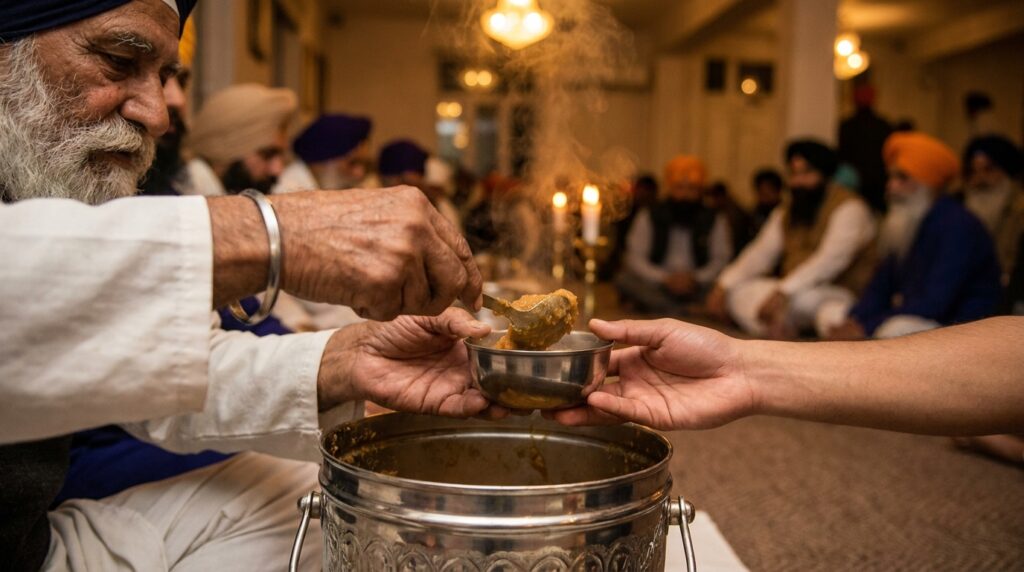
Additionally, the langar is a third activation context worth understanding. Specifically, langar is the Sikh tradition of the free community meal — served to all without distinction at gurdwaras and at Vaisakhi events. Brands that sponsor langar supplies — food, packaging, beverages, serving equipment — earn exceptional community goodwill. Sponsoring langar aligns with the Sikh value of seva (selfless service) and signals that a brand understands the community’s values at a deep level.
Furthermore, certain product categories are simply incompatible with Vaisakhi brand activation in Canada. Specifically, alcohol brands cannot activate at Vaisakhi — alcohol is prohibited in Sikhism. Beef products cannot be sampled at Vaisakhi events. Any brand that activates in these categories at a Vaisakhi context damages its Punjabi community relationships permanently.
March: community relationship building Specifically, the most important work in Vaisakhi brand activation in Canada happens before April. Gurdwara partnerships, community organization endorsements, and langar sponsorship arrangements are all confirmed in March. Brands arriving in April without established relationships are arriving too late for the highest-trust activation formats.
April 1–12: pre-Vaisakhi community engagement Specifically, in-store activations at South Asian grocery retailers, Punjabi-language digital content, and community media placements build brand awareness in the days before Vaisakhi. This pre-event window is the commercial equivalent of the pre-Diwali shopping surge — purchase intent is high across clothing, food, and gifting categories. See our brand ambassador program guide for the staffing model.
April 13: Vaisakhi day — mela and langar activation Specifically, the mela at local parks and community grounds adjacent to the Nagar Kirtan route is the primary brand activation space. Ambassador teams, sampling programs, branded booths, and cultural sponsorships all belong here — not on the procession route itself. Langar sponsorship on Vaisakhi day delivers the highest single-day goodwill of the Vaisakhi brand activation cycle in Canada.
April 14–30: community follow-through Specifically, gurdwaras host Vaisakhi celebrations through the weeks following April 13. Community melas in Brampton, Malton, and Mississauga extend the brand activation opportunity window well into late April.

The Edelman Trust Barometer shows that community trust builds through authentic, consistent presence — not one-time festival appearances. Effective Vaisakhi brand activation in Canada follows this principle closely.
Specifically, the ambassador team must include Punjabi and Sikh community members. They should speak Punjabi fluently and understand the occasion’s religious significance. A generalist ambassador team at a Vaisakhi mela delivers a fundamentally different — and substantially weaker — result than a Punjabi community-embedded team.
Additionally, in-language creative is essential. Specifically, Punjabi written in Gurmukhi script — not just transliterated Punjabi in Roman letters — signals genuine cultural investment to the Punjabi Sikh community. Brands that produce Gurmukhi creative for Vaisakhi signal a level of community respect that very few brands have attempted.
Moreover, community organization partnerships amplify everything. Specifically, working with gurdwaras, the World Sikh Organization, Punjabi community associations, and Vaisakhi parade committees gives brand presence a community endorsement that media spend cannot buy. For the ambassador and activation model, see our multicultural brand ambassador guide and our experiential marketing agency Toronto overview.
The most damaging mistake is attempting commercial brand presence on the Nagar Kirtan procession route. Specifically, the procession is a sacred religious event — not a parade in the conventional sense. Branded signage, ambassador canvassing, or sampling along the route signals a profound misunderstanding of the occasion. This mistake has ended brand relationships with the Punjabi Canadian community permanently.
The second mistake is activating alcohol or beef brands at Vaisakhi. Specifically, Sikhism prohibits alcohol. Beef is sacred in Hindu tradition. Any brand in either of these categories that attempts Vaisakhi activation damages its credibility irreparably in both communities simultaneously.
The third mistake is treating the two dimensions of Vaisakhi as one. Specifically, brands that position Vaisakhi solely as a harvest festival — ignoring the Khalsa founding — miss the occasion’s primary significance for the majority of attendees. Brands that acknowledge Vaisakhi only as a Sikh religious event miss the broader Punjabi community participation. Effective Vaisakhi brand activation in Canada holds both dimensions with equal respect.
Finally, many brands show up once and never return. Specifically, Punjabi community trust in brand relationships builds across multiple Vaisakhi appearances — not through a single activation. Brands that commit to Vaisakhi brand activation in Canada across multiple years earn community loyalty that a single appearance cannot.
When is Vaisakhi 2026? Vaisakhi 2026 falls on April 13 — fixed on the Sikh Nanakshahi calendar. The Brampton Nagar Kirtan typically takes place on the Saturday or Sunday closest to April 13.
What is the difference between the Nagar Kirtan and the Vaisakhi mela? Specifically, the Nagar Kirtan is the sacred Sikh procession — the religious heart of Vaisakhi. Commercial activation does not belong on the route. The mela is the community fair at parks and community grounds adjacent to the procession. It is the primary brand activation space. Langar sponsorship — supporting the free community meal — is the highest-goodwill format at Vaisakhi.
How large is the Punjabi Sikh community in Brampton and the GTA? South Asian Canadians represent 52% of Brampton’s total population — the highest of any city in Canada. Within that, Punjabi Sikh and Hindu Punjabi communities are the largest sub-communities. Brampton’s Nagar Kirtan draws hundreds of thousands of attendees each year.
What spending categories perform best for Vaisakhi brand activation in Canada? Clothing, food and grocery, gold and jewellery, personal care, financial services, and consumer electronics all perform strongly in the Vaisakhi season. Specifically, new clothing is a Vaisakhi tradition — similar to Diwali and Eid. Food and grocery spending peaks in the week before Vaisakhi as families prepare for reunion meals.
What must brands absolutely avoid at Vaisakhi? Avoid commercial activation on the Nagar Kirtan procession route. Never activate alcohol or beef brands at any Vaisakhi event. Do not produce creative that refers to Vaisakhi only as a “harvest festival” — this omits the occasion’s Sikh religious significance. Any creative that treats Vaisakhi as a generic multicultural event rather than a specifically Sikh and Punjabi occasion will underperform and risk community criticism.
Talk to Brand Guruz about building a Vaisakhi brand activation program in Canada. We cover mela activations, langar sponsorships, and Punjabi community event presence across Brampton, Malton, and Mississauga — with in-language ambassador teams who understand the occasion’s full cultural depth.