Experiential Marketing Examples: 12 Campaigns Canadian Brands Can Learn From in 2026

Experiential marketing examples are real-world campaigns that let people touch, taste, play with, or step inside a brand instead of simply watching an ad. The best experiential marketing examples turn a product into a live, shareable moment. In this guide, Brand Guruz breaks down 12 campaign types and the exact tactics Canadian brands can copy.

Updated November 2026.

Key takeaways:

  • Experiential marketing examples fall into six repeatable patterns: pop-ups, sampling, festivals, guerrilla, immersive tech, and community activations.
  • What makes each one work is participation, emotion, and shareability, not production budget.
  • The Greater Toronto Area, with 6.4M+ people, is one of the strongest live-brand markets in Canada.
  • Small brands can run high-impact activations by going narrow, local, and hands-on.
  • Brand Guruz plans, produces, and measures these activations across Toronto, the GTA, and Canada.

$128B+ — annual global brand spend on experiential and live marketing (Event Marketer) · 88% — consumers who trust a personal recommendation over any advertisement (Nielsen) · 6.4M+ — people in the Greater Toronto Area, a prime market for live brand experiences (Statistics Canada)

What Is Experiential Marketing?

Experiential marketing is a strategy that engages people through live, hands-on brand experiences they can join, feel, and share. Rather than interrupting an audience, it invites them in. For a full primer, see our guide to what is experiential marketing.

Experience over impression

Traditional ads chase impressions. Experiential marketing chases participation instead. Because people remember what they do far better than what they see, a single great activation can outperform months of passive media.

Why it matters in 2026

Attention is scarce, and audiences tune out banners automatically. However, they lean into experiences worth their time. In fact, Nielsen finds that 88% of consumers trust a personal recommendation over any advertisement. That is why brands keep shifting budget toward live moments, and why the latest experiential marketing trends all point to participation.

The examples below are grouped into six repeatable patterns. For each one, we explain what the campaign type does, why it works, and how a Canadian brand can run its own version. Think of it as a menu, not a ranking. The right format depends on your goal, your audience, and your budget.

Pop-Up and Retail Activation Examples

Pop-up and retail activations are among the most popular experiential marketing examples because they create urgency and foot traffic fast. A temporary space turns curiosity into a visit, and a visit into a story.

1. The branded pop-up shop

A branded pop-up gives a product its own temporary home for days or weeks. Typically, brands design a share-ready space, add a limited product, and let scarcity drive the crowd. For the mechanics, see our pop-up shop guide.

2. The flagship takeover

Here a brand transforms an existing store or window into an immersive scene. As a result, everyday shoppers walk into a branded world without planning to. The takeover works because it meets people where they already are.

3. The sampling store

Some pop-ups exist purely to put product into hands. Consequently, visitors leave having tried the thing, not just seen it. This format pairs naturally with retail launches and new-flavour drops.

To make any pop-up work, pick a high-traffic location and a clear reason to visit. Then give people one moment worth photographing. In most cases, that single shareable detail does more marketing than the signage ever could.

Product Sampling and Trial Examples

Product sampling remains one of the most reliable experiential marketing examples for driving trial. The logic is simple. When people taste or test a product, they buy it more often.

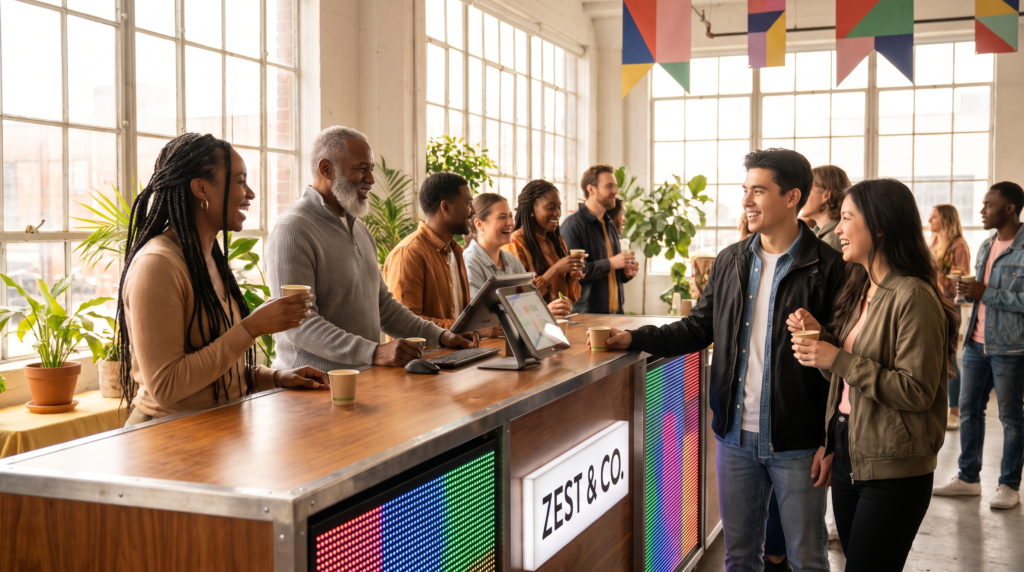
Tasting bars and trial stations

A branded tasting bar turns a sample into a small event. For instance, a beverage brand can pour, explain, and collect reactions in one friendly exchange. In practice, the conversation matters as much as the sample.

Street and transit sampling

Smart brands also meet people where energy runs high. Specifically, they sample at transit hubs, campuses, and festivals during peak moments. Because timing shapes mood, the right moment doubles the impact.

Sampling also opens a data door. When a brand ambassador trades a sample for an email or a quick survey, the trial becomes a measurable lead. In our experience, that follow-up step is where most sampling programs leave money behind.

Interactive product sampling experience at a branded tasting bar
Product sampling is one of the most effective experiential marketing examples for driving trial.

Festival and Sponsorship Activation Examples

Festivals concentrate thousands of engaged people in one place, which makes them prime ground for experiential marketing examples. The crowd is already in a celebratory, open mindset. Globally, brand spend on live marketing keeps climbing, as Event Marketer tracks each year.

Strategic festival sponsorship

A strong sponsorship does more than add a logo to a stage. Instead, the brand gives guests something they actually want, such as shade, charging, or a photo moment. Therefore the brand becomes part of the fun, not an interruption.

Branded experience zones

Many brands now build their own zone inside a festival footprint. Consequently, attendees choose to spend time with the brand. In Canada, multicultural festivals across the GTA offer especially high-intent, loyal audiences.

The best festival activations give before they ask. First, solve a real need in the crowd. Next, earn a photo and a follow. Finally, invite people to stay connected after the music stops.

Guerrilla and Street Marketing Examples

Guerrilla marketing uses surprise and place to earn attention on a modest budget. These experiential marketing examples prove that creativity can beat spend.

Street installations and stunts

A clever installation transforms a sidewalk, staircase, or crosswalk into a branded message. Because the idea is unexpected, people stop, smile, and film it. The footage then travels far beyond the original corner.

Interactive public art

Some brands invite the public to add to a piece, play a game, or trigger a reaction. As a result, passersby become participants. That small act of involvement is what makes the moment stick.

Guerrilla ideas reward brands that are brave and small. Because the format trades budget for surprise, a nimble challenger can out-punch a much larger competitor. The key word is relevance, since a stunt that ignores the audience simply falls flat.

Immersive and Tech-Driven Examples

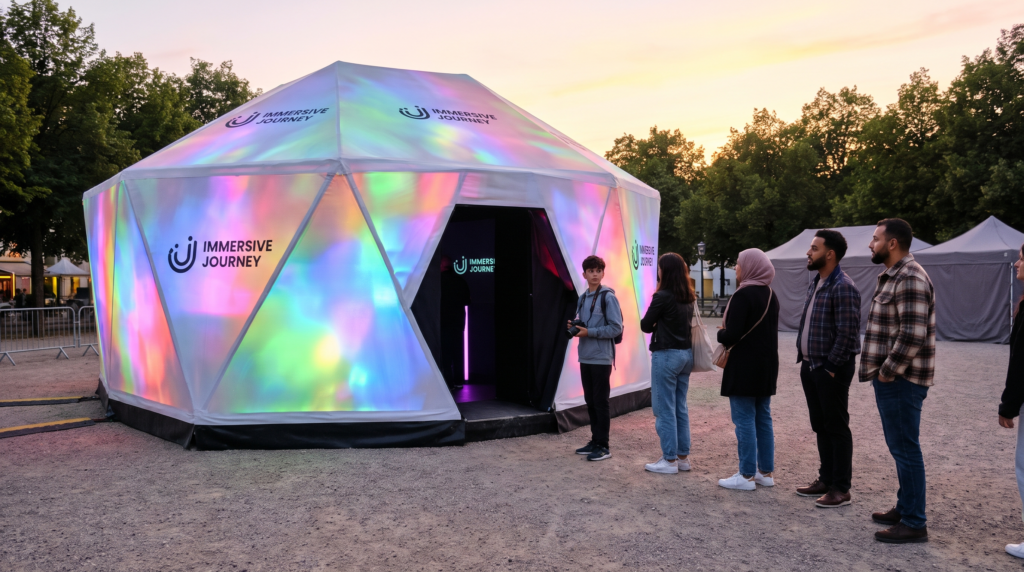
Technology lets brands build worlds people can step inside. These immersive experiential marketing examples turn a message into an environment.

AR and VR activations

Augmented and virtual reality let guests try the impossible, from virtual test drives to interactive demos. Because the experience feels personal, it lingers in memory. It also generates content guests happily share.

Projection mapping

Projection mapping turns a wall, building, or room into a moving canvas. Consequently, a static surface becomes a spectacle. The format suits launches, galas, and flagship reveals.

Interactive installations

Touch walls, motion games, and responsive lighting reward curiosity with reaction. In short, the visitor controls the show. That sense of agency is what separates an installation from a display.

Tech should serve the story, not the other way around. On balance, the strongest immersive campaigns start with a simple human insight and then add technology to amplify it. When the two align, the result feels like magic rather than a gadget demo.

Immersive branded pop-up room with projection-mapped walls and visitors
Immersive, tech-driven rooms are among the most memorable experiential marketing examples.

Multicultural and Community Activation Examples

Canada’s diversity makes community-rooted activations some of the most effective experiential marketing examples in the country. When a brand honours a culture authentically, it earns deep loyalty. With more than 6.4 million people in the region, Statistics Canada data shows why the GTA is such a rich market for live experiences.

Cultural festival activations

From Diwali to Caribbean Carnival, the GTA hosts world-class cultural moments. Brands that show up with genuine respect, not just a logo, become part of the celebration. For local strategy, explore brand activation in Toronto.

Neighbourhood and community pop-ups

Hyper-local activations meet communities on their own streets. Because the scale feels personal, trust builds quickly. In our experience, a small, sincere presence often outperforms a giant downtown spend.

Authenticity is the whole game here. To be clear, hire from the community, partner with local creators, and listen before you launch. Done right, a community activation does not just reach an audience; it joins one.

What These Experiential Marketing Examples Have in Common

Across all 12 formats, the best experiential marketing campaigns share the same DNA. Clearly, budget is not the common thread. Participation, emotion, and shareability are.

Three shared principles

First, every great activation invites action rather than attention. Next, it sparks a genuine feeling. Finally, it gives people a reason to post. Put simply: participate, feel, share.

How to apply these examples to your brand

Start with one clear goal, then pick the format that fits your audience and budget. After that, design for a single shareable moment and plan the follow-up before the event. That is how a great night becomes measurable pipeline.

Why Brand Guruz is built for this

Brand Guruz is a Canadian experiential marketing agency that plans, produces, and measures live activations across Toronto, the GTA, and the country. Because we own both the experience and the digital follow-up, every guest can become a tracked lead. Compare the field in our guide to the best experiential marketing agency options, then plan your activation with our team.

Frequently Asked Questions About Experiential Marketing Examples

What is an example of experiential marketing?

A branded pop-up shop is a classic example of experiential marketing. The brand builds a temporary, immersive space where people can touch products, join activities, and share photos. Other common examples include product sampling bars, festival activation zones, guerrilla street installations, and AR or VR experiences. Each one invites participation instead of simply showing an advertisement.

What makes an experiential campaign successful?

A successful experiential campaign combines three things: active participation, genuine emotion, and built-in shareability. First, it invites people to do something rather than watch. Next, it sparks a real feeling tied to the brand. Finally, it gives guests a reason to post. When those three align with a clear business goal, the campaign delivers measurable results.

How much does an experiential marketing campaign cost?

Experiential marketing campaigns in Canada range widely by scope. A small, local activation can start in the low thousands, while a multi-city festival program can reach six figures. Cost depends on venue, staffing, build, technology, and duration. The smarter metric is cost per engaged attendee, since one focused activation often beats several cheaper, forgettable ones.

What industries use experiential marketing?

Nearly every consumer-facing industry uses experiential marketing. Food and beverage, automotive, beauty, technology, fashion, finance, and entertainment all run activations. So do B2B brands at trade shows and conferences. Any brand that benefits from trial, emotion, or community, which is almost all of them, can turn a product into a live experience.

How do you measure experiential marketing?

Measure experiential marketing with a mix of reach, engagement, and conversion metrics. Track foot traffic, dwell time, samples given, leads captured, and social impressions or user-generated content. Then connect those actions to downstream outcomes like email sign-ups and sales. Because Brand Guruz owns the digital follow-up, each guest can be tracked as a real lead.

Can small brands do experiential marketing?

Yes, small brands can run highly effective experiential marketing. The trick is to go narrow, local, and hands-on rather than big and broad. A single tasting bar, a neighbourhood pop-up, or a clever street stunt can create outsized buzz. Because participation beats budget, a focused activation often outperforms a far more expensive campaign.


Plan Your Next Experiential Marketing Activation With Brand Guruz

Ready to turn one of these experiential marketing examples into your next campaign? Then let us build the activation that fits your brand, your audience, and your budget.

Brand Guruz plans, produces, and measures live brand experiences across Toronto, the GTA, and all of Canada. Tell us your goal, and we will design the moment to hit it. To start, plan your activation with our team, or explore proven results in our case studies.

Let's Grow Your Brand

Author