Field Marketing vs Experiential Marketing: Key Differences and When to Use Each (2026)

Field marketing vs experiential marketing comes down to one core difference: field marketing puts brand reps into retail and distribution channels to drive sales and coverage, while experiential marketing builds immersive, emotional brand experiences that earn attention, memory, and long-term loyalty. Brand Guruz, a Toronto-based experiential marketing agency, plans and runs both for brands across Canada.

Updated November 2026. If you are a marketing manager choosing where the next budget goes, this decision-stage guide compares the two disciplines side by side, shows when each one wins, and explains how to combine them into one program. Everything here is practical, Canadian, and built to help you choose with confidence.

Key takeaways

  • Field marketing drives sales, trial, and retail coverage through reps, demos, sampling, and merchandising in stores and on the street.
  • Experiential marketing builds brand love and buzz through immersive, interactive activations that people feel and remember.
  • Field marketing is usually measured in units and stores; experiential marketing is measured in reach, dwell time, and sentiment.
  • Field programs tend to cost less per touch and scale with staffing; experiential programs cost more per event and scale with production.
  • The strongest campaigns combine both, using an experiential moment to create buzz and field activity to convert it into sales.

$128B+ — global experiential and event marketing spend (Event Marketer) · 88% — consumers who trust a personal recommendation over any advertising channel (Nielsen) · 6.4M+ — people in the Greater Toronto Area, a key Canadian retail and activation market (Statistics Canada)

What Is Field Marketing?

Field marketing is the practice of taking a brand directly to shoppers in the physical world to drive trial, sales, and retail performance. In short, it is boots on the ground: trained reps, product demos, sampling, and in-store support that move products off the shelf.

Where field marketing happens

Most field marketing lives inside retail and distribution channels. Reps work grocery aisles, big-box stores, pharmacies, and liquor outlets, plus street teams, campus activations, and trade shows. The goal is coverage: being present wherever your buyer makes a decision. In the GTA that means Toronto, Mississauga, Brampton, and Scarborough locations, often many at once. Our field marketing in Toronto programs are built for exactly this kind of reach.

What field marketing delivers

Field marketing delivers measurable retail outcomes. A rep demonstrates a product, answers objections, hands over a sample, and closes a sale on the spot. Because the interaction is personal, it converts: Nielsen reports that 88% of consumers trust a personal recommendation more than any ad. As a result, field marketing is the engine behind distribution, velocity, and share of shelf.

What Is Experiential Marketing?

Experiential marketing is the practice of building immersive, interactive brand experiences that people take part in rather than simply watch. Instead of pushing a message, it invites participation, so the audience feels the brand and remembers it long after they leave.

Experiences that earn emotion

Think branded pop-ups, interactive installations, product launches, festival activations, and sampling tours designed around a story. The point is emotion and memory, not an immediate transaction. For a fuller definition, see our guide on what experiential marketing is in Canada. Industry coverage from Event Marketer shows why brands keep investing: global experiential and event spend now tops 128 billion dollars.

Why brands use it

Experiential marketing earns attention that advertising cannot buy. A memorable activation sparks conversation, user-generated content, and genuine affinity. For multicultural audiences across the GTA, a well-designed experience also signals that a brand sees and respects its community, which deepens loyalty.

Field Marketing vs Experiential Marketing: What Are the Key Differences?

The difference between field and experiential marketing is one of intent. Field marketing is built to sell and distribute; experiential marketing is built to make people feel and remember. Both are live and human, yet they pursue different outcomes with different tactics and metrics.

A side-by-side comparison

DimensionField marketingExperiential marketing
Primary goalSales, trial, retail distribution and coverageBrand affinity, emotion, memory, and word of mouth
SettingStores, retailers, trade shows, street and door to doorBranded activations, pop-ups, festivals, and launches
Core tacticsReps, demos, sampling, merchandising, auditingImmersive installations, interactive and sensory experiences
Main KPIsUnits sold, stores covered, conversion rateDwell time, reach, sentiment, content created
Typical costLower per touch, scales with staff hoursHigher per event, scales with production
Best forDriving trial and retail velocity at scaleLaunches and long-term brand building

How they overlap

The two disciplines are cousins, not opposites. A sampling tour, for example, uses experiential design to draw a crowd and field discipline to track samples and conversions. Consequently, the smartest marketers treat them as a spectrum rather than a binary choice.

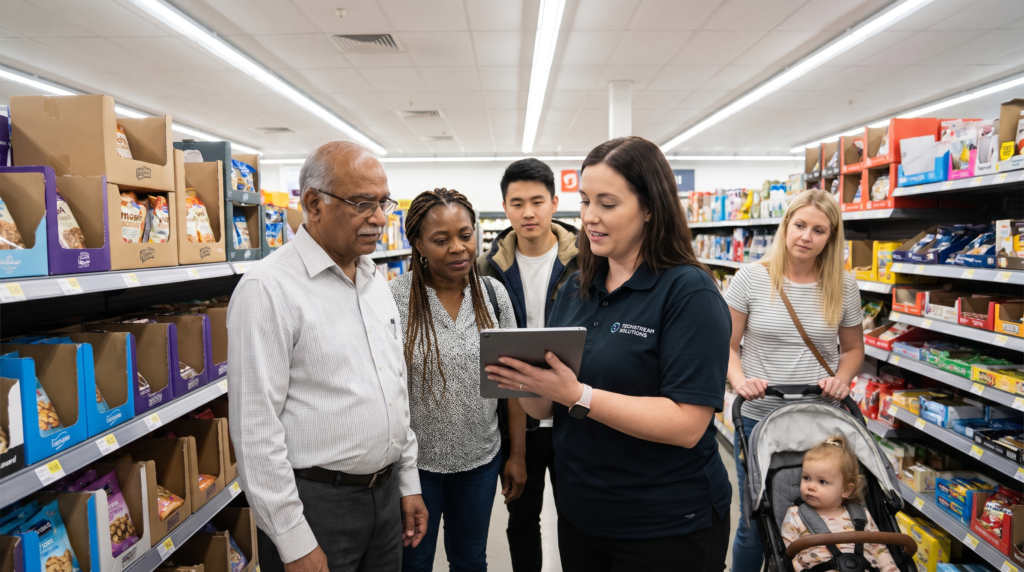
Field marketing representative demonstrating a product in a retail store aisle
A field marketing rep running an in-store product demo

When Should You Use Field Marketing?

Use field marketing when your priority is selling more product and widening distribution. If the business goal is measured in units, stores, or conversions, field activity is the fastest route to it.

Retail coverage and distribution

When you are launching into new retailers or defending shelf space, field teams provide presence at scale. They audit displays, fix out-of-stocks, and make sure your product looks right in every door across the GTA and wider Ontario markets like Ottawa, Hamilton, and London.

Demos, sampling, and trial

When a product is better once people try it, demos and sampling remove the risk of the first purchase. A rep turns curiosity into a sale, which is why field marketing is so effective for food, beverage, beauty, and wellness brands.

Scaling efficiently

Finally, choose field marketing when you need predictable, repeatable reach. Because programs scale with staffing rather than production, you can expand from a dozen stores to hundreds without reinventing the campaign each time.

When Should You Use Experiential Marketing?

Use experiential marketing when your priority is attention, emotion, and brand meaning. If the goal is to launch something, create buzz, or deepen loyalty, an immersive experience does what a shelf demo cannot.

Launches and buzz

When you need a moment that people talk about, an activation creates it. A striking installation in downtown Toronto or at a major festival generates press, social content, and crowds. Our experiential marketing programs are designed to turn a launch into a story.

Brand love and multicultural reach

When you want audiences to feel something, experiences build affinity faster than ads. This is especially true for the GTA’s diverse communities, where a culturally fluent activation shows real respect and earns lasting trust.

Differentiation

Finally, choose experiential marketing when you need to stand out in a crowded category. A memorable experience gives people a reason to choose you that price and features alone cannot provide.

Can You Combine Field and Experiential Marketing?

Yes, and the best programs do exactly that. Combining the two means an experiential moment creates demand while field activity captures it, so attention turns into measurable sales.

Integrated sampling tours

A branded sampling tour is the clearest example. The experiential layer, an eye-catching booth and an interactive demo, pulls people in; the field layer, trained reps with samples and tracking, converts them and records the results. One program delivers both buzz and velocity.

One connected program

When the same agency owns both, nothing falls through the cracks. The experience is designed to feed the retail push, and every activation is tracked to real outcomes. To compare partners who can run both, see our roundup of the best experiential marketing agencies in Canada.

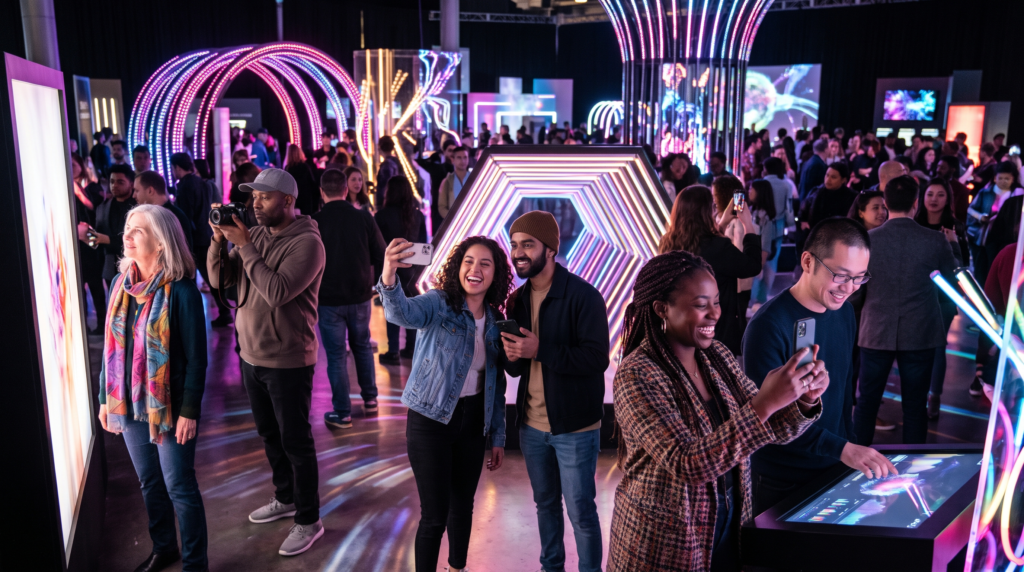
Attendees engaging with an immersive experiential brand installation
Attendees inside an immersive experiential brand activation

How Much Does Each Cost in Canada, and How Do You Measure Results?

Budget and measurement are the two questions every marketing manager asks next. Both field and experiential marketing scale to almost any budget, but they are priced and measured differently.

What field marketing costs in Canada

Field marketing is usually priced by staffing: day rates for reps, plus coordination, travel, and reporting. A modest in-store demo program can run a few thousand dollars, while a national retail coverage push scales into the tens of thousands as doors and hours increase.

What experiential marketing costs

Experiential marketing is priced by production: concept, build, staffing, permits, and venue. A compact pop-up might start in the low five figures, while a flagship festival activation can reach six figures depending on scale and creative ambition.

How to measure field marketing results

Field KPIs are concrete and sales-focused:

  • Units sold and sales lift during the activation window
  • Number of stores covered and compliance rate
  • Samples distributed and demo-to-purchase conversion
  • New distribution points and share of shelf

How to measure experiential results

Experiential KPIs capture attention and emotion:

  • Footfall and dwell time at the activation
  • Social reach, impressions, and user-generated content
  • Brand sentiment and lift in consideration
  • Leads and opt-ins captured for follow-up

Which is right for your brand? A quick checklist

Choose based on your primary goal. Field marketing fits if you can tick most of the first list; experiential fits if you lean to the second.

  • Choose field if you need sales now, retail coverage, trial, or national scale on a tight cost-per-touch.
  • Choose experiential if you are launching, building brand love, chasing buzz, or reaching multicultural communities.
  • Choose both if you want a moment that creates demand and a field team that converts it into revenue.

Why Brand Guruz Runs Both Field and Experiential Programs

Brand Guruz is a Toronto-based experiential marketing agency built for live, multicultural Canadian audiences, and we run both field and experiential programs under one roof. That matters because most brands need a bit of both, and a single accountable partner keeps them connected.

One team, both disciplines

We design the experience that earns attention and staff the field team that turns it into sales. Because we own production and the retail push together, every activation across Toronto, the GTA, and Ontario is tracked to real outcomes rather than guesswork.

Measurable, culturally fluent work

We plan programs that reflect the communities you want to reach, then report on the numbers that matter to you. The result is work that feels authentic to audiences and defensible to your finance team at the same time.

Frequently Asked Questions

What is the difference between field and experiential marketing?

Field marketing drives sales, trial, and retail coverage through reps, demos, and sampling in stores and on the street. Experiential marketing builds brand affinity through immersive, interactive experiences people take part in. In short, field marketing sells now, while experiential marketing builds the brand that makes future selling easier.

Which is cheaper, field or experiential marketing?

Field marketing is usually cheaper per touch because it scales with staffing rather than production. A demo program can start in the low thousands. Experiential marketing costs more per event because it includes concept, build, and venue, but it delivers reach and emotion that a simple demo cannot.

Can field and experiential marketing be combined?

Yes, and the strongest campaigns do. A branded sampling tour uses experiential design to draw a crowd and field discipline to convert and track it. When one agency owns both, the experience is built to feed the retail push, so attention becomes measurable sales.

Which drives more sales?

Field marketing drives more direct, immediate sales because it meets buyers at the point of purchase and closes on the spot. Experiential marketing drives longer-term sales by building awareness and loyalty. For fast retail velocity, lead with field; for durable demand, add experiential.

Which suits a product launch?

Experiential marketing usually suits a launch best because it creates the buzz, press, and social content a new product needs. Pairing it with a field sampling push is even stronger, since the activation drives trial while reps turn curious visitors into first-time buyers.

Does Brand Guruz do both?

Yes. Brand Guruz plans and runs both field and experiential programs across Toronto, the GTA, and Ontario. We design the experience, staff the field team, and track everything to real outcomes, so you get buzz and measurable sales from one accountable partner.


Choose the Right Program for Your Next Canadian Campaign

Still deciding between field marketing and experiential marketing? You do not have to choose blindly, or choose only one. Tell us your goal and we will recommend the right mix.

Brand Guruz plans, produces, and measures both field and experiential programs across Toronto, the GTA, and all of Ontario. To get a tailored recommendation, book a quick call through our contact page and we will map the program to your objective.

Let's Grow Your Brand

Author