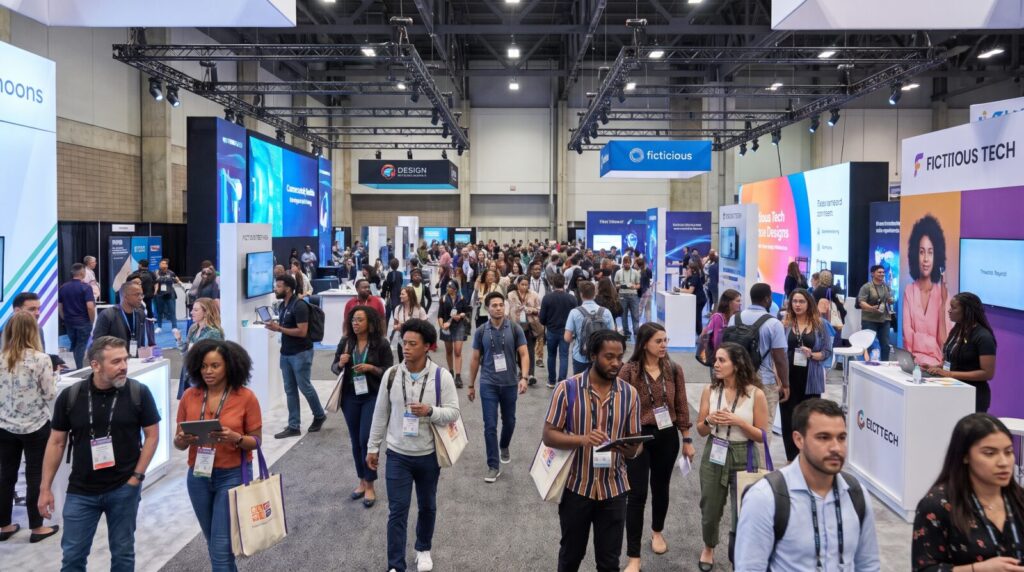
Updated November 2026
A trade show booth rental in Canada typically costs about 2,000 to 25,000 dollars, depending on size, format, and services. A 10×10 inline rental starts near the low end. An island exhibit sits at the top. Most rentals include the structure, graphics, basic lighting, and delivery, while labour, drayage, and electrical cost extra.
Brand Guruz, a Toronto-based experiential marketing agency, helps brands plan, rent, and staff exhibits across the GTA and all of Canada. So this guide gives you honest numbers and a clear way to choose.
Key takeaways
128 billion dollars — global experiential and event marketing spend (Event Marketer) · 88% — consumers who trust personal recommendations over advertising (Nielsen) · Nearly 2 in 3 — trade show attendees who are new prospects for the exhibitors they visit (CEIR)
A trade show booth rental is a complete exhibit you lease for one show or a season, instead of buying it outright. In short, a rental partner owns the hardware, and you pay to use it. As a result, you skip the capital cost, the storage, and the repair bills.
A custom build is designed and owned by you. By contrast, a rental uses modular, reusable components dressed in your graphics. Therefore a rented booth can look custom on the floor, yet cost far less upfront.
Most packages bundle the frame, panels, counters, and printed graphics. In addition, many include lighting, flooring, and furniture. Consequently, you arrive to a finished space rather than a pile of empty crates.
Rentals fit brands that travel between cities or test new show formats. According to CEIR, most trade show attendees come to discover new products and suppliers. Therefore a sharp rented booth puts you in front of ready buyers without the capital cost.
A trade show booth rental in Canada usually costs between 2,000 and 25,000 dollars for the space and structure. Naturally, the final number depends on size, custom elements, and the services you add. Below is a realistic range by booth type.
| Booth type | Footprint | Typical CAD rental | What is usually included |
|---|---|---|---|
| Inline 10×10 | 10 ft x 10 ft | $2,000 – $6,000 | Backwall, graphics, counter, basic lighting, delivery |
| Inline 10×20 | 10 ft x 20 ft | $6,000 – $14,000 | Larger backwall, storage, two counters, lightbox graphics |
| Island exhibit | 20×20 and up | $15,000 – $25,000+ | Custom structure, hanging sign, demo stations, meeting area |
Three factors swing the quote most. First, size drives the base rate. Next, custom graphics and technology raise it. Finally, show services such as drayage and electrical add real cost. For context on Canada’s wider events economy, Statistics Canada tracks business travel and tourism spending.
Smart teams judge cost per qualified lead, not sticker price. For instance, a 5,000 dollar rental that captures 150 leads costs about 33 dollars per lead. To plan that math, see our trade show lead generation guide.
Most trade show booth rental packages include the structure, graphics, and delivery. However, the show floor itself charges for several services that catch first-time exhibitors off guard. So let us separate the two clearly.
Standard rentals cover the frame, printed panels, a counter or two, basic lighting, and transport to the venue. In many cases, flooring and furniture come bundled as well. As a result, the booth arrives ready to assemble.
Watch four line items in particular. Drayage, the fee to move freight from the dock to your space, is often the biggest surprise. Electrical, rigging for a hanging sign, and install-and-dismantle labour follow close behind. Audiovisual gear is another common add-on.
Ask for an all-in quote before you sign. Specifically, request drayage, electrical, and labour estimates in writing. Because these costs vary by venue, a good partner forecasts them early. For the bigger picture, see our experiential marketing services.
Renting wins when you value flexibility; buying wins when you value repetition. Put simply, the right call depends on how often you exhibit and whether your footprint stays the same. Here is the honest comparison.
Rent when you exhibit a few times a year, travel between cities, or want to test a new size. Moreover, renting keeps cash free and removes storage and refurbishment costs. For most mid-market brands, that flexibility pays off.
Buy when you exhibit often at the same booth size and want full design control. Over many shows, ownership can lower the per-show cost. Still, you take on storage, repairs, and the risk of an outdated look.
Many brands own a small kit and rent larger structures for flagship shows. Consequently, they balance cost and impact. To plan a signature build, explore our trade show booth design services.
Booth formats fall into three main types: inline, corner, and island. Each one shapes traffic flow, sightlines, and cost differently. Therefore choosing the right format matters as much as the graphics.
Inline booths sit in a row with neighbours on both sides, usually 10×10 or 10×20. A corner booth opens on two sides, so it draws more traffic. For a first show, an inline 10×10 rental is a smart, affordable start.
An island is open on all four sides, which gives maximum visibility and room for a hanging sign. A peninsula opens on three sides. Both suit brands that want a bold, destination-style presence on the floor.
Let your goal pick the size. For lead volume, prioritise open access and demo space. For executive meetings, add a semi-private area. In practice, the format should serve the outcome, not the other way around.
Choose a rental partner on proof, not promises. Accordingly, run every shortlist through five quick checks before you sign. This keeps the decision objective.
Ask where they have exhibited and which venues they work with. Because Canadian show rules and drayage differ by city, local experience saves money and stress.
Look at real booths they have built, not stock photos. In particular, check that their inventory covers your target size and format.
Insist on one quote that lists structure, graphics, drayage, electrical, and labour. That way, you compare partners fairly.
Confirm who installs the booth and who is on call during the show. A partner with its own crew prevents day-of chaos.
The best partners also staff the booth and capture leads. To see how we compare across the market, read our guide to the best experiential marketing agencies in Canada.
A rented booth converts when it is easy to spot, easy to enter, and easy to remember. So design for attention first, then for conversation. These features do the heavy lifting.
Readable headlines beat clever ones from twenty feet away. Therefore lead with one clear message and a strong brand colour. Lightbox graphics and a hanging sign lift visibility further.
An open, welcoming layout invites people in. In addition, one interactive hook, such as a demo or a game, gives staff a reason to start a conversation. That hook turns walk-bys into leads.
Screens, product demos, and touch displays hold attention and explain value fast. For wider industry benchmarks, follow Event Marketer, and for the full playbook, see our trade show marketing guide.
Great staff turn a great booth into real pipeline. In fact, the people in the booth matter more than the hardware. So plan staffing as carefully as you plan the structure.
Trained ambassadors draw people in, qualify quickly, and stay on message. Because energy is contagious, confident staff lift traffic across the whole show. Rotate shifts so the team stays sharp.
Use a simple digital lead capture flow with a few qualifying questions. As a result, your follow-up is faster and far more targeted. Avoid the old fishbowl of business cards.
Speed wins after the show. Specifically, contact hot leads within 48 hours while interest is high. That discipline is where most trade show ROI is won or lost.
Book your trade show booth rental early, then work backward from show day. Generally, eight to twelve weeks gives you room for design, print, and logistics. Here is a simple timeline.
Lock your goals, budget, and booth size. Next, choose your rental partner and reserve the structure. Early booking secures better inventory and rates.
Approve graphics and finalise the layout. Meanwhile, order show services such as electrical, drayage, and internet through the venue. Confirm your staffing plan too.
Confirm install times, lead capture tools, and staff schedules. Then brief the team on the one goal that matters most. To hand it all to one partner, contact Brand Guruz.
Brand Guruz is a Toronto-based experiential marketing agency that designs, rents, and staffs trade show exhibits across Canada. Because we handle the booth and the people together, your rental becomes a lead engine, not just a backdrop.
Most rental vendors stop at the hardware. By contrast, we connect design, logistics, staffing, and lead capture into one accountable plan. In practice, that closes the gap where ROI usually leaks.
We produce at every size, from a 10×10 inline rental to a full island exhibit. Moreover, we manage drayage, electrical, and install so you avoid surprise fees. To see proven results, talk to Brand Guruz through our contact page.
Few rental vendors close that loop. Since we own both the exhibit and the follow-up, no qualified lead slips through the cracks after the show.
Most rentals cost between 2,000 and 25,000 dollars. A 10×10 inline booth runs roughly 2,000 to 6,000 dollars, a 10×20 runs 6,000 to 14,000 dollars, and an island exhibit starts near 15,000 dollars. Size, custom elements, and show services such as drayage and electrical decide the final number.
A standard rental includes the structure, printed graphics, a counter or two, basic lighting, and delivery to the venue. Many packages add flooring and furniture. However, drayage, electrical, rigging, and install labour usually cost extra, so always ask for an all-in quote.
Renting is cheaper when you exhibit a few times a year or travel between cities. Buying can cost less per show if you exhibit often at the same size. Still, ownership adds storage, repairs, and refurbishment, so most mid-market brands rent for flexibility.
Drayage is the fee to move your freight from the loading dock to your booth space and back. Venues charge it by weight, and it is often the biggest surprise on a show invoice. A good rental partner forecasts drayage before you commit.
Book eight to twelve weeks ahead for most shows. That window leaves time for design, graphics printing, and ordering show services. For large islands or peak-season shows, reserve earlier, since the best inventory and dates get claimed quickly.
Yes. Full-service partners like Brand Guruz rent the booth and provide trained brand ambassadors plus digital lead capture. Because one team owns design, logistics, and staffing, your exhibit runs smoothly and every conversation becomes a tracked lead.
Start with a 10×10 inline or corner booth. It is affordable, easy to staff, and enough to test your message and offer. Once you prove the channel, step up to a 10×20 or an island exhibit at your priority shows.

Ready to rent a booth that actually fills your pipeline? Then let us design, rent, and staff an exhibit built around your goal.
Brand Guruz plans trade show booth rentals across Toronto, the GTA, and all of Canada. Tell us your show, your size, and your target, and we will handle the rest. To start, book a quick call through our contact page, or explore our experiential marketing services.